
Not every customer service problem needs escalation.
Sometimes a simple call, email, chat message, or refund request is enough. A company reviews the issue, provides an answer, and resolves the problem.
But other times, the process starts to break down.
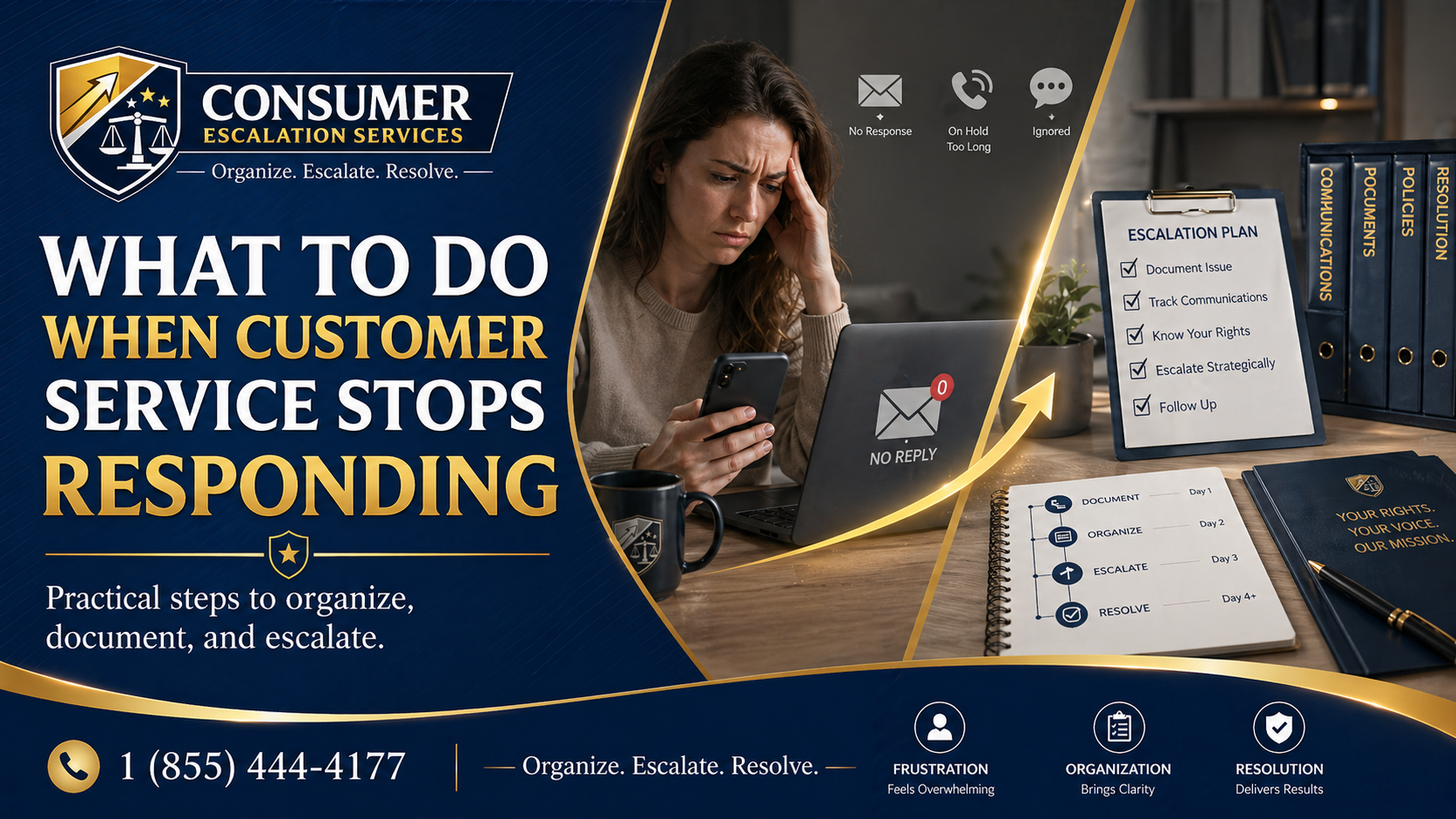
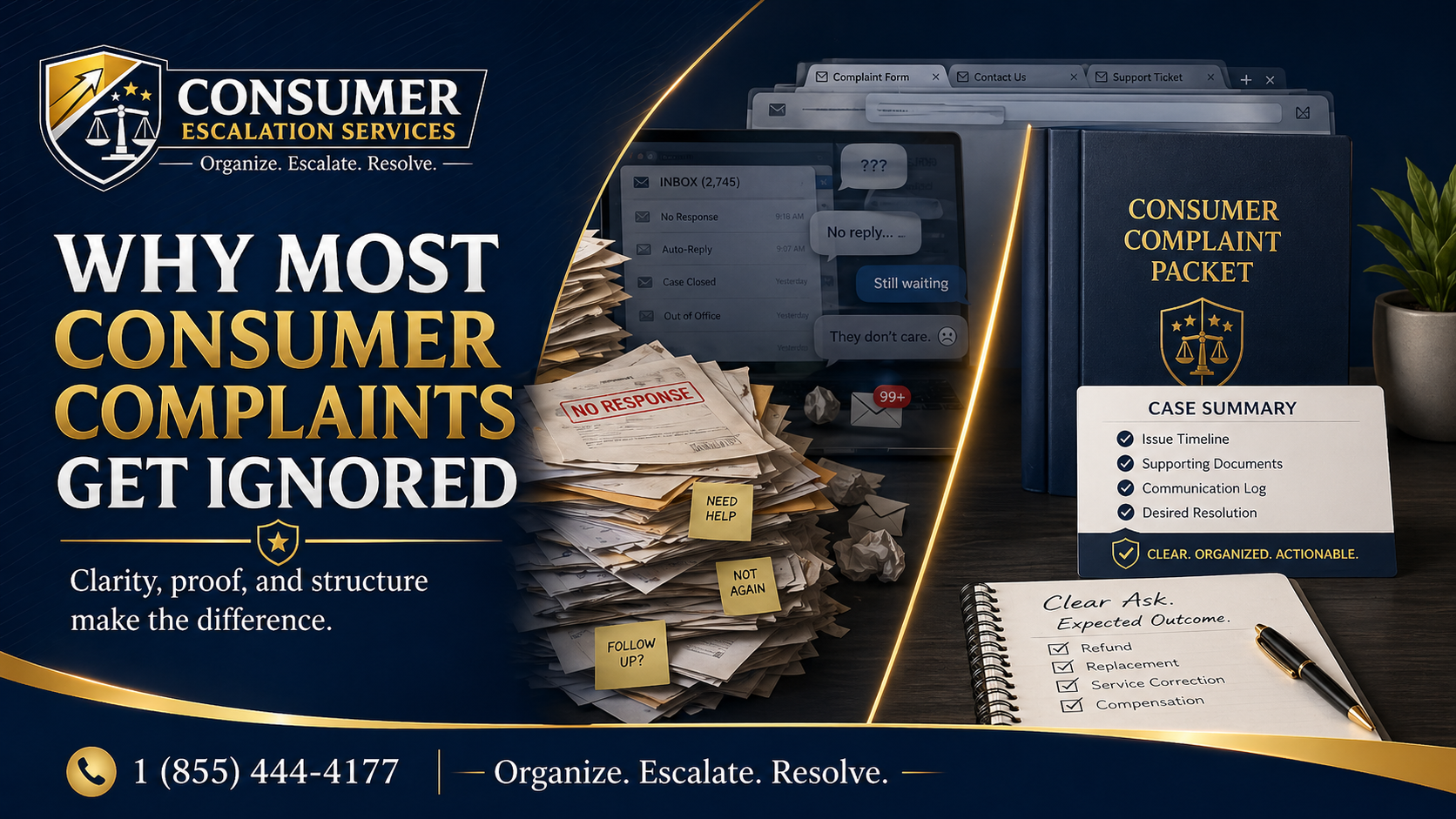
The consumer is ignored. The story keeps changing. The company gives generic responses. The case is closed without explanation. The consumer is transferred from one department to another. The documents are submitted but never reviewed.
When that happens, it may be time to stop repeating the same complaint and start organizing the issue for escalation.
Here are common red flags that your customer service issue may need a more structured approach.
Red Flag 1 — You Keep Getting Transferred
If you are being passed from department to department with no clear ownership, that is a warning sign.
One representative says billing must handle it. Billing says claims must handle it. Claims says customer support must handle it. Customer support says a supervisor will call back, but no one does.
This cycle can continue for days or weeks.
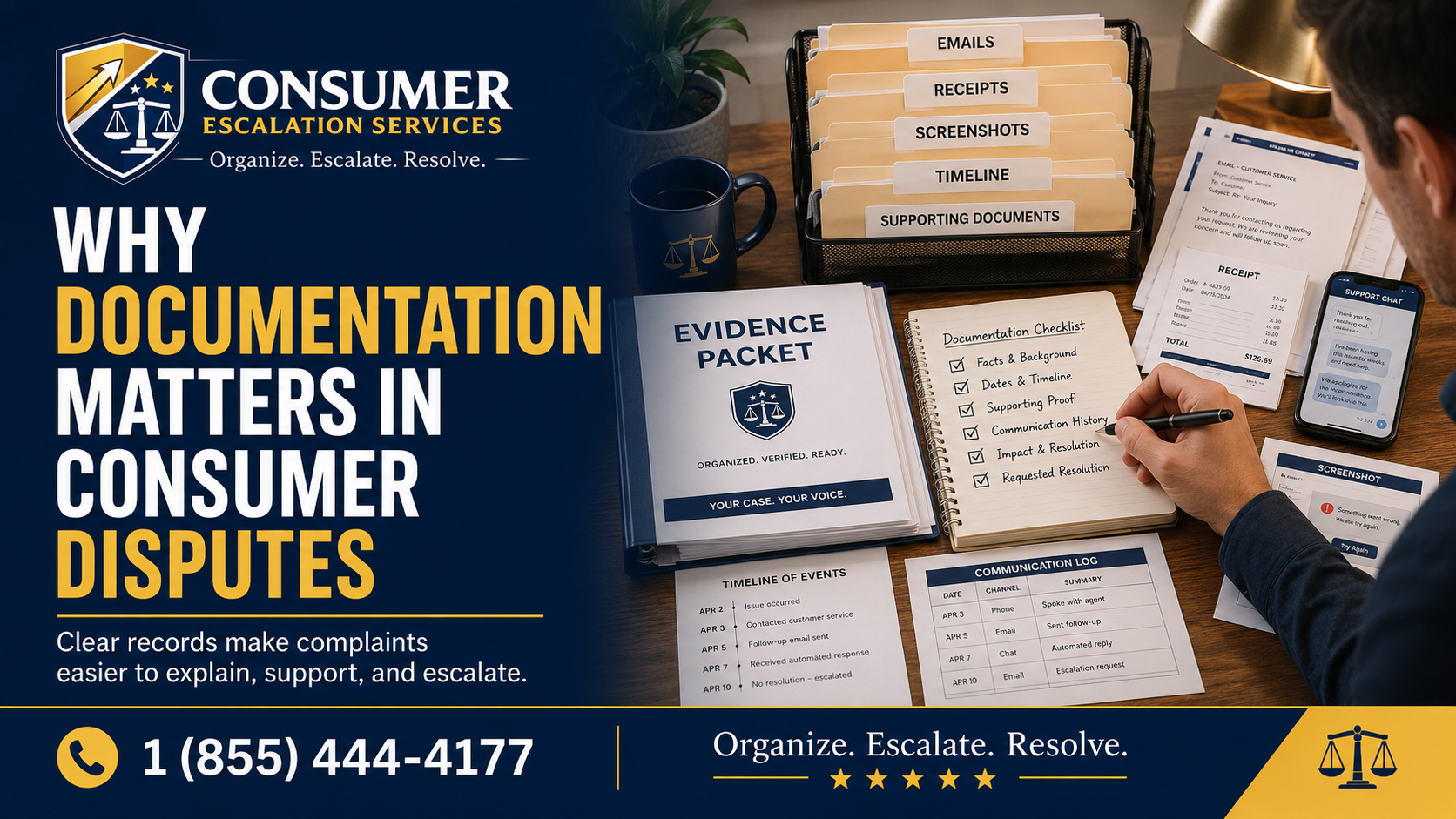
When no one owns the issue, the consumer should begin documenting each contact, including dates, departments, names if available, and what each person said.
A structured escalation can help bring the scattered history into one clear record.
Red Flag 2 — The Company Gives Different Answers Each Time
Another warning sign is inconsistent information.
One representative says the refund was approved. Another says it was denied. One department says documents were received. Another says nothing is on file. One email says the case is under review. Another says the case is closed.
Contradictory answers create confusion and make it difficult for the consumer to know what is actually happening.
When this occurs, screenshots, emails, call notes, and ticket numbers become very important.
The escalation should identify the inconsistent responses and ask for a clear written explanation.
Red Flag 3 — Your Documents Are Being Ignored
If you submitted proof and the company's response does not address it, that may be a major escalation signal.
For example:
- You submitted a cancellation confirmation, but the company still charged you.
- You provided photos of damage, but the claim denial does not mention them.
- You sent a receipt, but the refund response says no proof was provided.
- You uploaded account documents, but the company keeps asking for the same items.
- You provided a written promise from customer support, but the company denies any record of it.
When documents are ignored, the issue should be organized carefully. The consumer may need to point out exactly what was submitted, when it was submitted, and why it matters.
Red Flag 4 — You Receive a Generic "Case Closed" Message
A short "case closed" message can be frustrating, especially when it does not explain why the complaint was denied or what information was reviewed.
A case closure should not leave the consumer guessing.
If the company closes the case without addressing the facts, the consumer can request a written explanation and ask whether the supporting documents were reviewed.
The goal is not to argue emotionally. The goal is to make the company explain its position clearly.
Red Flag 5 — Promised Follow-Ups Never Happen
Many consumers are told:
- "A supervisor will call you back."
- "We will respond within 48 hours."
- "Your refund is being processed."
- "Someone from the escalation team will contact you."
- "Your case is under review."
Then nothing happens.
If the company misses its own follow-up promises, write them down.
Dates matter. Promises matter. Written confirmations matter. Even if the original promise was made by phone, your call notes can help establish the timeline.
A strong escalation can say:
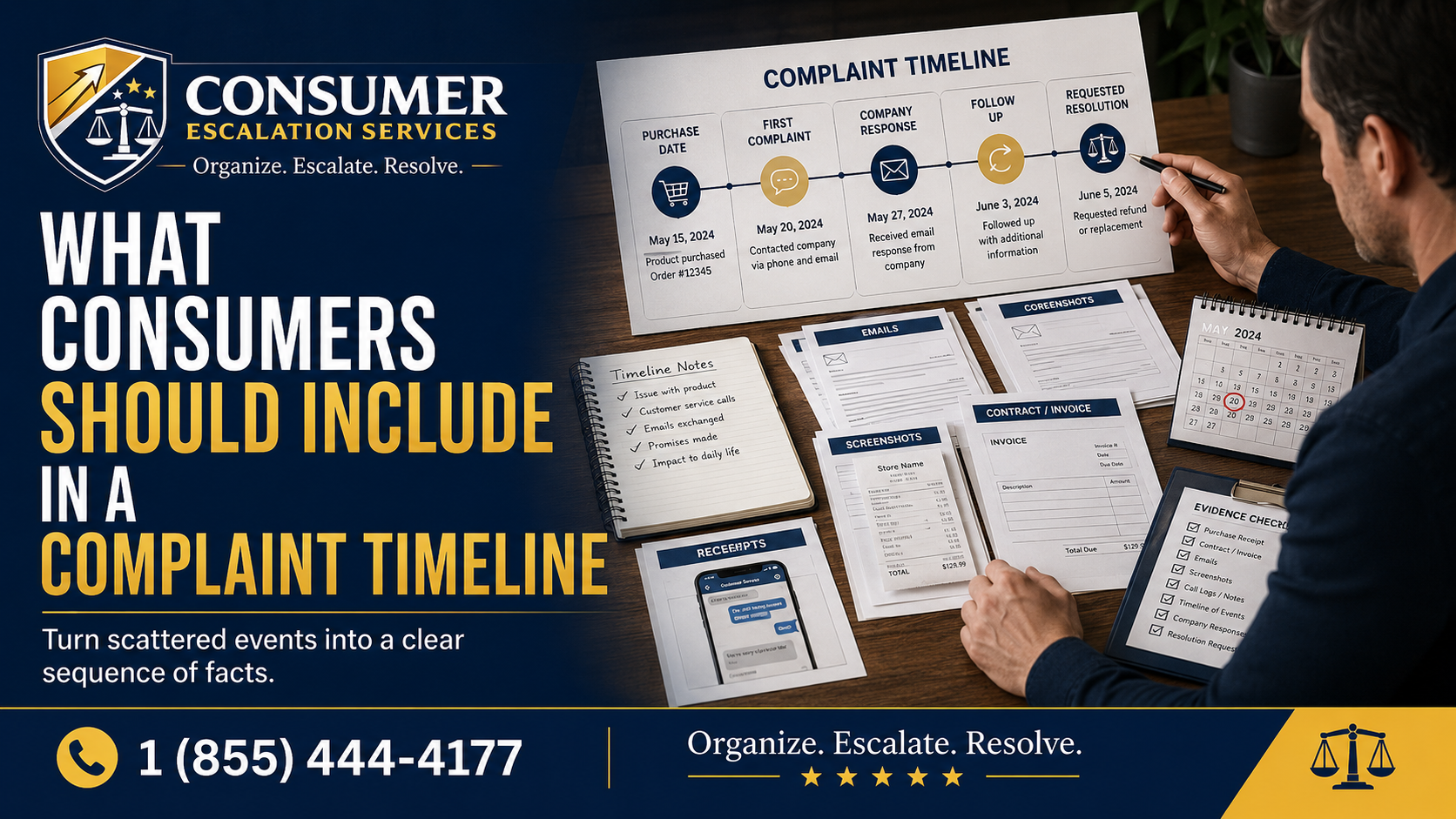
On May 2, I was told a supervisor would contact me within 48 hours. As of May 9, I have not received a call, email, or written update.
That is factual and reviewable.
Red Flag 6 — The Financial Amount Is Significant
Some issues may not be worth a major escalation effort.
But when the amount involved is meaningful, consumers should take the complaint seriously.
This may include:
- Large refunds
- Unreleased funds
- Security deposits
- Travel expenses
- Contractor deposits
- Repair costs
- Medical billing disputes
- Warranty repairs
- Subscription overcharges
- Lost or damaged property
- Business invoices
The higher the financial impact, the more important it is to organize the complaint properly.
Red Flag 7 — You Are Running Out of Time
Some disputes have deadlines, appeal windows, claim periods, cancellation dates, chargeback windows, response deadlines, or document submission deadlines.
Consumer Escalation Services does not provide legal advice or determine legal deadlines. But from a practical standpoint, consumers should avoid waiting too long to organize their records.
If you receive a denial, account notice, claim decision, or final response, save it immediately and review any stated response window.
Red Flag 8 — You Are Too Frustrated to Explain It Clearly
Sometimes the clearest red flag is emotional exhaustion.
If you are angry, overwhelmed, confused, or tired of repeating the same story, it may be time to pause and organize everything before sending another message.
A rushed emotional response may make the complaint harder to review.
A structured complaint can help turn frustration into a clean explanation.
Final Thought
Escalation is not needed for every customer service issue.
But when you see repeated transfers, ignored documents, contradictory answers, missed follow-ups, vague denials, financial harm, or "case closed" responses with no explanation, it may be time to take a more organized approach.
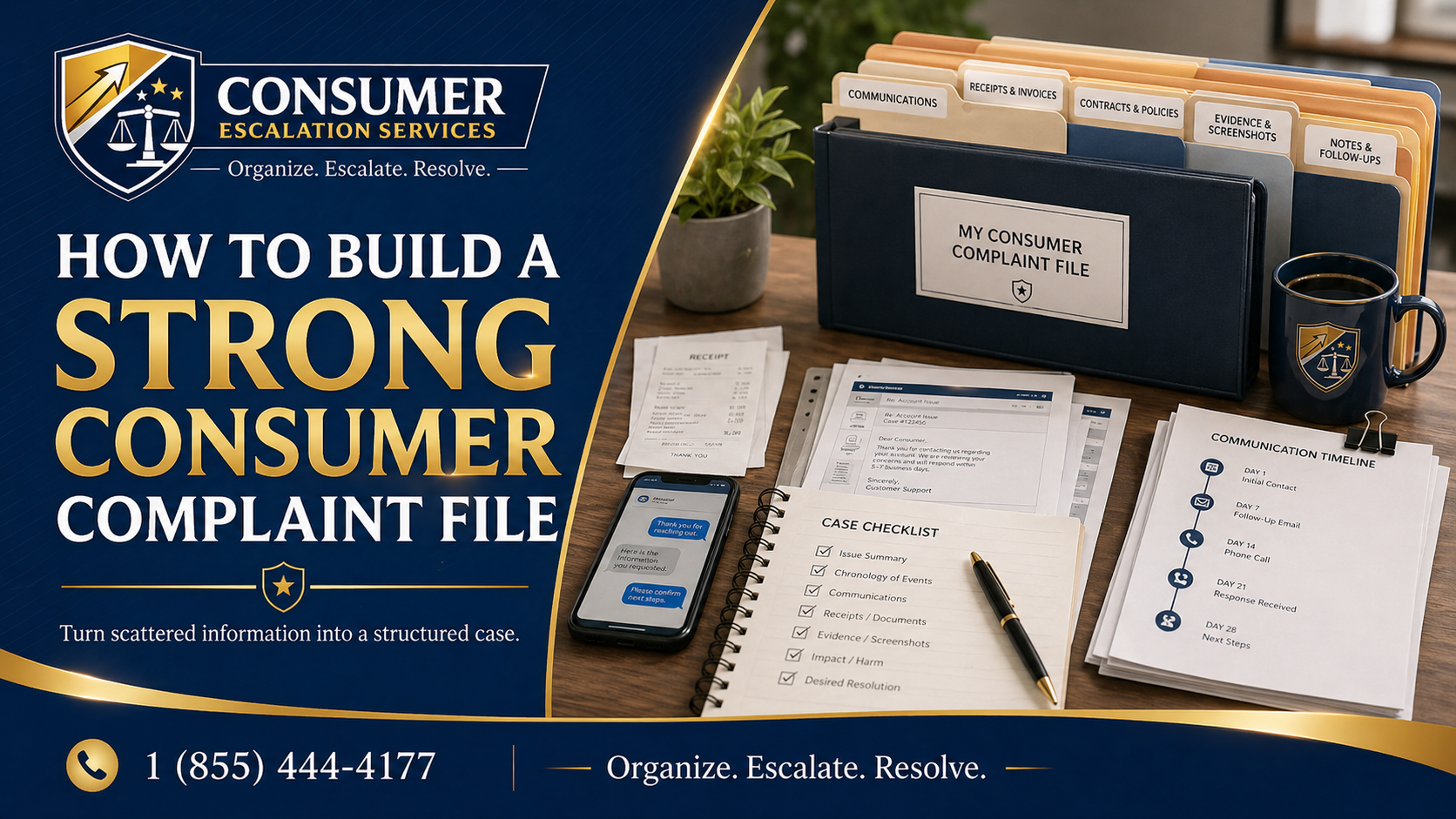
Before escalating, gather the facts, timeline, documents, prior communications, and requested resolution.
The more clearly the issue is presented, the easier it may be for the company to understand what happened and review the matter seriously.