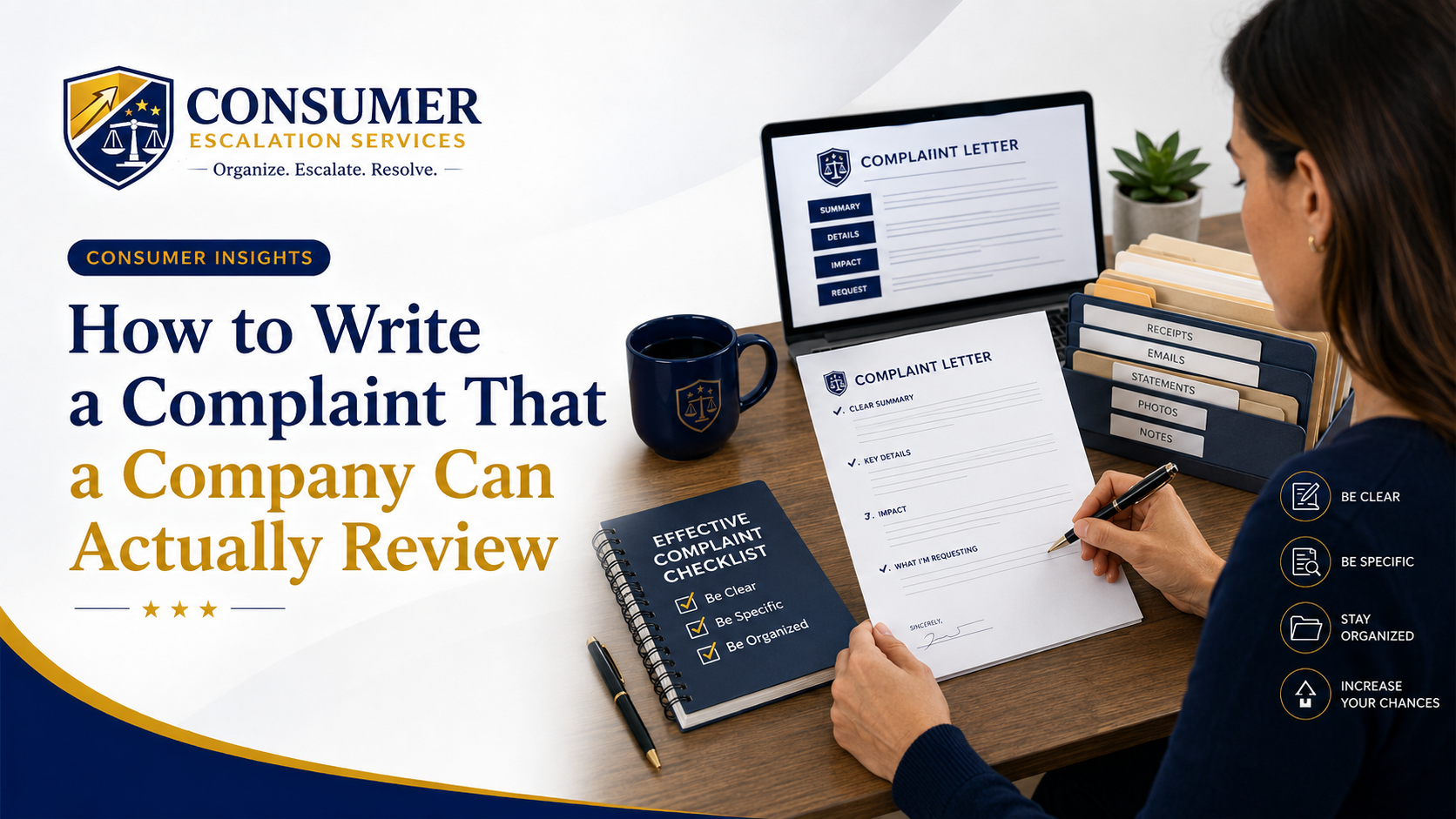
Many consumer complaints fail before they are ever properly reviewed.
Not because the consumer is wrong.
Not because the issue is not serious.
But because the complaint is difficult to understand.
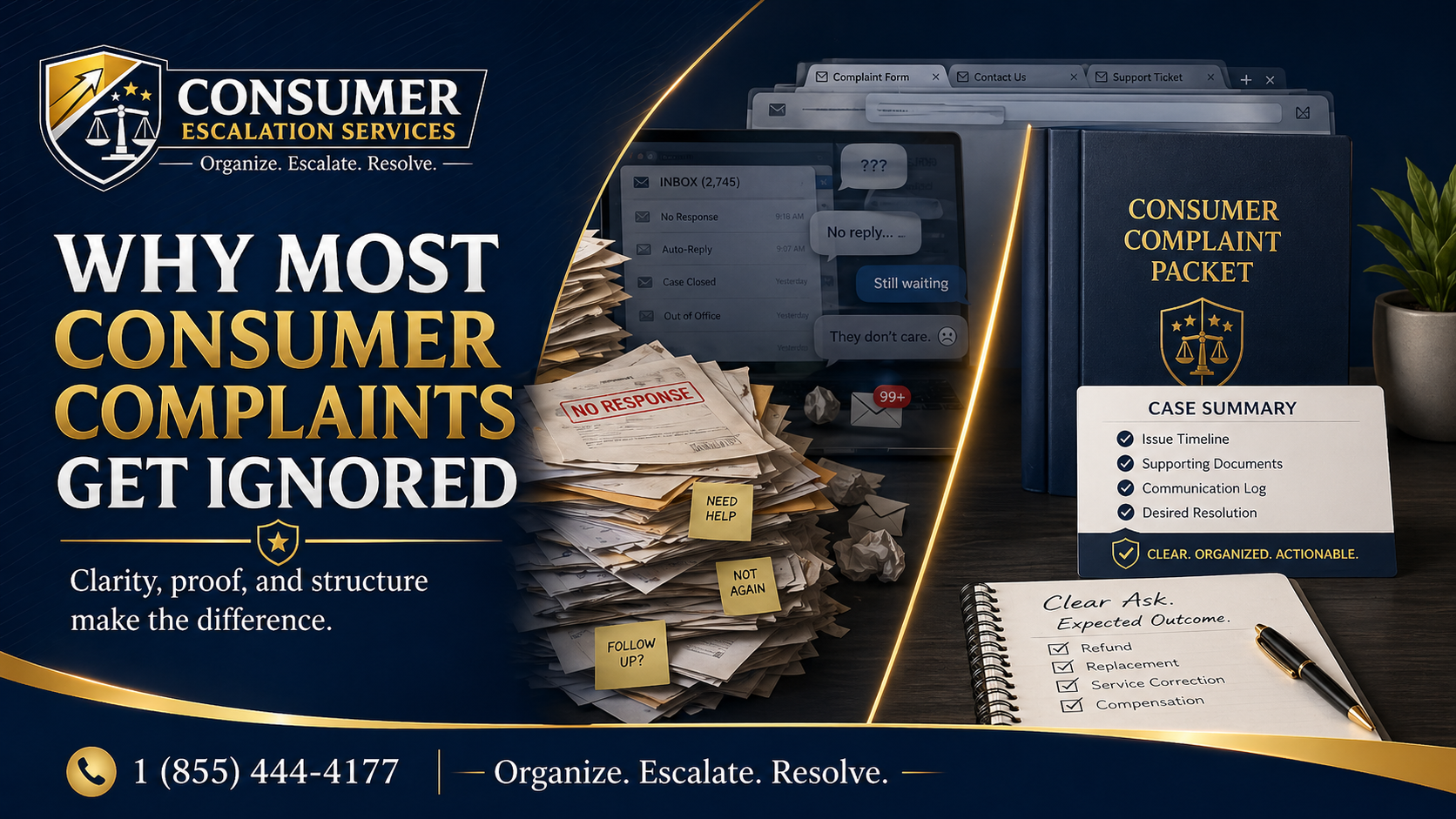
A company may receive a long emotional message with missing dates, unclear facts, no documents, no requested resolution, and no organized timeline. The consumer may be completely justified in feeling frustrated, but the complaint itself may not be easy for a reviewer to process.
A strong complaint should help the company understand the issue quickly.
That means it should be clear, organized, factual, and specific.
Start With a Short Summary
Begin your complaint with a short summary of the issue.
Do not start with every detail at once. Give the reviewer the basic picture first.
For example:
I am requesting a review of a refund issue involving order number 12345. I canceled the service on April 3, received written confirmation of cancellation, but was charged again on April 10.
That short summary tells the company what the complaint is about, what happened, and why the consumer is asking for review.
Identify Yourself and the Account
Make it easy for the company to locate the account, order, claim, booking, invoice, or case.
Include relevant information such as:
- Full name
- Account number
- Order number
- Booking number
- Claim number
- Invoice number
- Ticket number
- Transaction date
- Email address associated with the account
- Phone number associated with the account
Do not include unnecessary sensitive information. For example, do not include full Social Security numbers, full card numbers, passwords, or private login details in a complaint letter.
Explain What Happened in Order
A good complaint should be easy to follow.
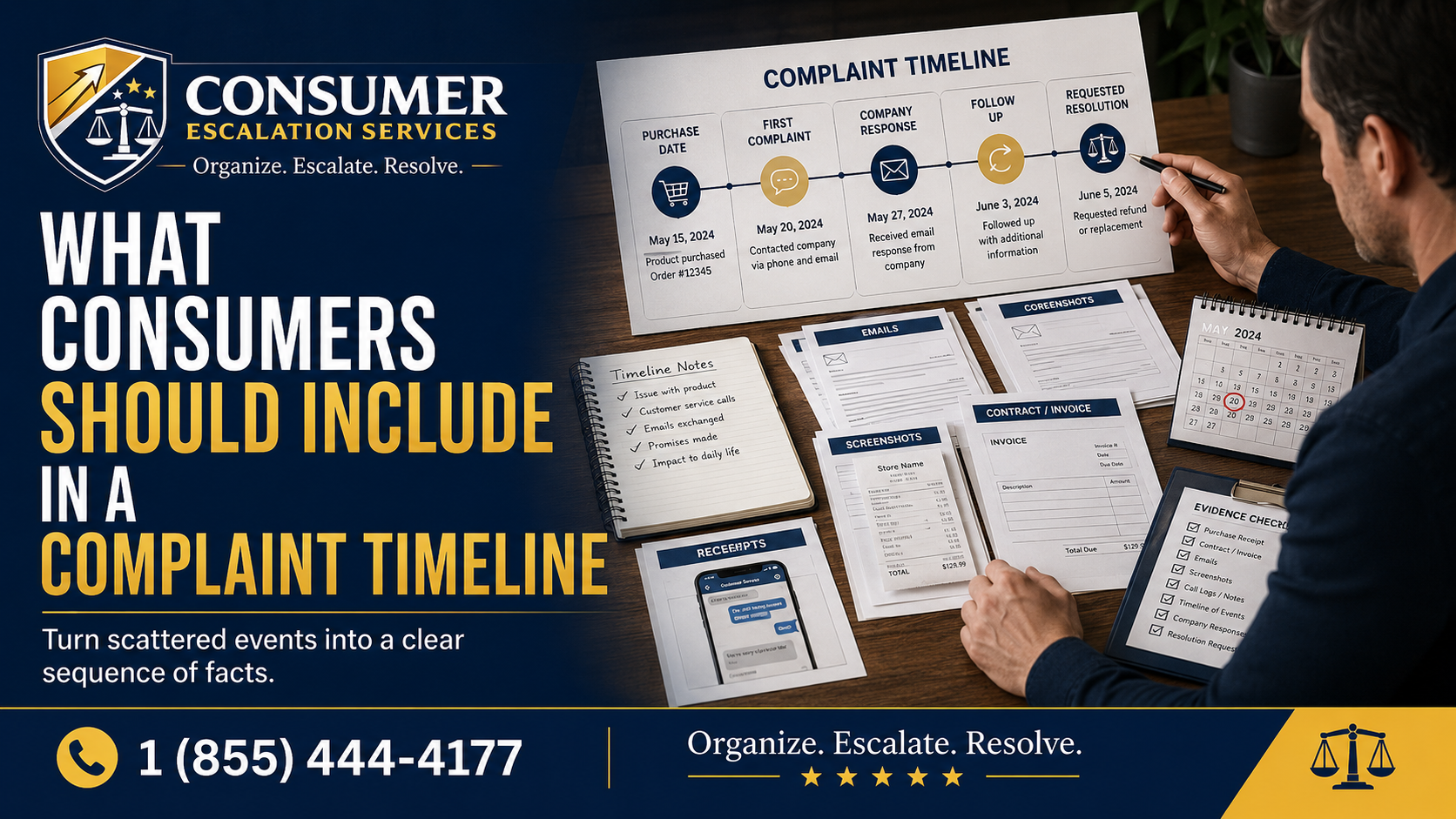
Use a timeline format when possible.
For example:
- April 1: Purchased the service.
- April 3: Canceled the service through the online portal.
- April 3: Received cancellation confirmation by email.
- April 10: Charged again for the next billing cycle.
- April 12: Contacted customer support and requested a refund review.
- April 15: Customer support stated the charge was not refundable.
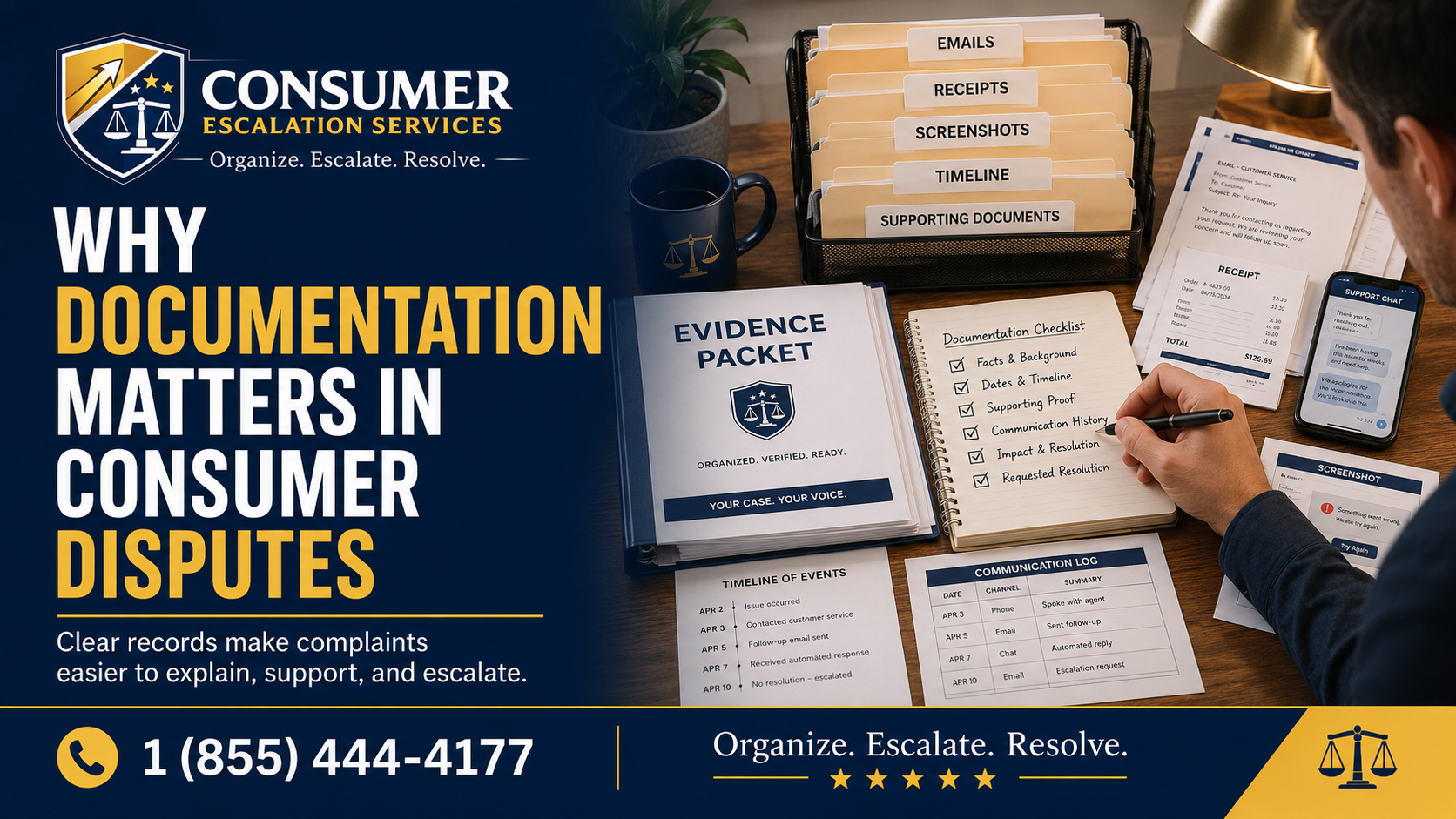
This format is much easier to review than a long paragraph filled with frustration.
A timeline helps the company see what happened and when.
Stay Focused on the Main Issue
Consumers often include too much unrelated information because they are frustrated.
Try to stay focused on the issue that needs review.
Ask yourself:
- What is the main problem?
- What decision or charge am I disputing?
- What documents support my position?
- What outcome am I requesting?
Avoid turning the complaint into a general attack on the company. A focused complaint is usually stronger.
Attach Only Relevant Documents
Documents matter, but too many unrelated attachments can create confusion.
Attach documents that directly support the complaint.
This may include:
- Receipts
- Invoices
- Photos
- Screenshots
- Emails
- Chat transcripts
- Cancellation confirmations
- Refund approvals
- Claim denials
- Account notices
- Repair estimates
- Contracts
- Delivery confirmations
For each attachment, explain what it shows.
For example:
- "Attachment 1 shows the original receipt."
- "Attachment 2 shows the cancellation confirmation."
- "Attachment 3 shows the customer support message stating a refund would be processed."
This helps the reviewer connect the documents to your complaint.
Clearly State What You Are Requesting
A company should not have to guess what you want.
Be specific and reasonable.
Depending on the issue, you may request:
- Refund review
- Billing correction
- Written explanation
- Repair or replacement review
- Claim reconsideration
- Reimbursement review
- Account review
- Release of eligible funds
- Correction of records
- Cancellation confirmation
- Payment review
- Another reasonable resolution
For example:
I am requesting a review of the charge and reimbursement of the $249 amount charged after cancellation.
Or:
I am requesting a written explanation of why the claim was denied and whether the attached documents were reviewed.
A clear request gives the company something specific to answer.
Use a Professional Tone
Your tone matters.
You can be firm without being rude.
Avoid threats, insults, profanity, exaggeration, or personal attacks. These can distract from the facts and make the complaint easier to dismiss.
A professional tone may sound like:
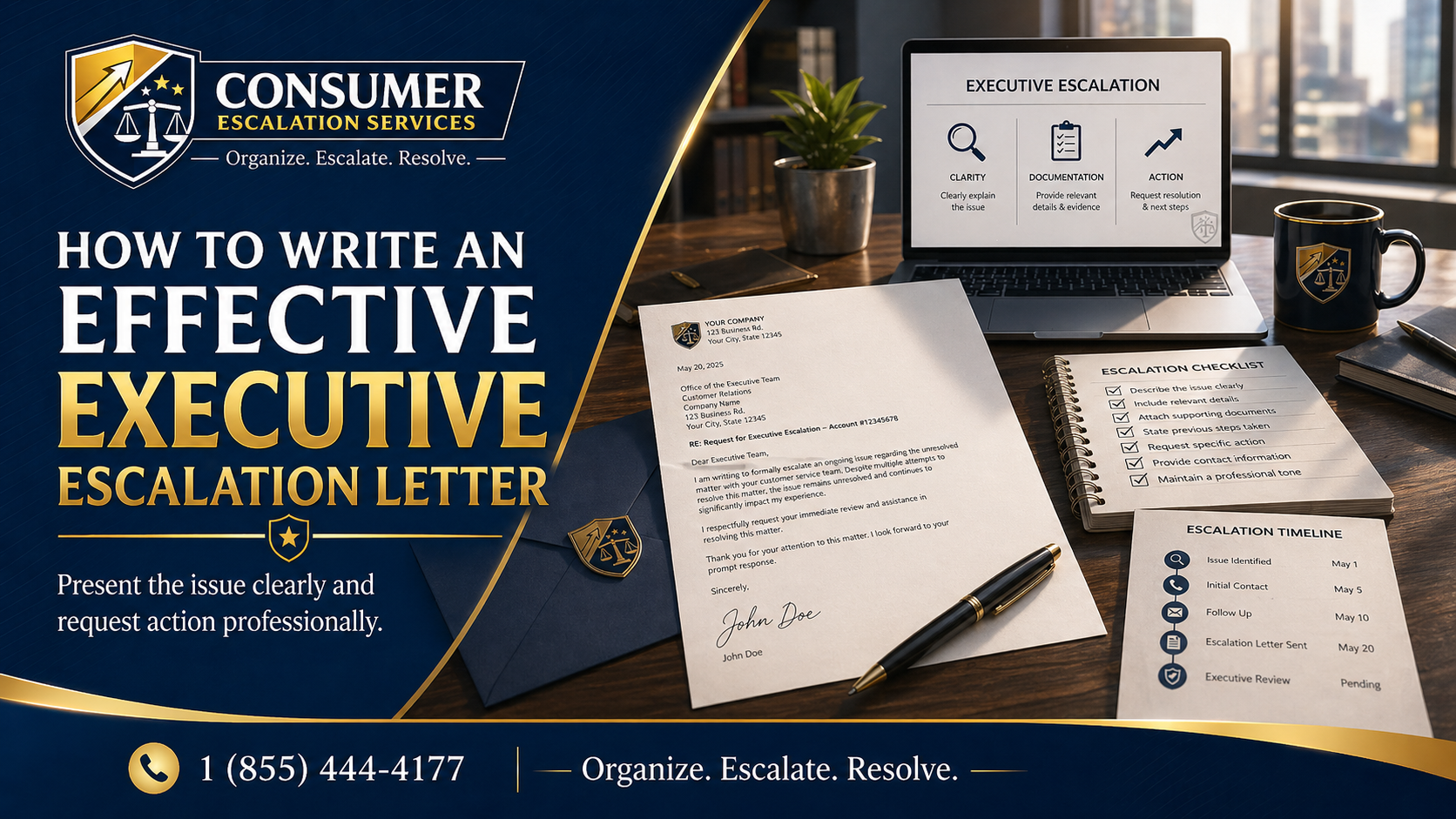
I am requesting a review of this issue because the response I received does not appear to address the attached documentation.
That is calm, direct, and focused.
Keep the Complaint Organized
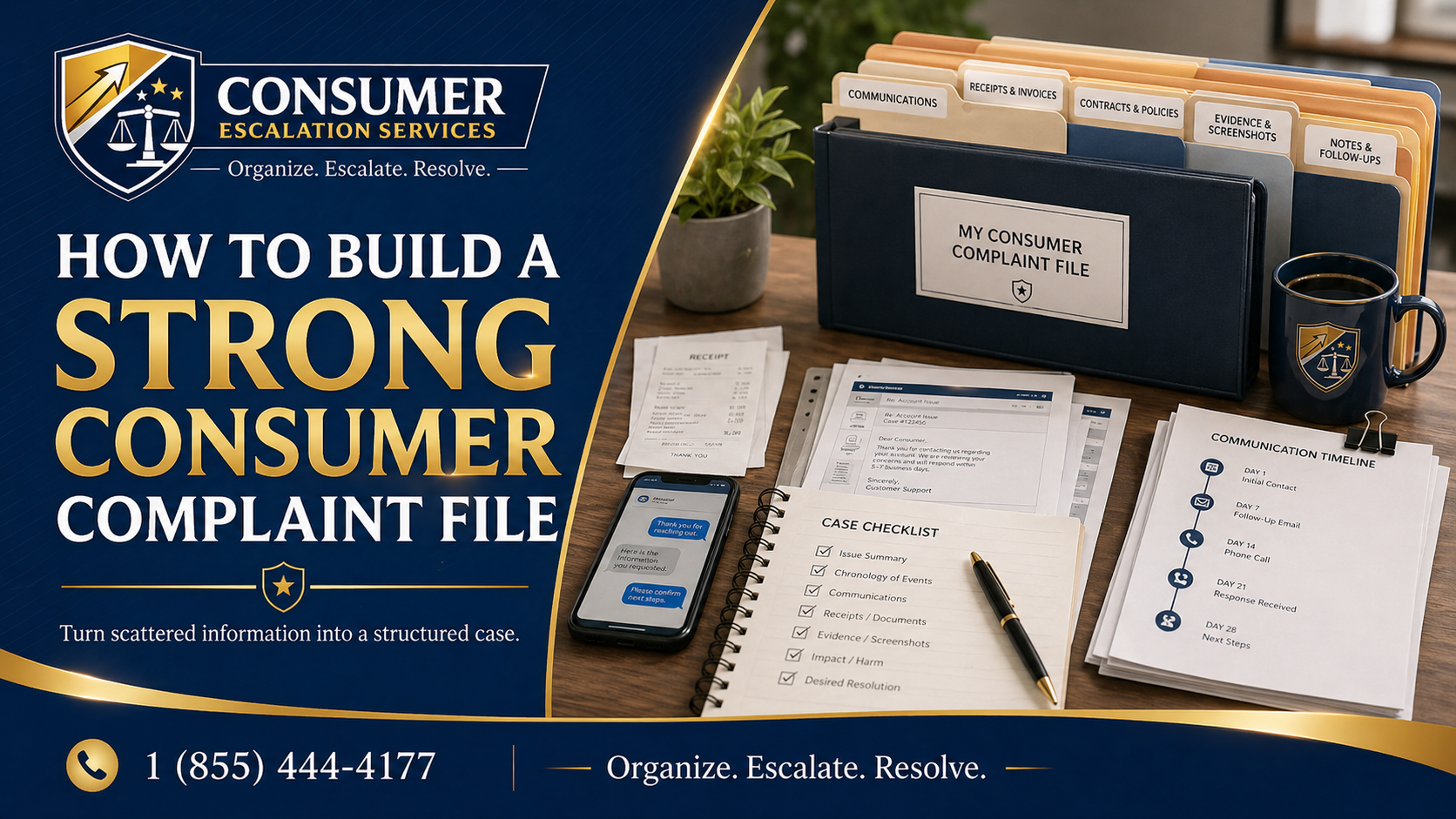
A strong complaint often follows this structure:
- Short summary
- Account or order details
- Timeline of events
- What went wrong
- What documents are attached
- What resolution is being requested
- Request for written response
This structure makes the complaint easier to read and easier to review.
Avoid Making Legal Claims Unless You Have Legal Guidance
Consumers may feel that a company acted unfairly or wrongfully. But it is important to be careful with legal language.
Consumer Escalation Services does not provide legal advice, does not interpret laws, and does not determine whether a company violated legal rights. If your complaint involves legal claims, contract interpretation, lawsuits, court deadlines, or legal remedies, you should consider speaking with a qualified attorney.
For most consumer complaints, the better first step is to organize the facts clearly and request a practical review or reasonable resolution.
Final Thought
A company can only review what it can understand.
A strong complaint is not about writing the longest message. It is about writing the clearest one.
Before sending your next complaint, make sure it includes:
- A short summary
- Important account details
- A timeline
- Relevant documents
- A clear requested resolution
- A professional tone
When your complaint is organized, factual, and easy to review, you give the company a better opportunity to understand the problem and respond to the actual issue.