
Most consumers know how to complain.
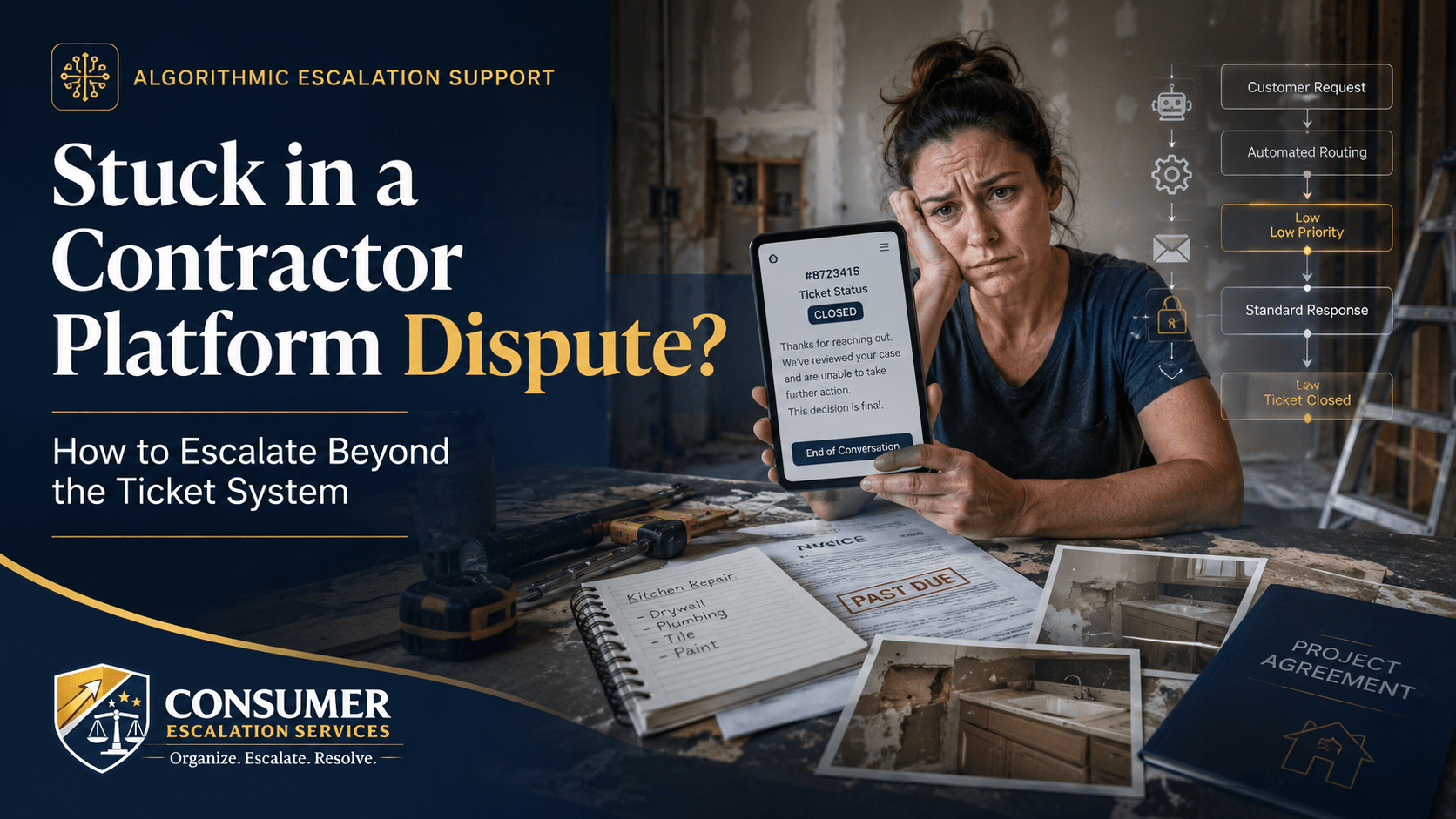
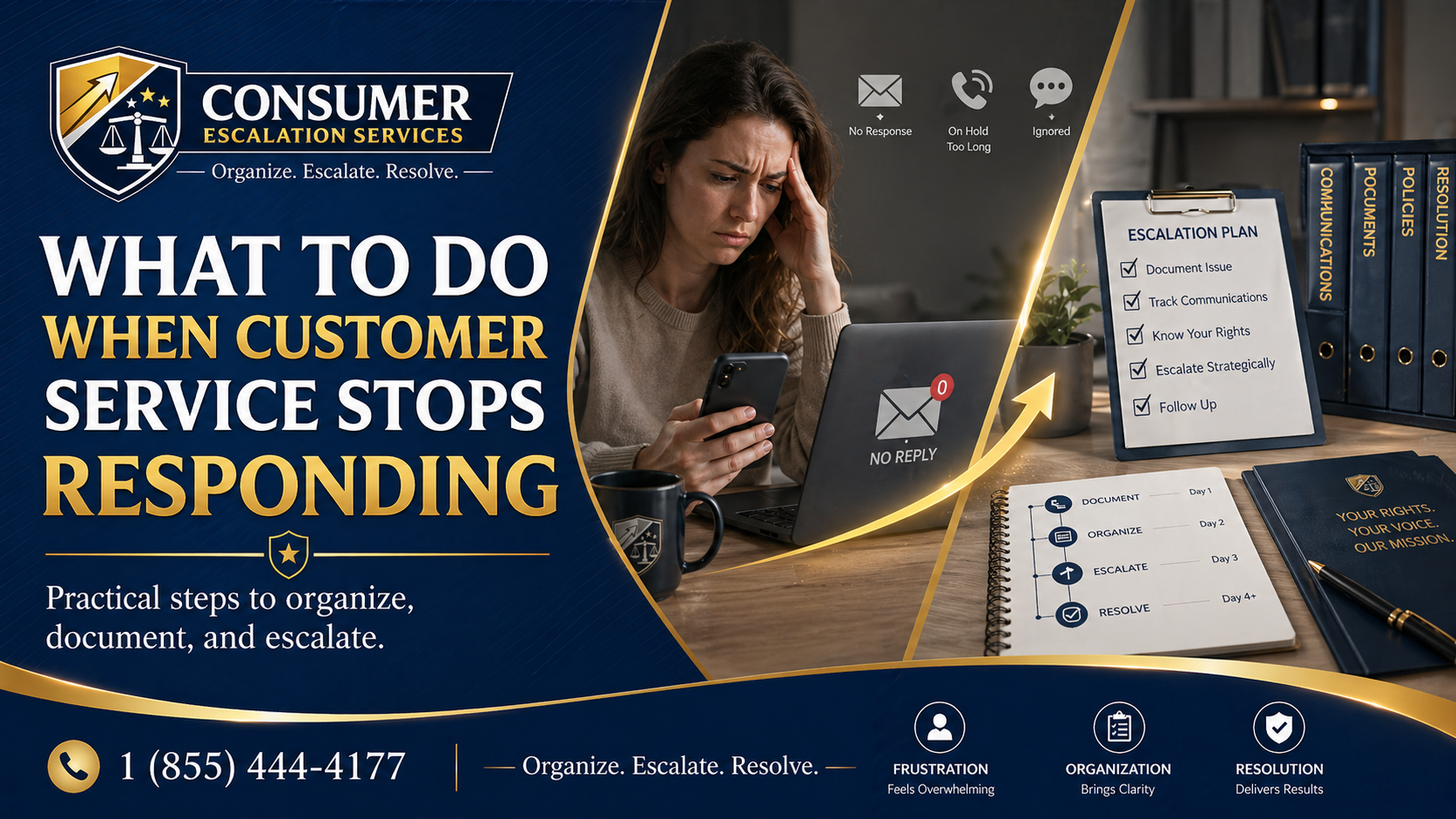
They call customer service. They explain what happened. They repeat the same story. They get frustrated. They ask for a supervisor. They send an angry email. They post online. They wait. Then, many times, nothing meaningful happens.
That is complaining.
Escalating is different.
Escalating means taking the problem out of the emotional back-and-forth and turning it into a structured, documented, professional request for review.
The difference matters.
A complaint may express frustration. An escalation organizes the issue so someone can actually review it.
Complaining Is Usually Emotional
When something goes wrong, emotion is normal.
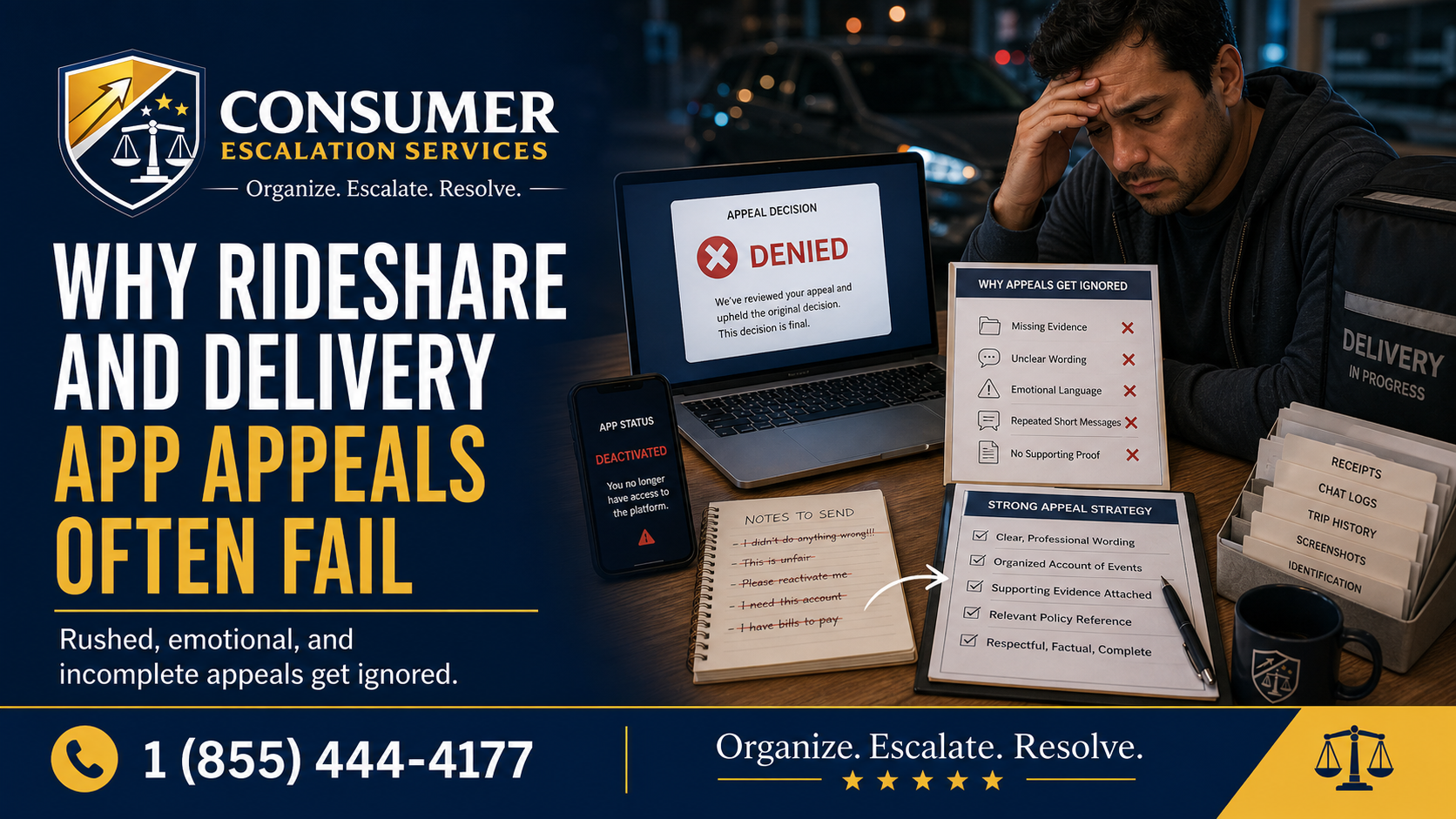
Maybe you were overcharged. Maybe your refund was denied. Maybe a company ignored your emails. Maybe your account was closed. Maybe a contractor stopped responding. Maybe your trip was ruined. Maybe a platform deactivated your account. Maybe you were told the case was closed without a clear explanation.
The frustration is real.
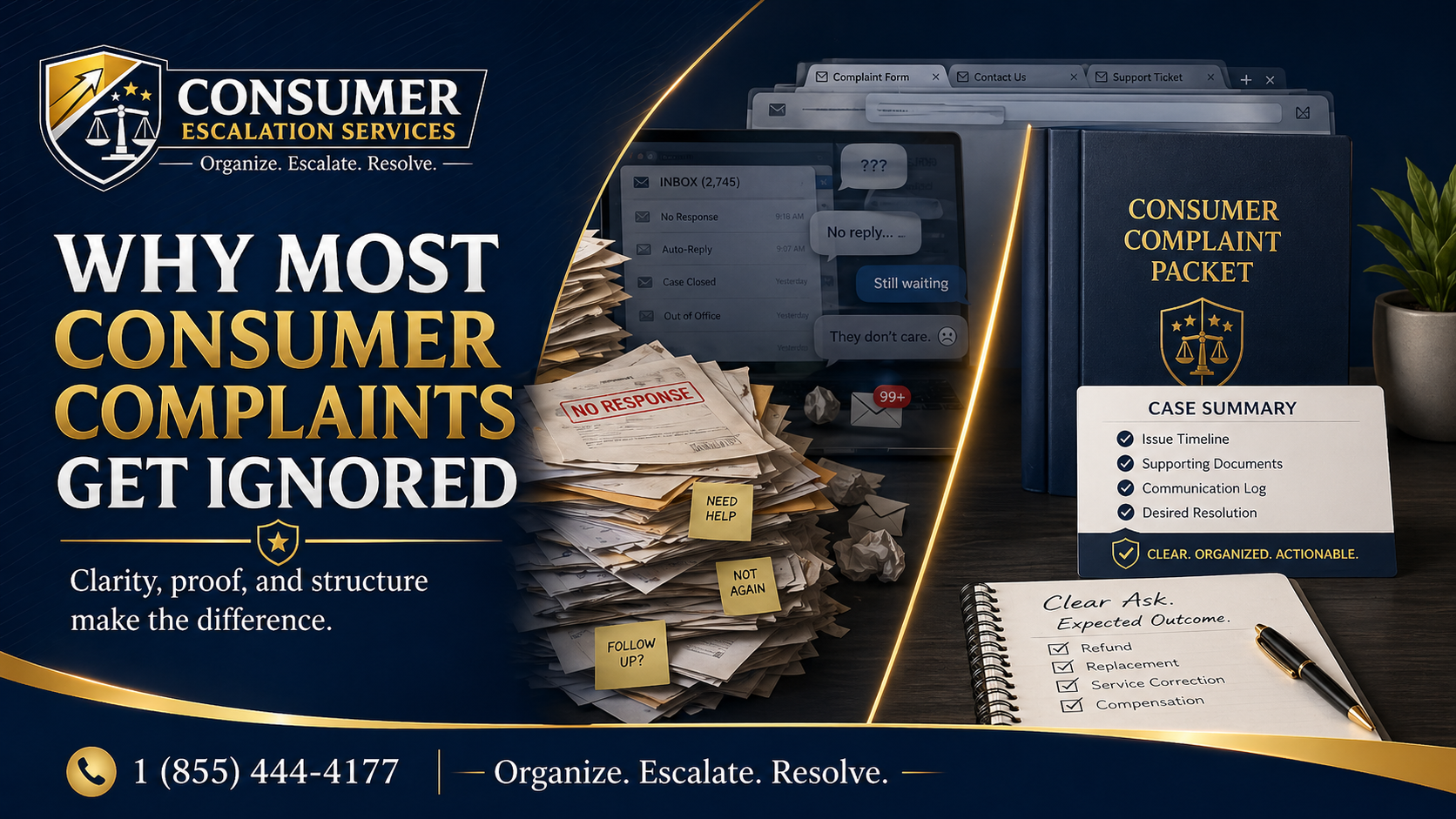
But emotional complaints often become harder for companies to process. Long messages, repeated accusations, missing dates, unclear facts, and scattered attachments can make it easier for the issue to be dismissed, delayed, or misunderstood.
That does not mean the consumer is wrong. It means the complaint may not be presented in a way that helps the reviewer understand the problem quickly.
Escalating Is Organized
Escalation is about structure.
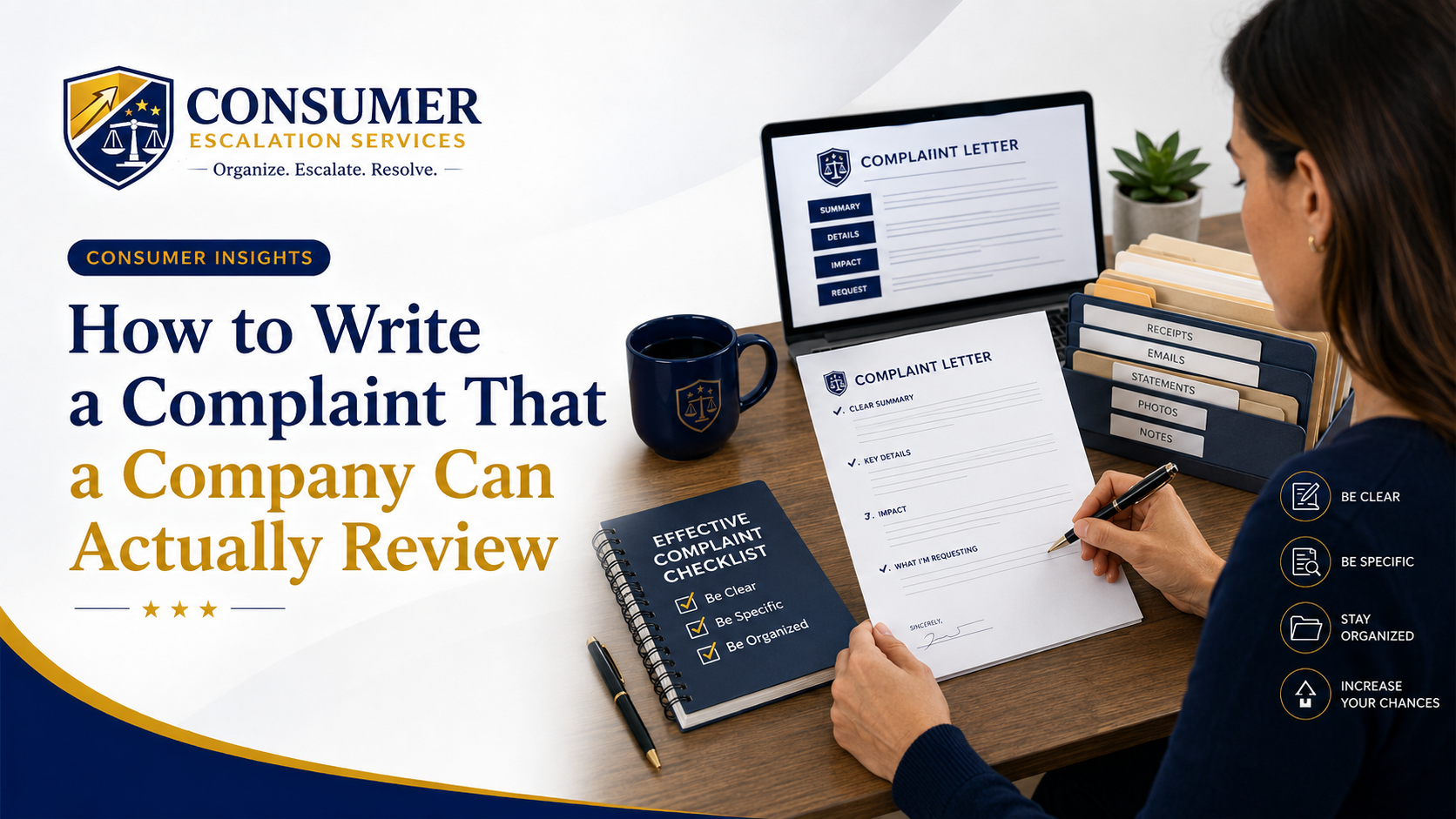
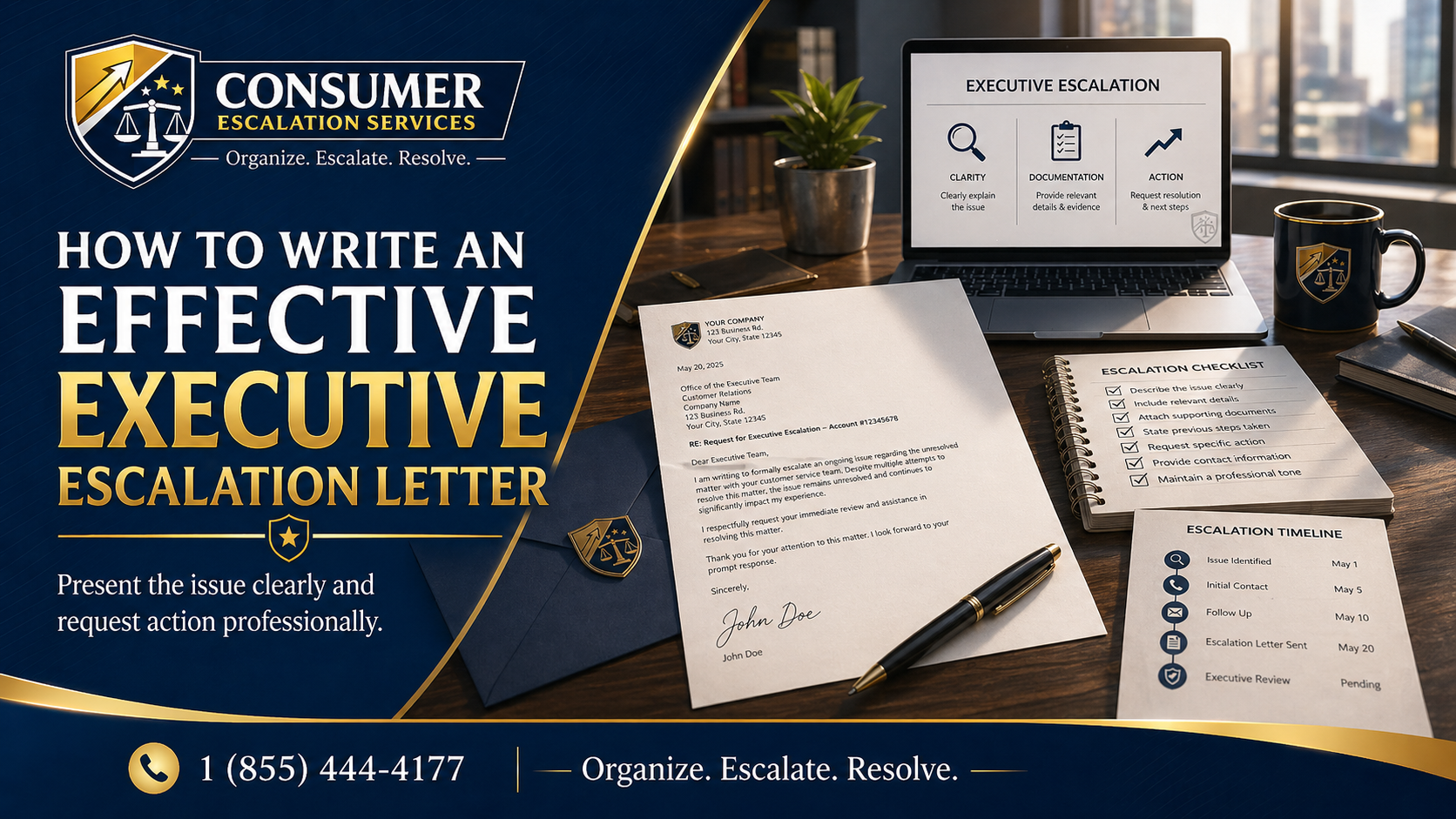
A strong escalation usually answers the questions a reviewer needs to understand:
- Who is the consumer?
- What happened?
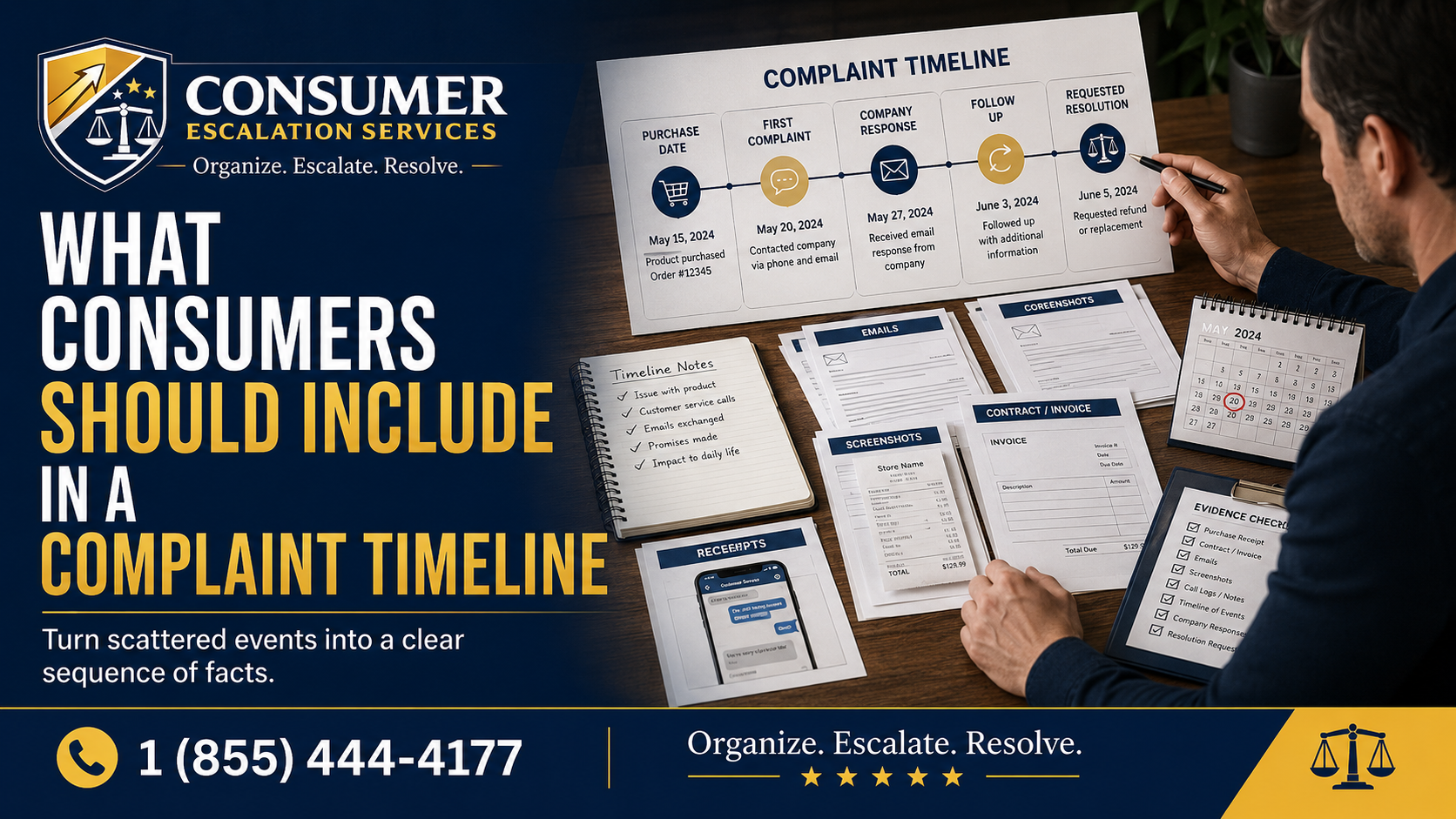
- When did it happen?
- What was paid, promised, denied, damaged, canceled, or disputed?
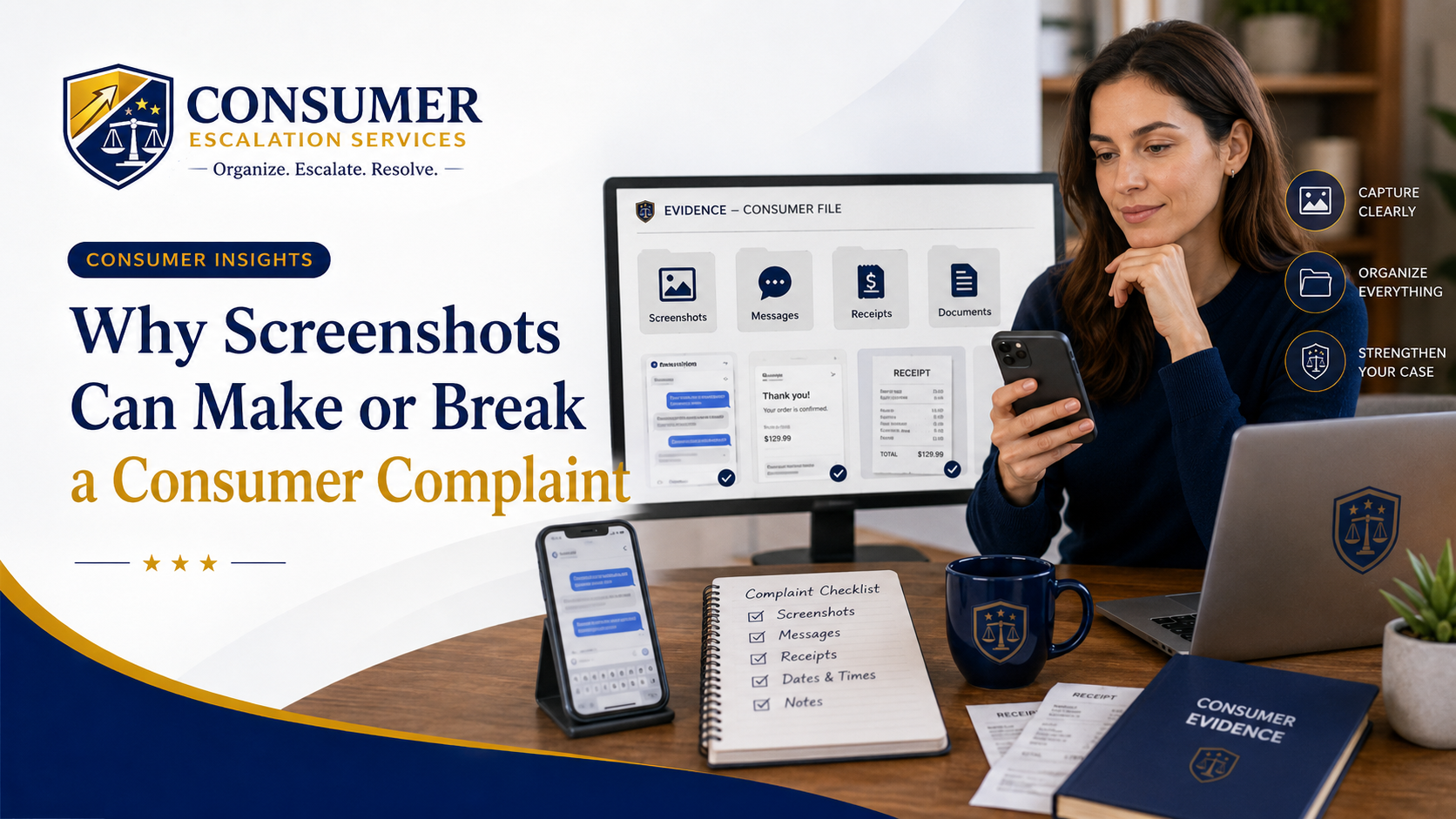
- What documents support the issue?
- What has already been attempted?
- What response did the company provide?
- What resolution is being requested?
When those pieces are organized, the complaint becomes easier to review.
Instead of sounding like anger, it sounds like a file.
That is the shift.
Complaining Often Repeats the Same Story
One of the biggest signs that a consumer is stuck is repetition.
They keep saying the same thing to different representatives.
- They call Monday and explain the issue.
- They email Tuesday and explain it again.
- They chat Wednesday and repeat the same story.
- They call Friday and start over with a new person.
Each time, the consumer feels like no one is listening.
The problem is that the information may not be getting organized into one clear complaint record. Customer service notes can be incomplete, inaccurate, or disconnected between departments.
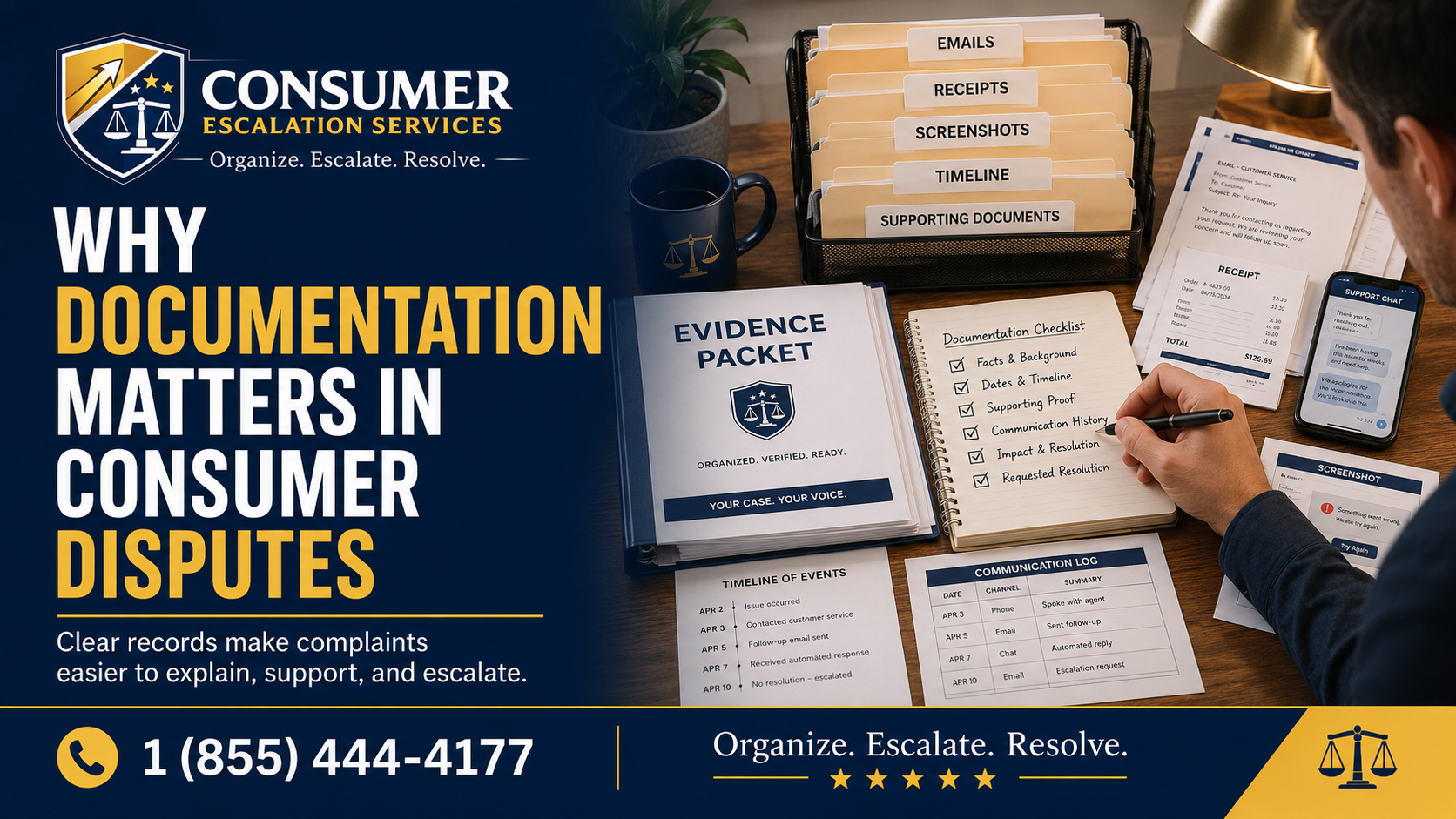
Escalation helps by putting the facts into one written package so the consumer is not depending entirely on phone conversations.
Escalating Focuses on Evidence
Complaints often say what happened.
Escalations show what supports what happened.
That is a major difference.
For example, instead of saying:
You promised me a refund and never gave it to me.
A stronger escalation may say:
On April 3, customer support confirmed by email that a refund would be processed within 7 to 10 business days. As of April 22, no refund has appeared on my account. A copy of the April 3 email and payment record is attached.
That second version gives the reviewer something specific to examine.
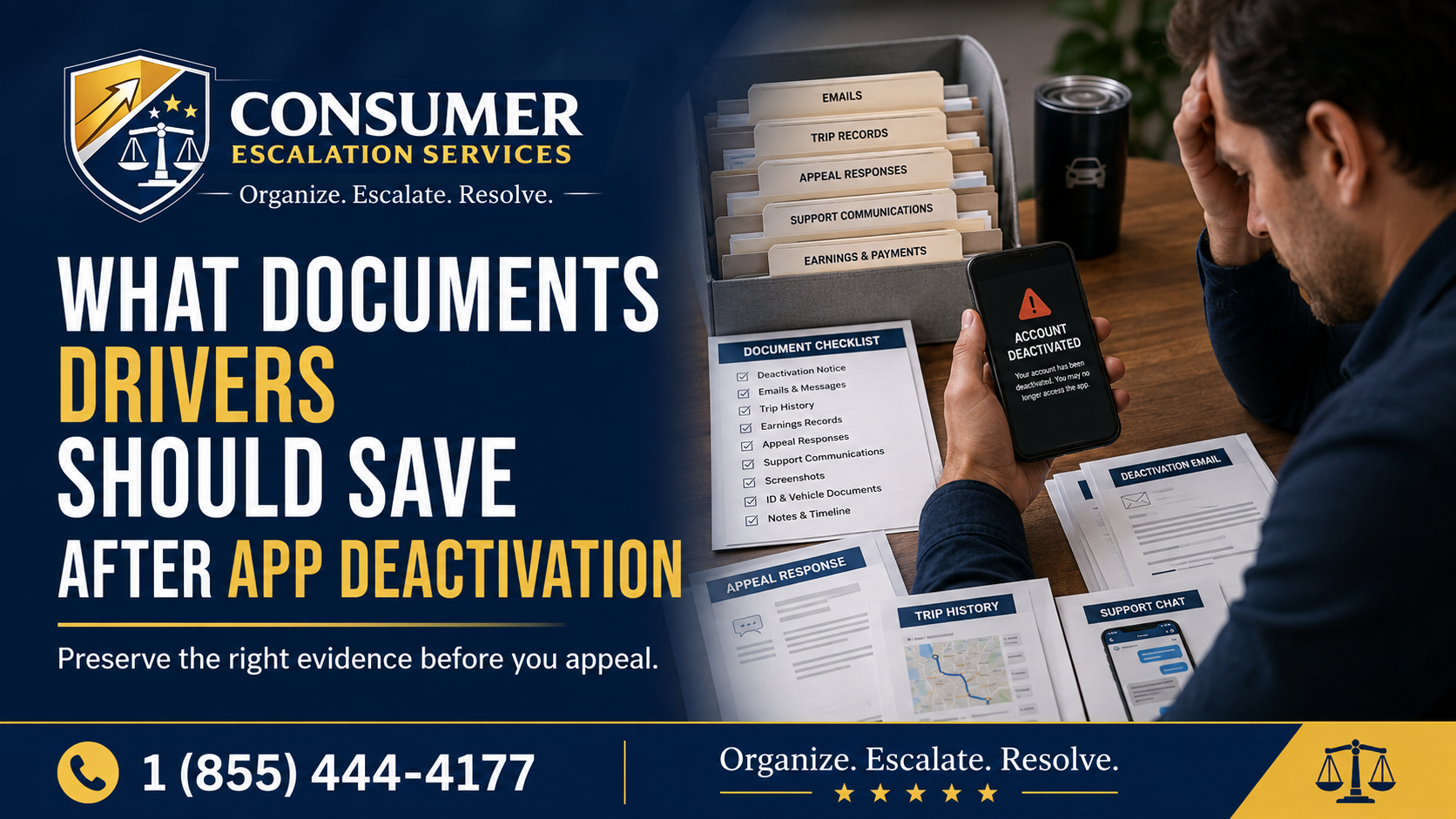
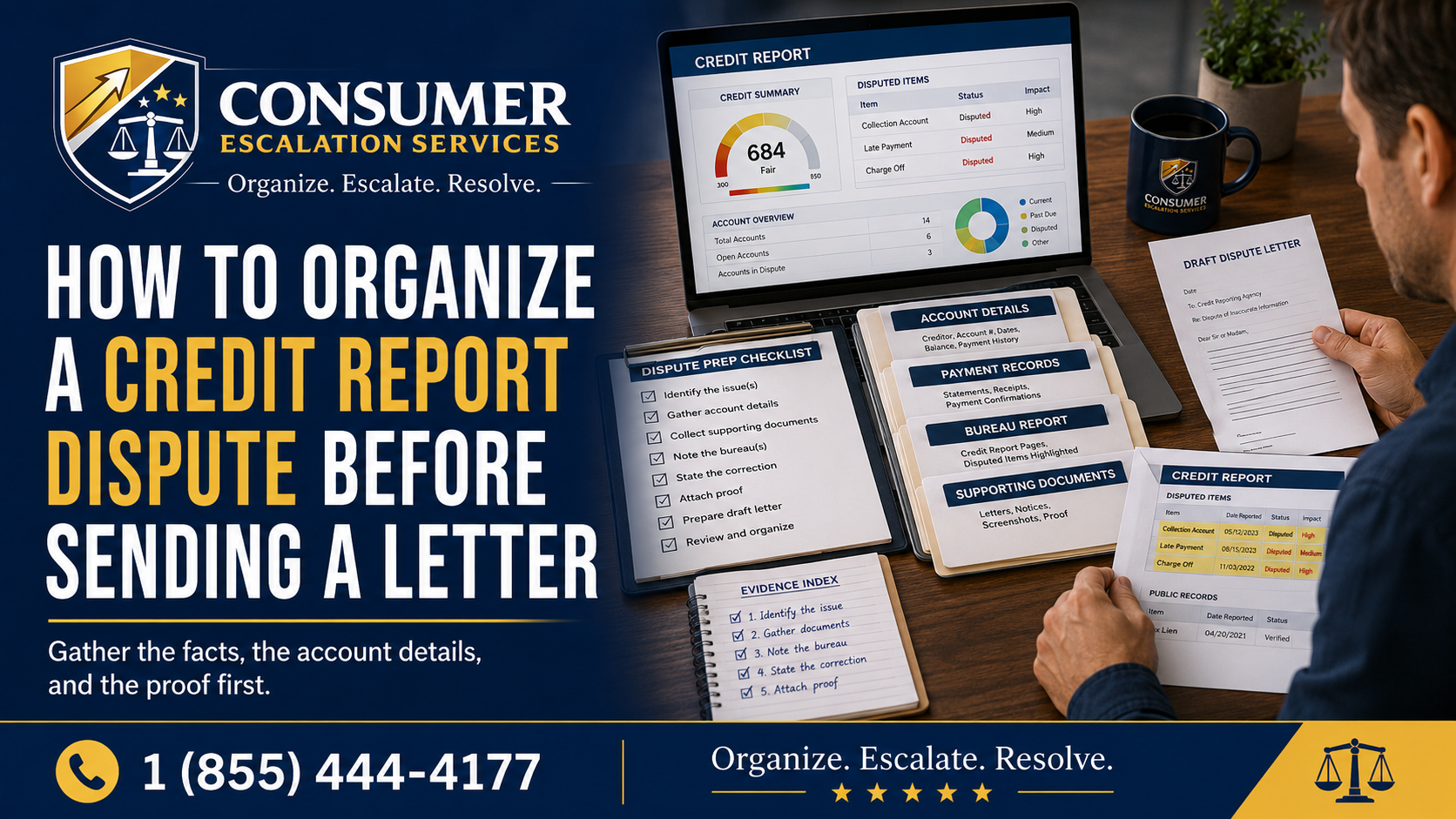
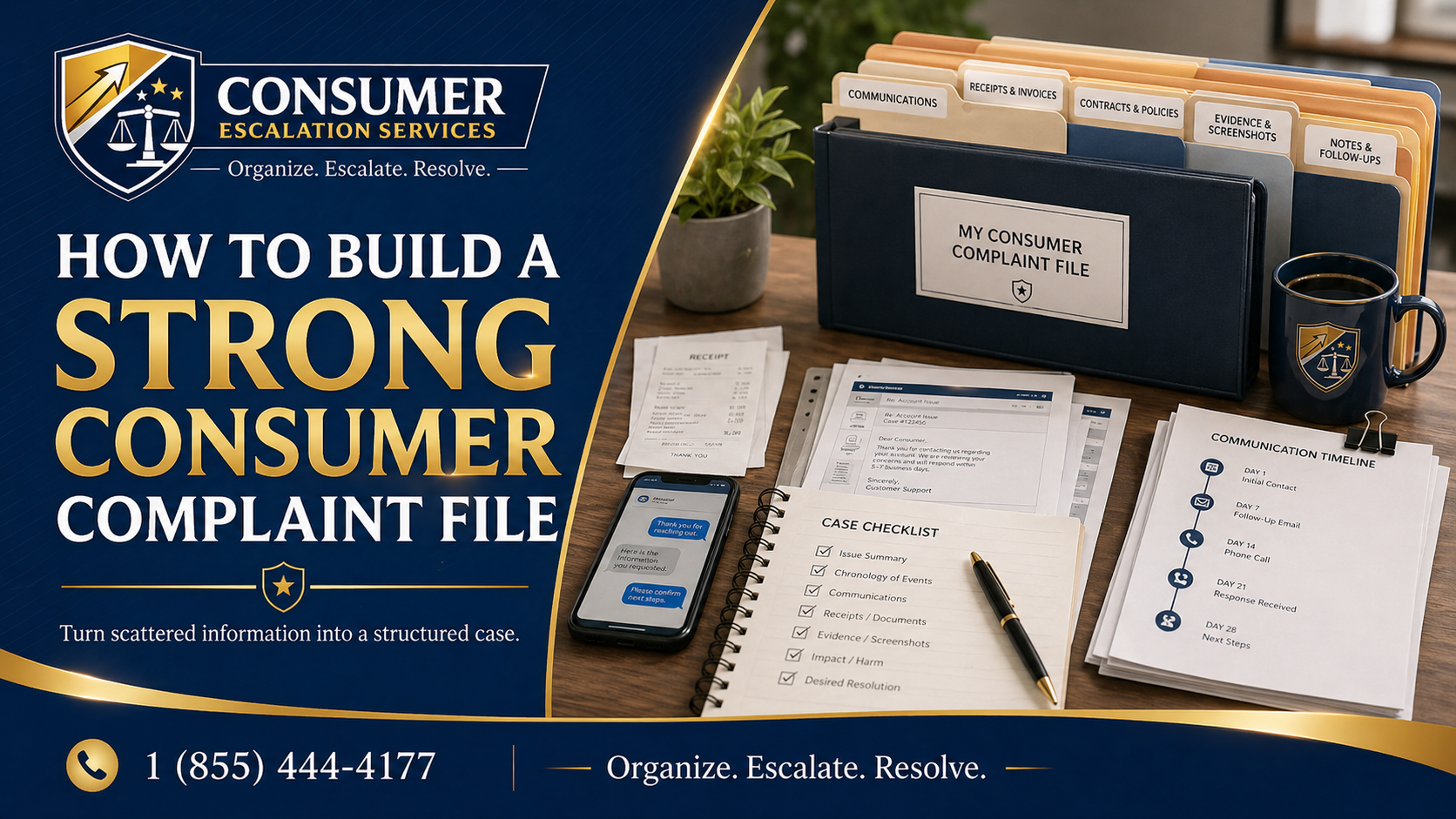
Evidence may include receipts, screenshots, contracts, emails, chat logs, photos, billing records, account notices, cancellation confirmations, or claim documents.
Escalating Uses a Professional Tone
A professional tone does not mean being weak.
It means being clear, calm, and focused.
Companies are more likely to review a complaint seriously when the consumer avoids insults, threats, sarcasm, and emotional exaggeration.
A professional escalation may say:
I am requesting a review of this issue because the company's response does not appear to address the attached documents.
That is stronger than:
You people are ignoring me and scamming me.
Even when the consumer is angry, the escalation should stay focused on facts, documents, dates, and requested resolution.
Complaining Is Often Open-Ended
Many complaints do not clearly state what the consumer wants.
They say:
- "This is unacceptable."
- "I'm upset."
- "You need to fix this."
- "This is wrong."
Those statements may be understandable, but they do not always tell the company what resolution is being requested.
An escalation should be specific.
The requested resolution may include:
- Refund review
- Billing correction
- Repair or replacement review
- Claim reconsideration
- Written explanation
- Account review
- Release of eligible funds
- Service credit review
- Cancellation confirmation
- Reimbursement review
- Correction of records
- Another reasonable resolution
The goal is to make the request clear enough that the company can respond directly.
Escalation Does Not Guarantee a Result
Escalation is not magic.
It does not guarantee a refund, payment, reinstatement, repair, replacement, claim approval, account reopening, or any other outcome.
But escalation can improve the way the issue is presented.
It can help the consumer move from scattered frustration to an organized complaint file.
That is often the difference between an issue that gets ignored and an issue that gets reviewed more carefully.
Final Thought
Complaining is emotional.
Escalating is strategic.
Complaining says, "I'm upset."
Escalating says, "Here are the facts, here is the timeline, here are the documents, here is what I already tried, and here is the resolution I am requesting."
That shift matters.
When consumers learn the difference between complaining and escalating, they become better prepared, better organized, and better positioned to present their issue clearly.