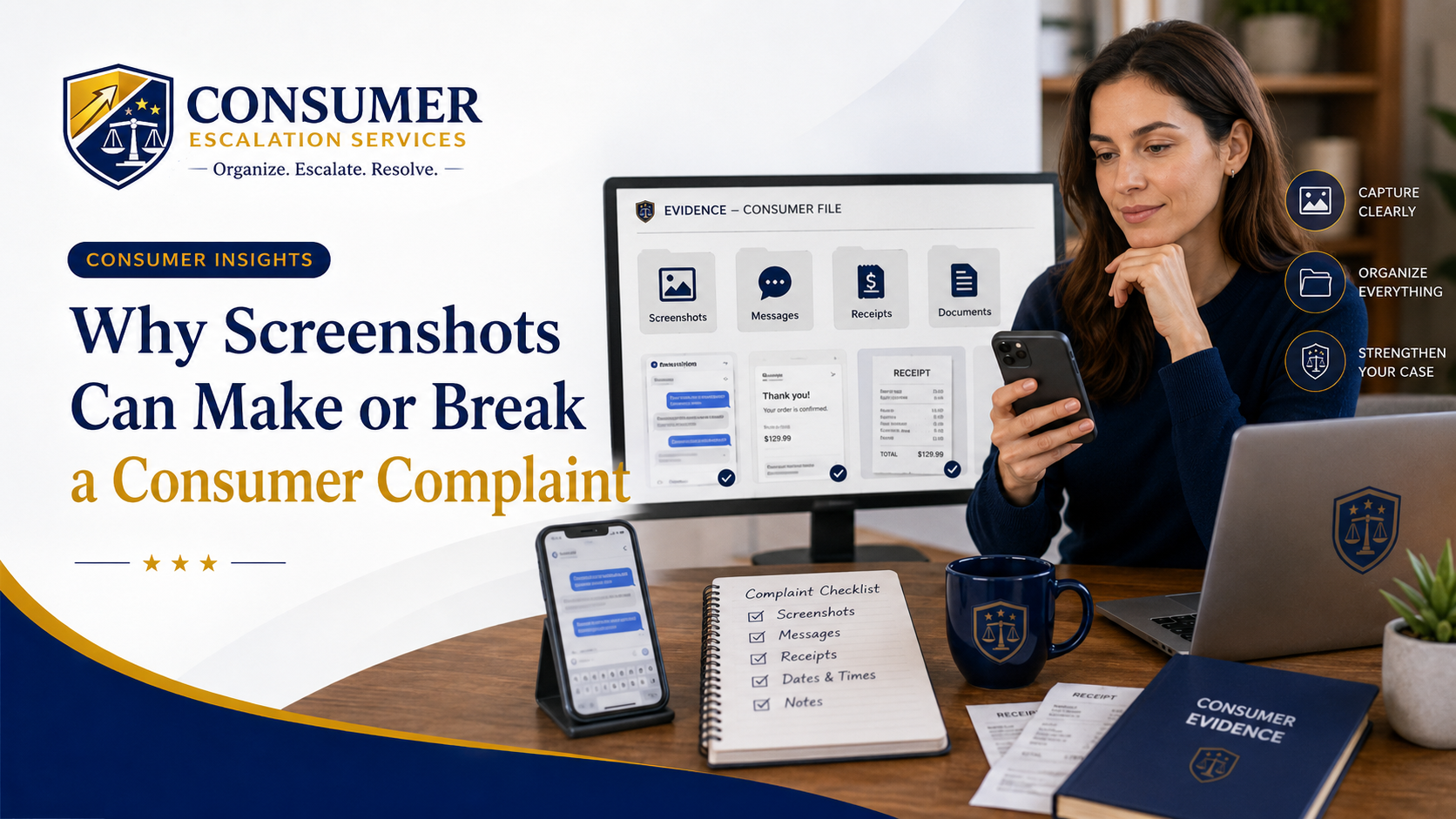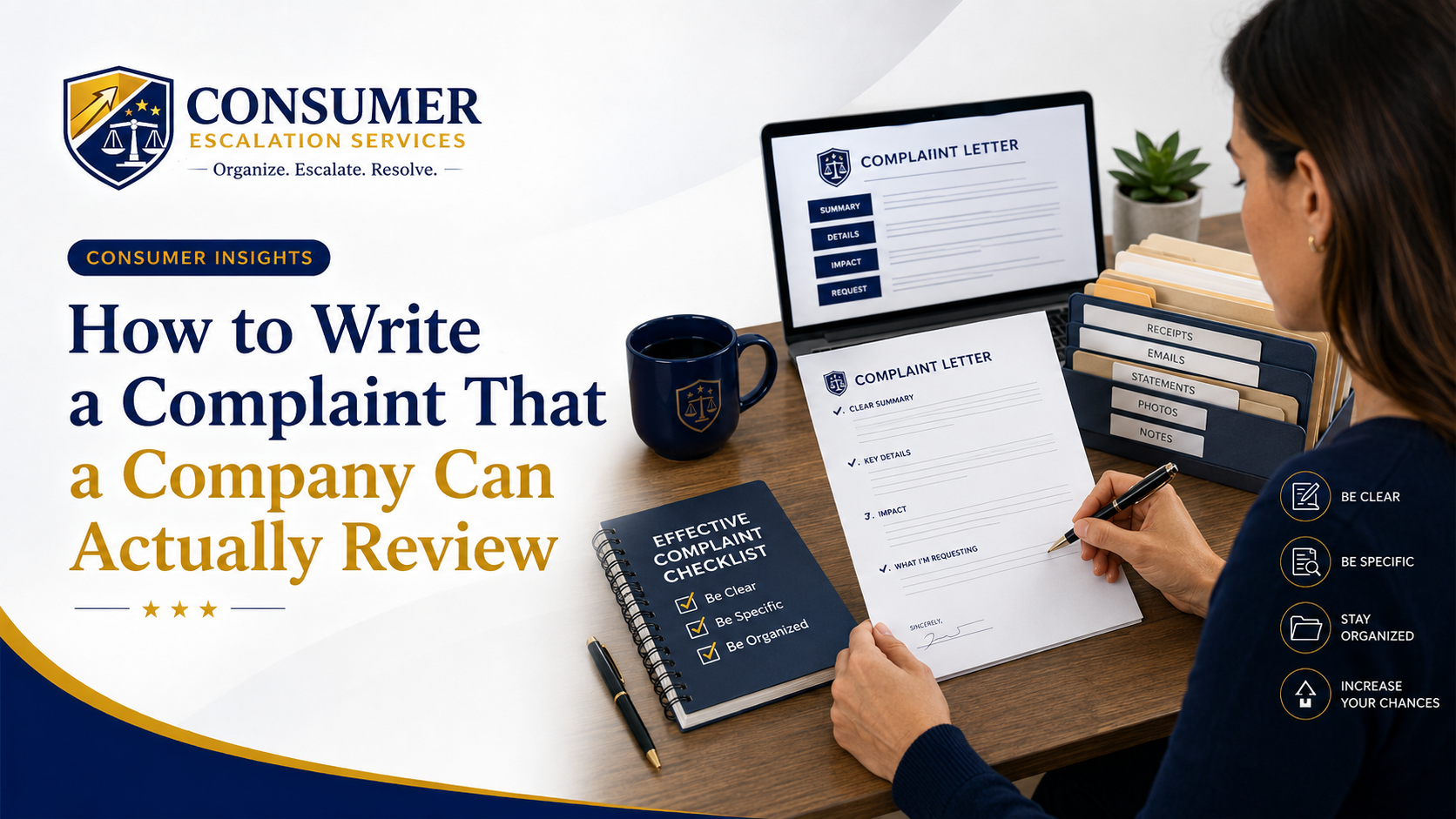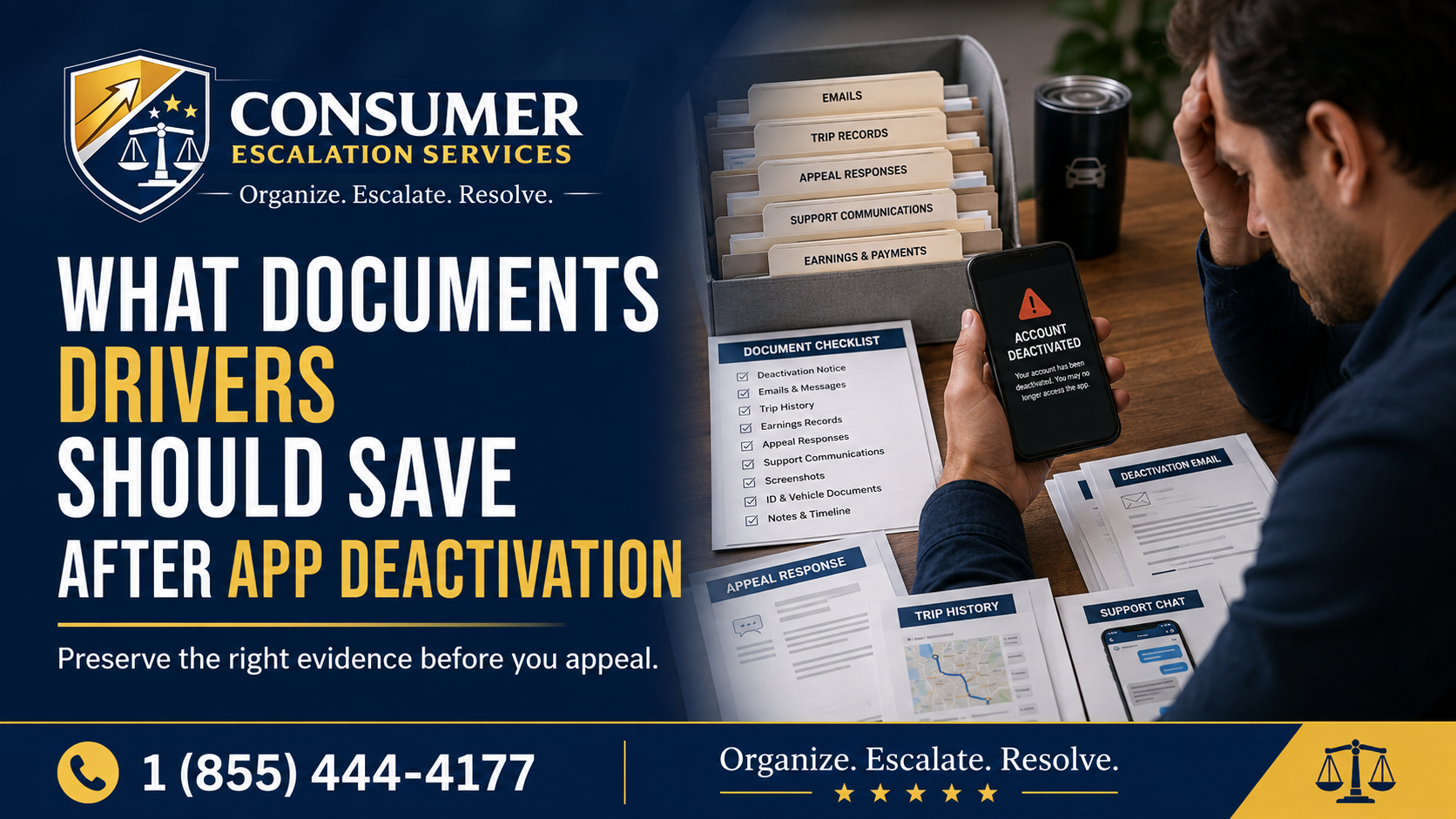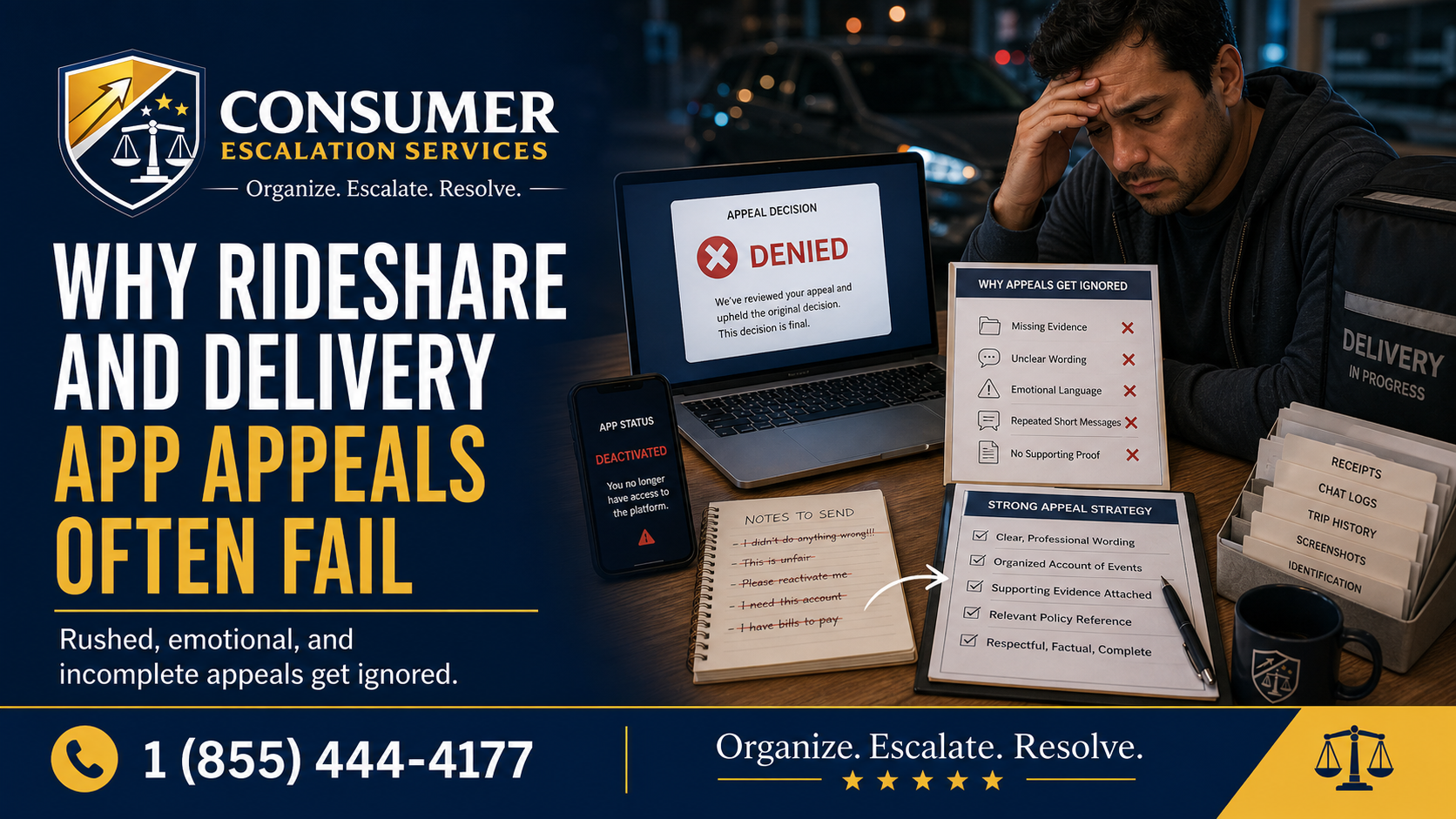

When consumers are upset, they often want to send everything they have. Screenshots, receipts, emails, photos, chat messages, call logs, contracts, notes, and long explanations all get bundled together.
The intention is understandable. The consumer wants to prove they are right.
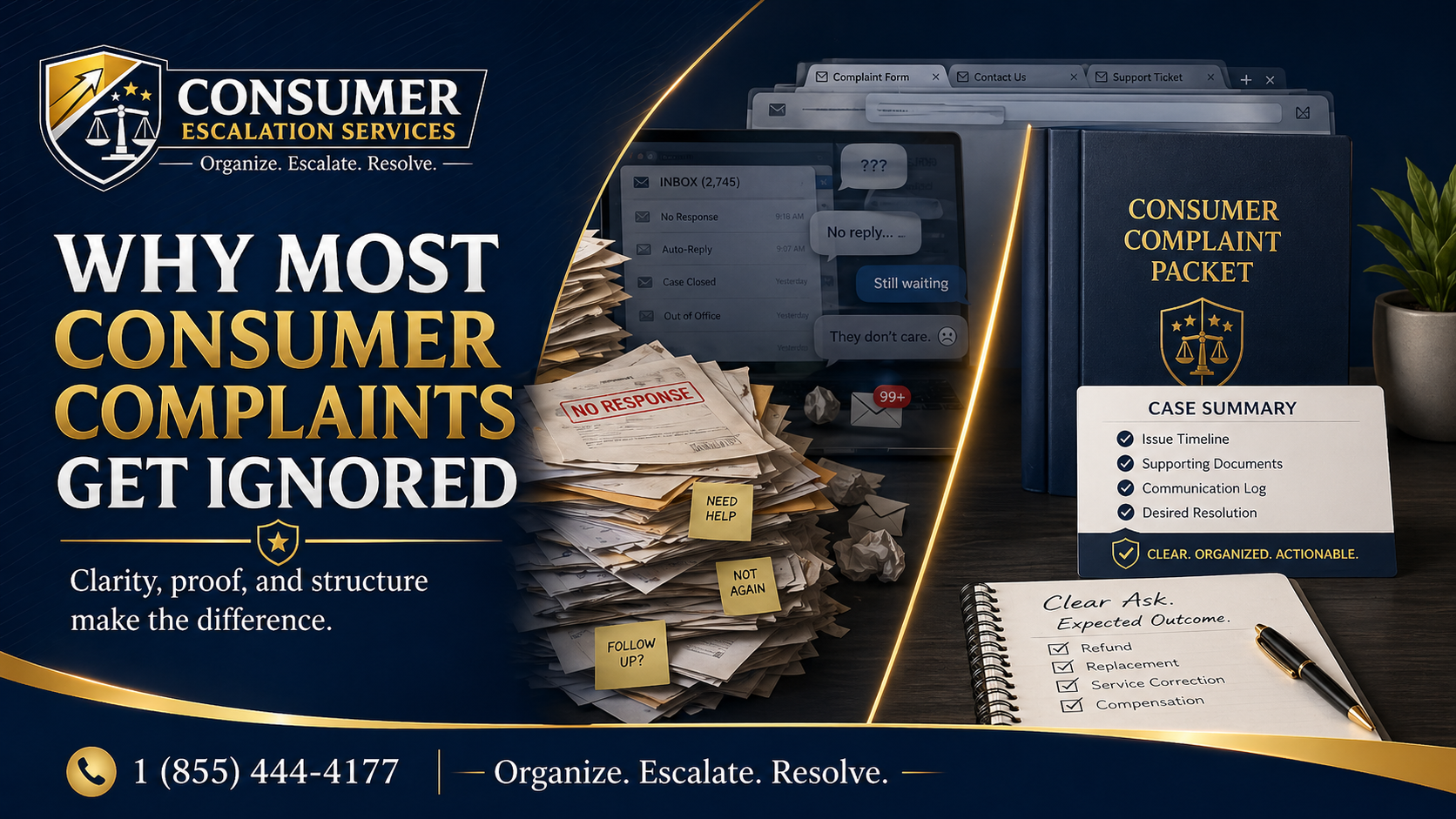
But too much evidence, if it is not organized, can actually hurt the complaint.
A company representative, escalation department, executive office, or reviewer may not have time to sort through dozens of unrelated documents. If the important proof is buried inside a messy file dump, the strongest parts of the complaint may be missed.
Start With the Core Documents
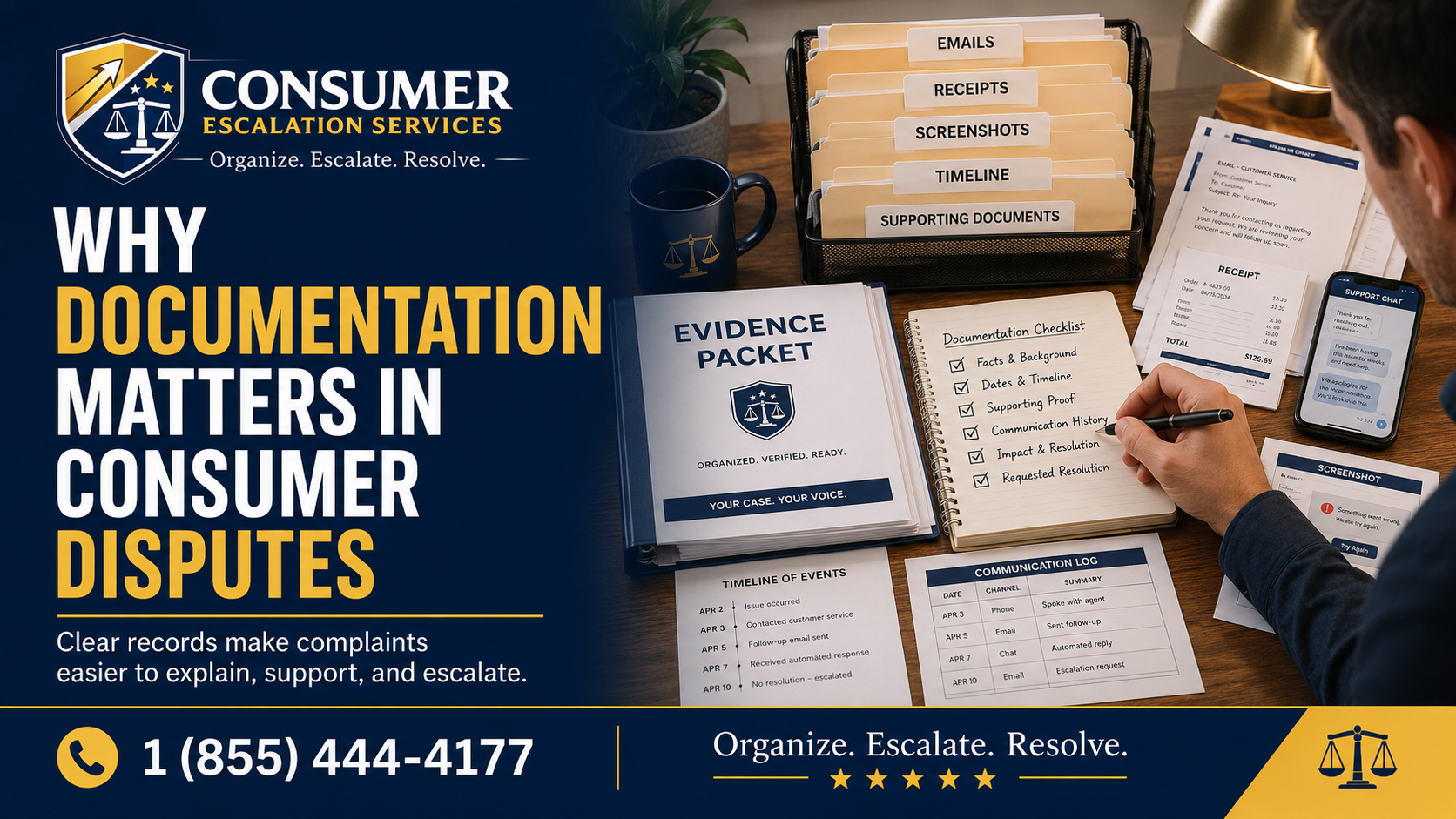
A better approach is to organize evidence by relevance.
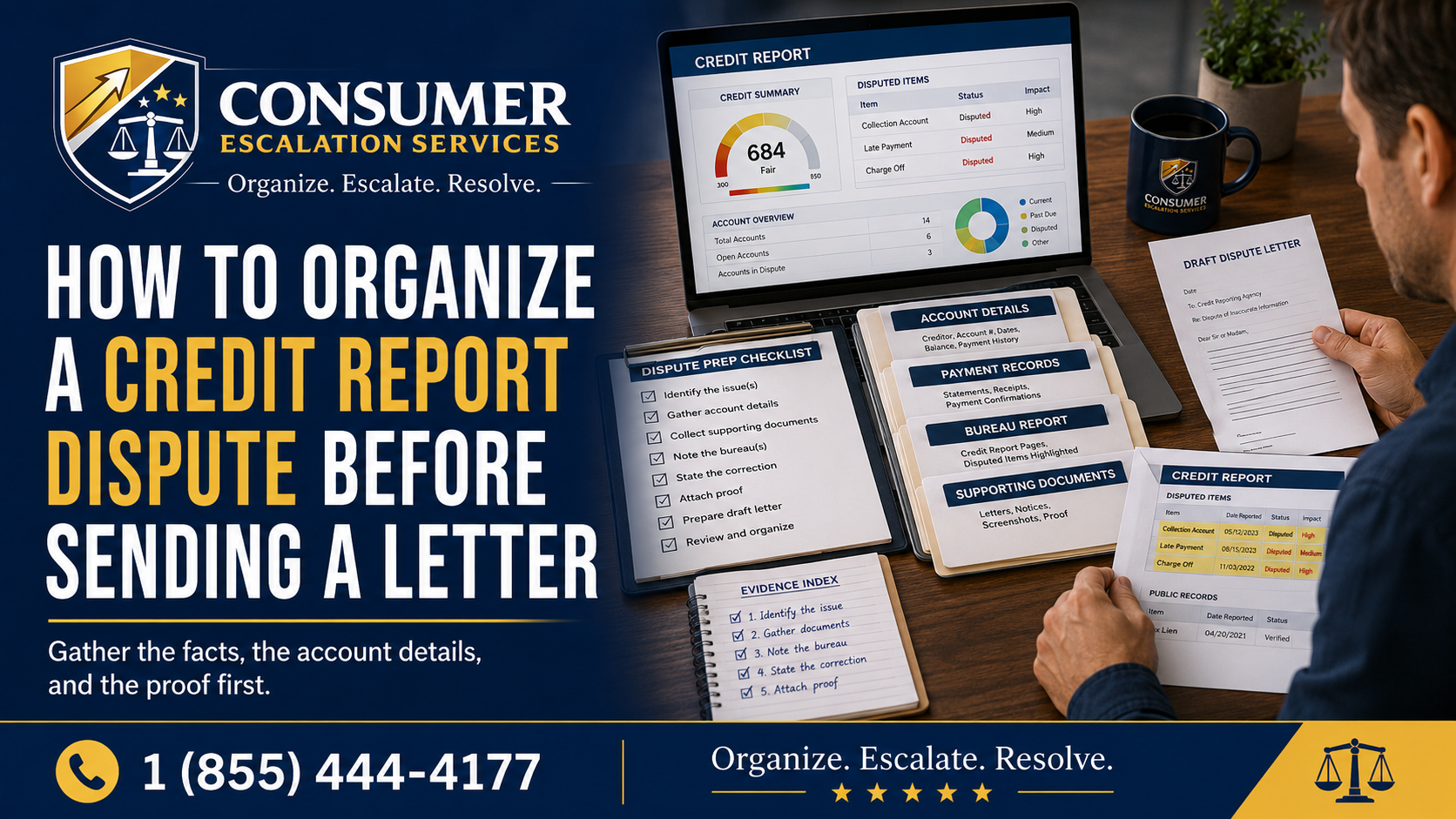
Start with the core documents first. These may include:
- Purchase receipt
- Contract
- Invoice
- Service agreement
- Cancellation confirmation
- Written promise
- Repair order
- Warranty document
- Refund denial
- Account notice
Organize Communication Records Next
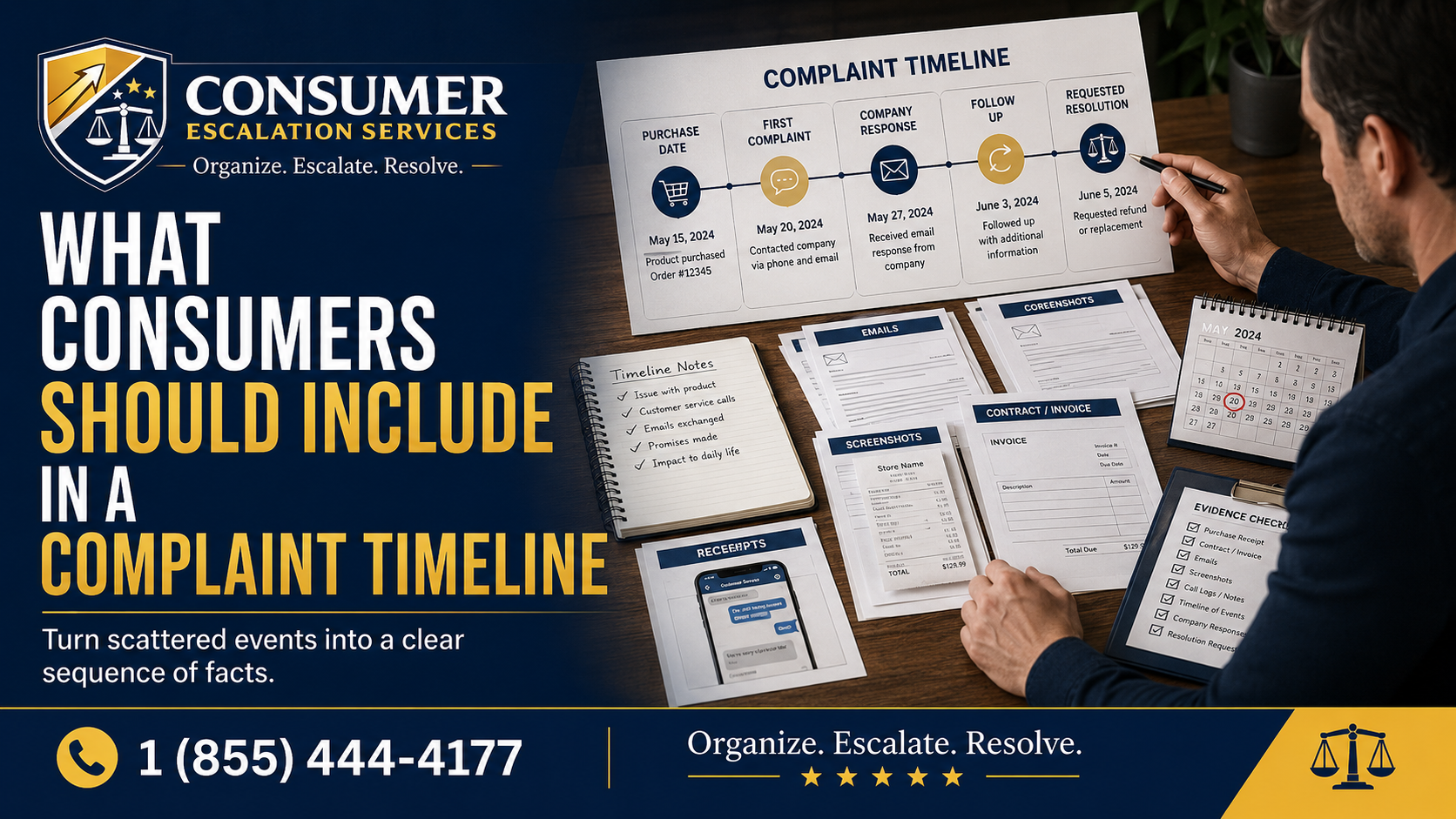
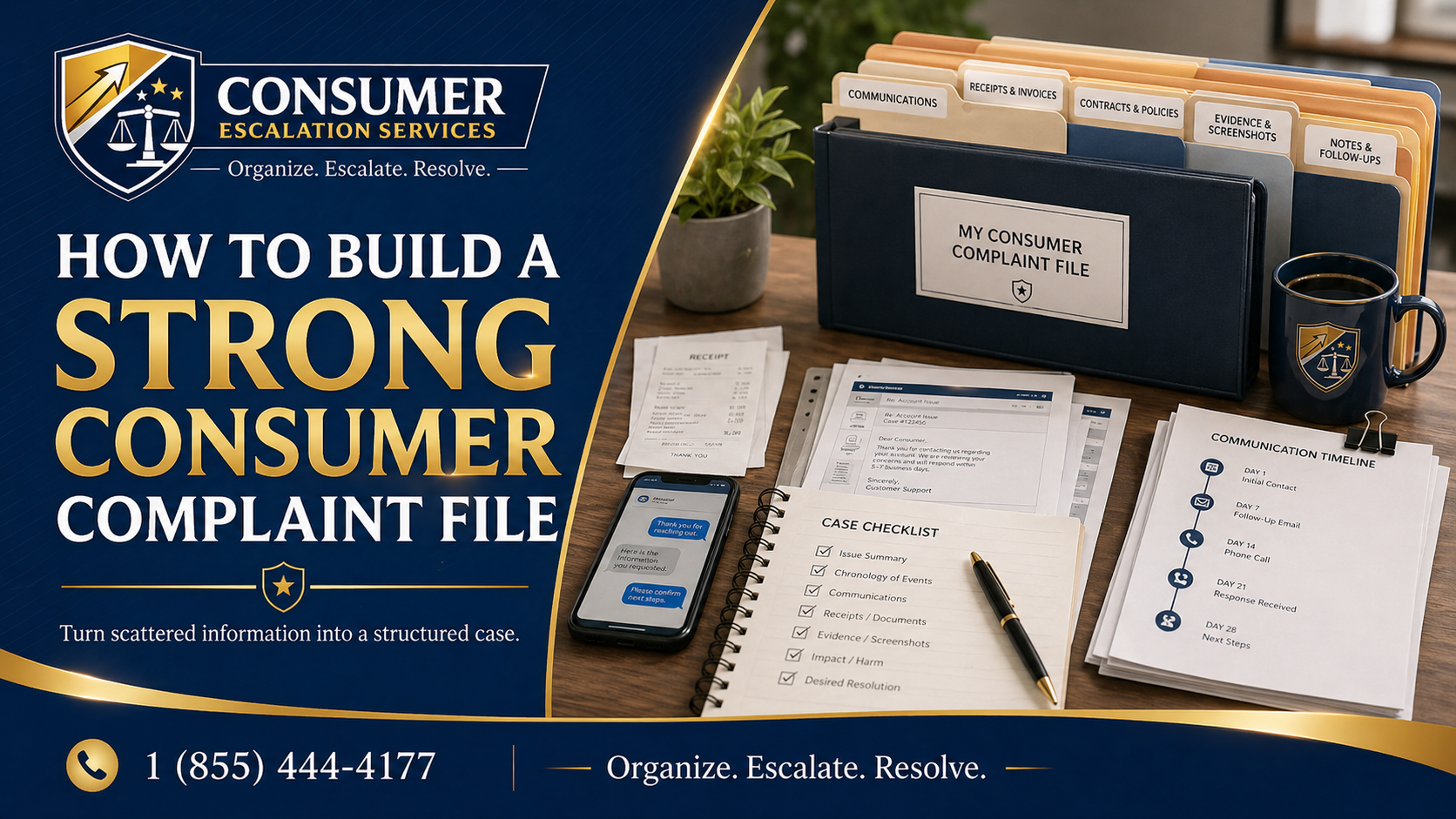
Next, organize communication records. Include emails, text messages, chat transcripts, support tickets, case numbers, and screenshots that directly support your timeline.
Then separate supporting evidence from background material. Supporting evidence helps prove the issue. Background material may explain the situation, but it should not overwhelm the complaint.
The Strongest Packages Are Easy to Follow
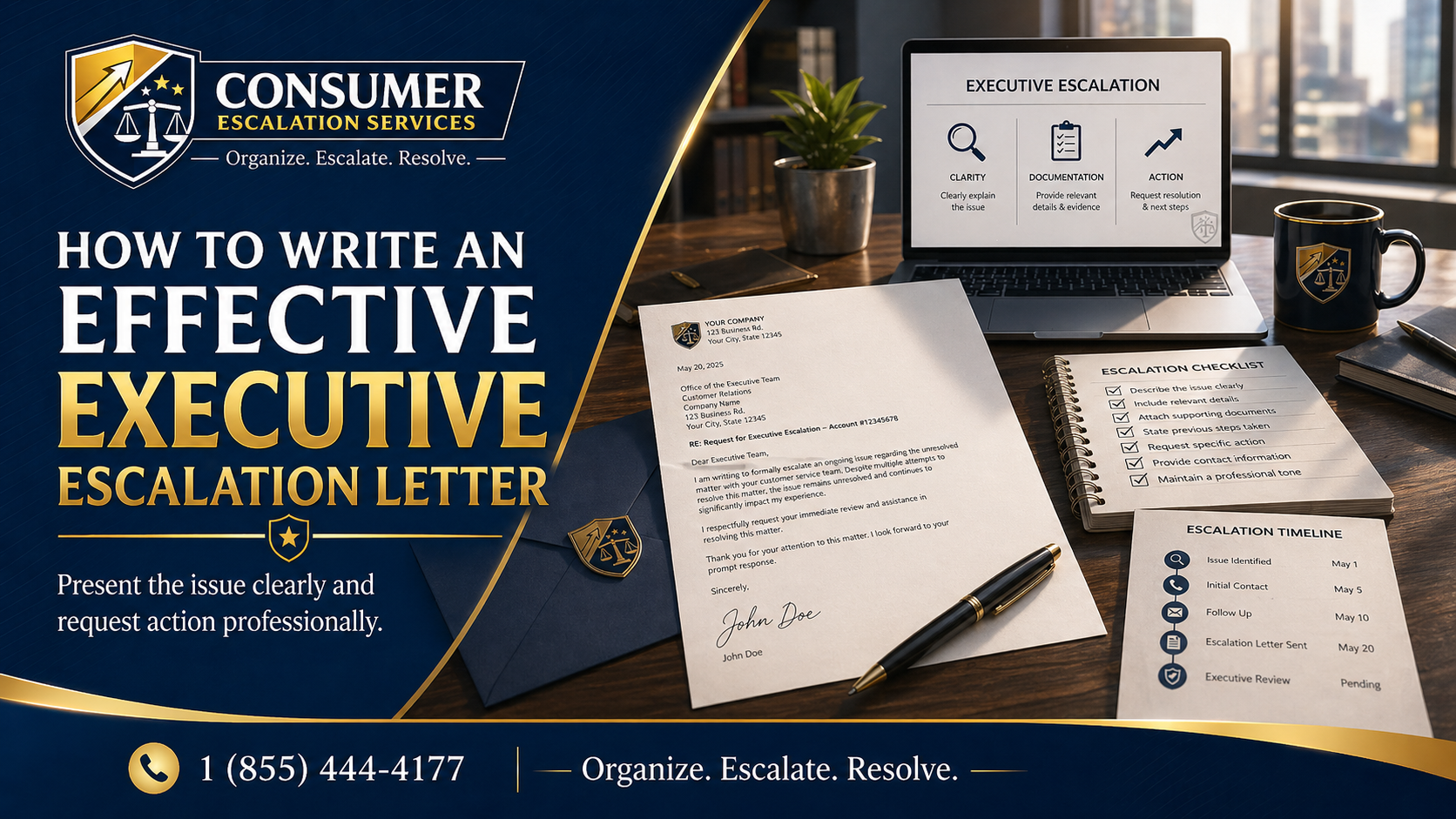
The strongest complaint packages are usually easy to follow. They show what happened, when it happened, who was contacted, what was promised, what went wrong, and what resolution is being requested.
The goal is not to send the most evidence. The goal is to send the clearest evidence.
Ask Yourself Before You Attach
Before submitting a complaint, ask yourself:
- Does this document help prove the issue?
- Does it support the timeline?
- Does it show the company's response or lack of response?
- Does it help explain the resolution being requested?
If the answer is no, it may belong in a backup file instead of the main complaint package.
Final Thought
Consumer Escalation Services helps consumers organize complaint evidence, timelines, and supporting materials in a professional format. CES is not a law firm, does not provide legal advice, and does not guarantee any outcome.