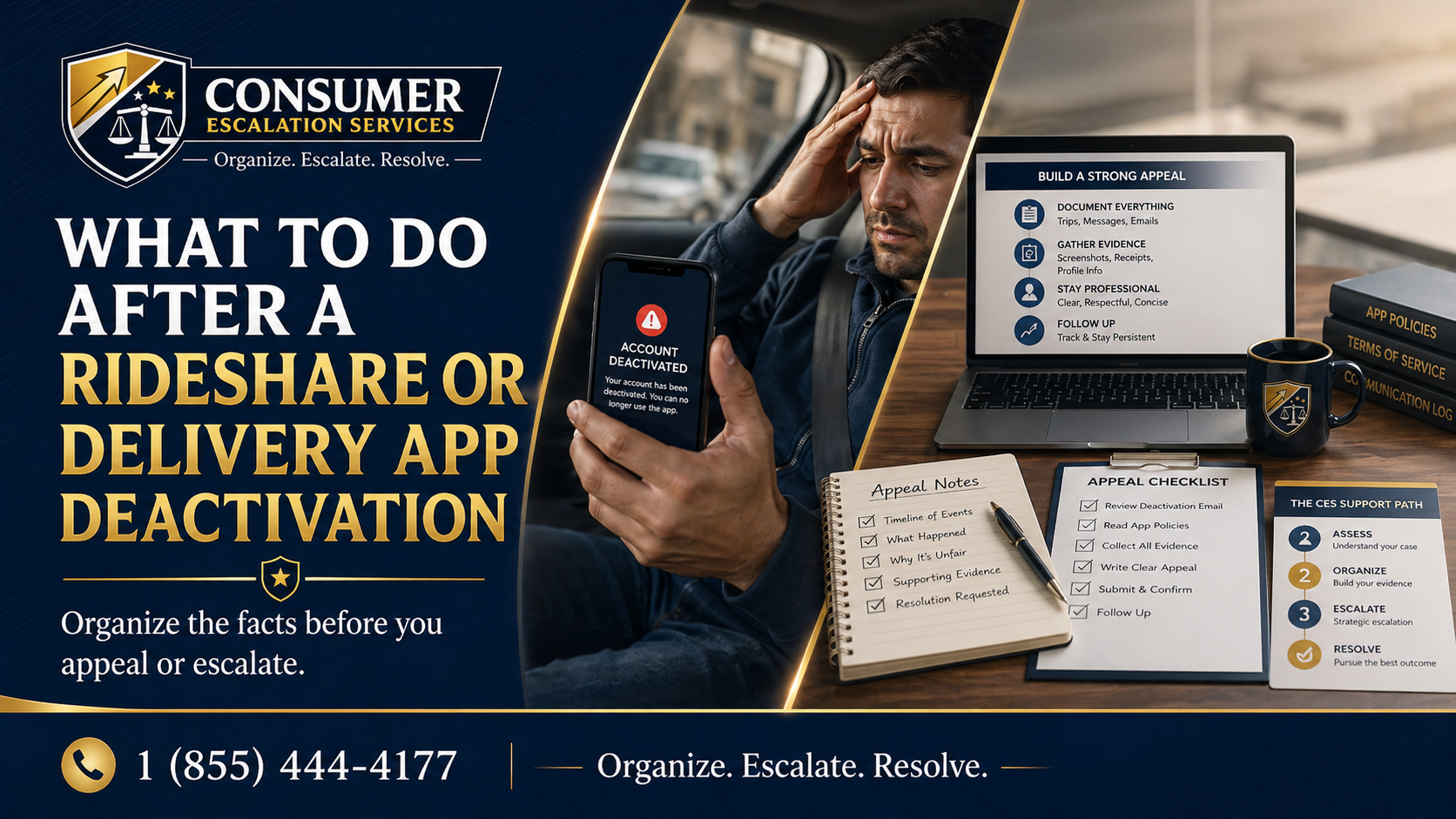

If your Uber, Lyft, DoorDash, Instacart, Grubhub, Spark, Amazon Flex, or similar driver account was just deactivated, you may have received a short message with no real explanation. Phrases like "violation of community guidelines," "account under review," or "we are unable to continue with your account" are common. They feel personal, but they are almost always the output of an automated review.
Most gig platforms now combine algorithmic risk scoring, automated complaint triage, and policy filters to decide who gets deactivated. A real person may never look at your account before the decision is made. Understanding how that pipeline works is the first step to challenging it.
Why Automated or AI Systems Deactivate Drivers
App-based platforms process millions of trips per day. Human review does not scale, so they rely on rules and scores. Common triggers behind an algorithmic deactivation include:
- A single customer complaint flagged as "safety" — even when the facts are minor or untrue.
- Cancellation rate, acceptance rate, or completion-rate thresholds.
- A background check rerun that flags a record the platform missed at onboarding.
- Identity verification mismatches (photo, ID, address, device, or vehicle data).
- Speeding, hard-braking, or GPS anomalies in dashcam or telematics data.
- Rating averages falling below the platform threshold over a rolling window.
- Suspected fraud signals — multi-accounting, location spoofing, or referral abuse flags.
- A pattern of refund or adjustment requests on delivered orders.
Drivers usually do not learn which specific factor triggered the deactivation. The platform only confirms a "violation," not the underlying signal. That is by design — explaining the rule would make it easier to game.
Common Problems Drivers See
Patterns we see across rideshare and delivery deactivations:
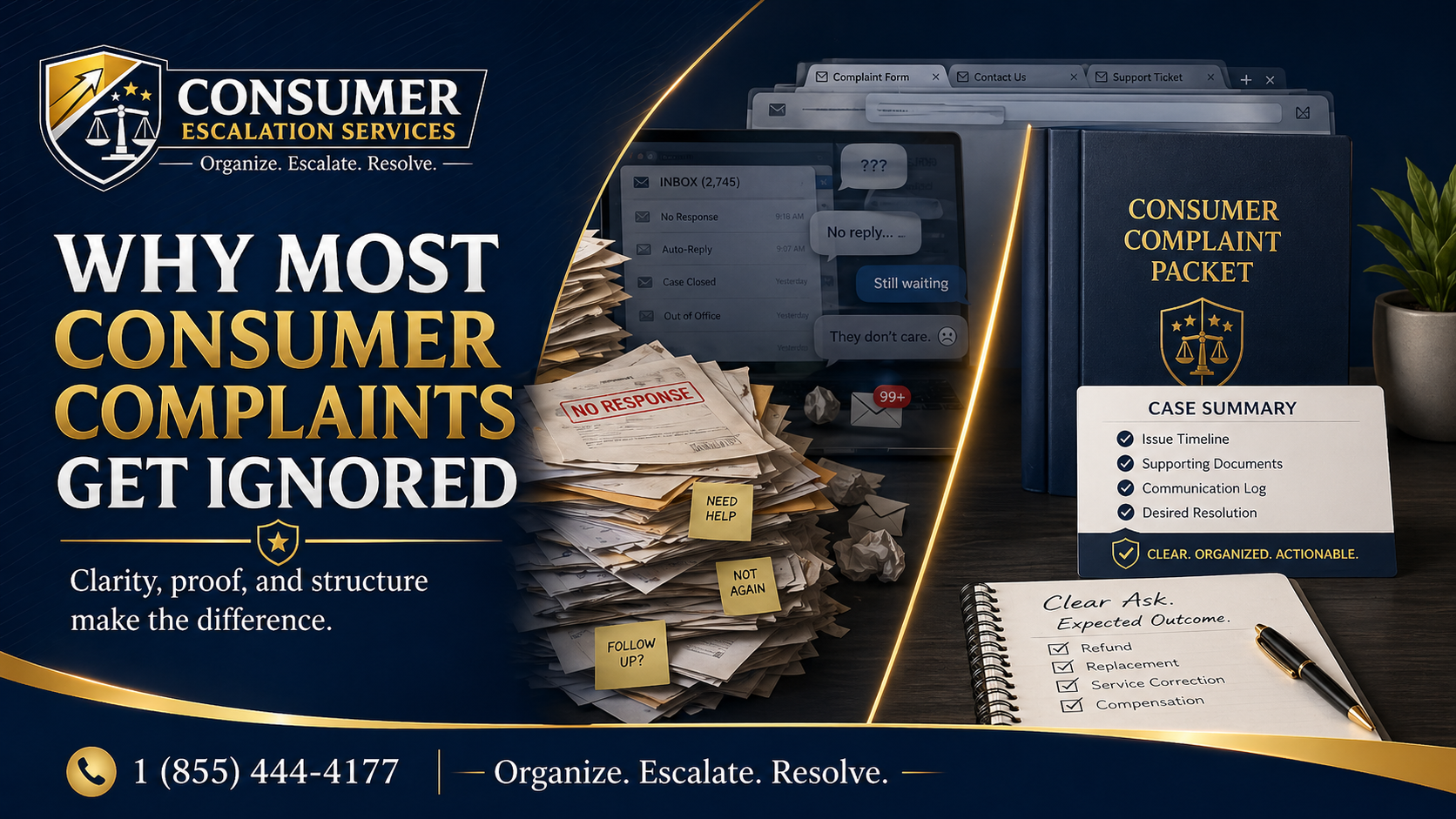
- The first appeal returns an identical automated response within hours.
- Support tells the driver to wait, then closes the case without an update.
- The chatbot loops the driver back to the same help-center article.
- The driver cannot tell which trip or customer triggered the flag.
- A "final decision" comes back before the driver has finished gathering evidence.
What You Can Try First
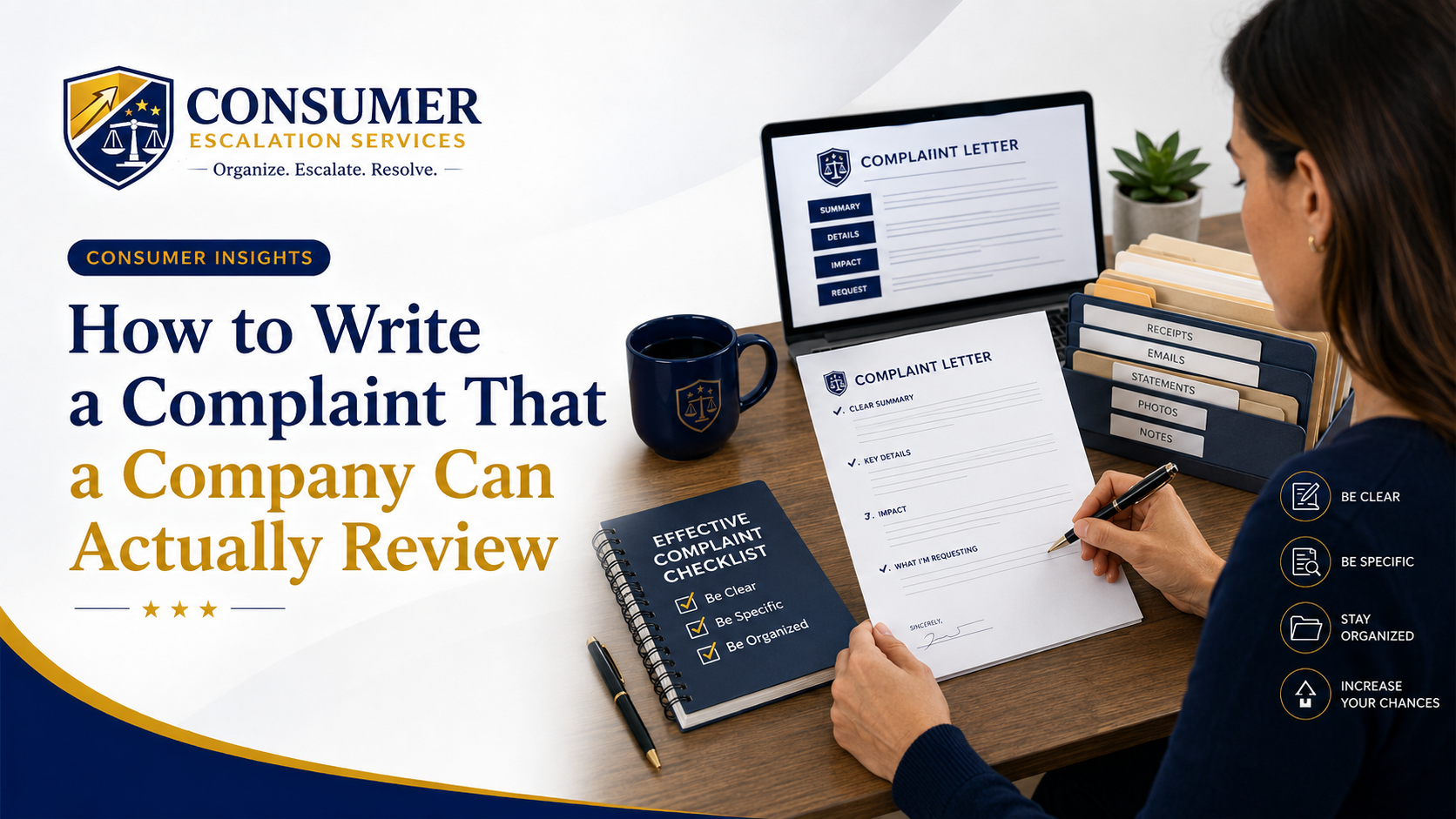
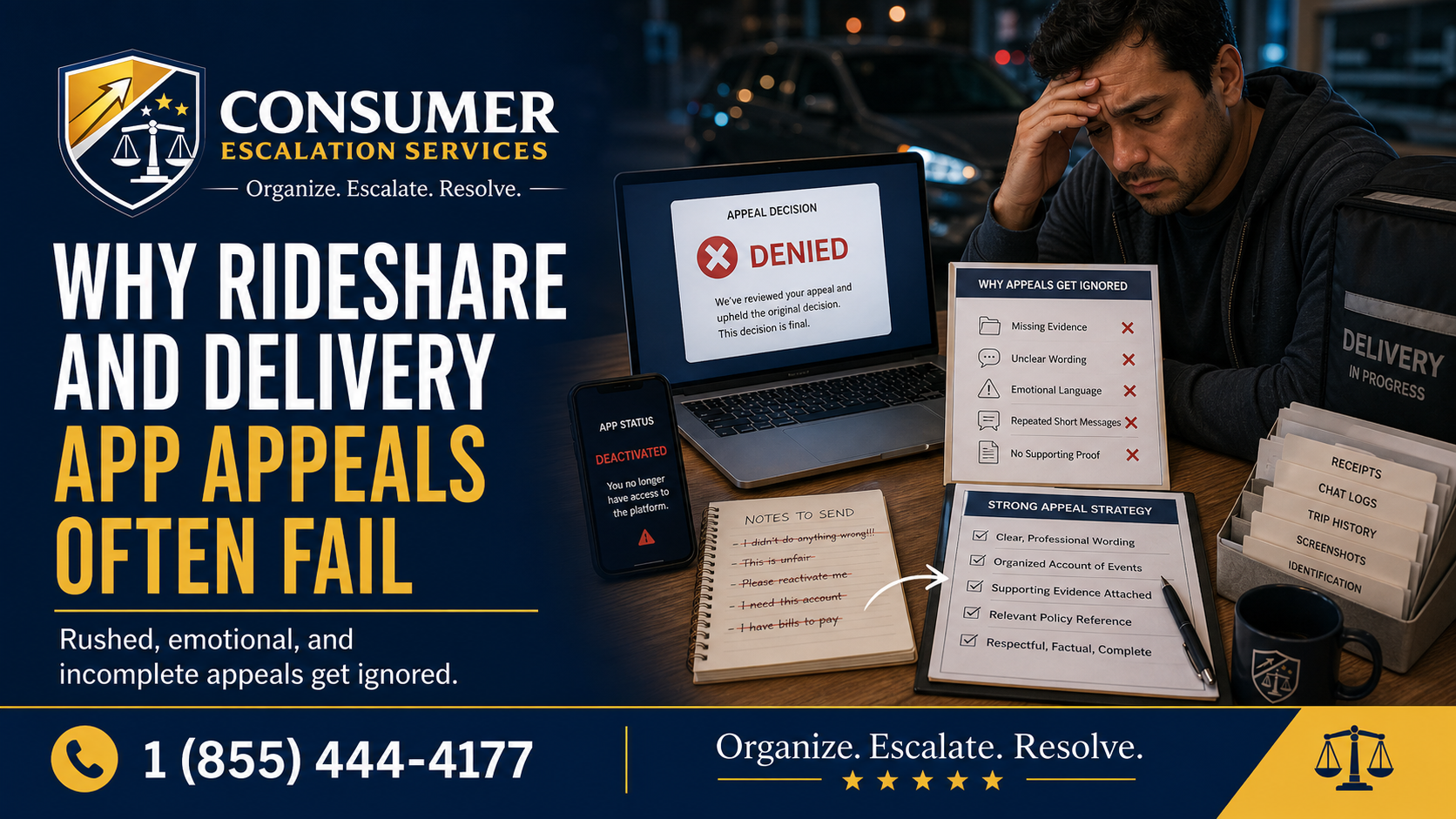
Before sending a long, emotional appeal, slow down and build the record. The platform appeals queue is also algorithmic — a clean, short appeal with attachments outperforms a 2,000-word reply.
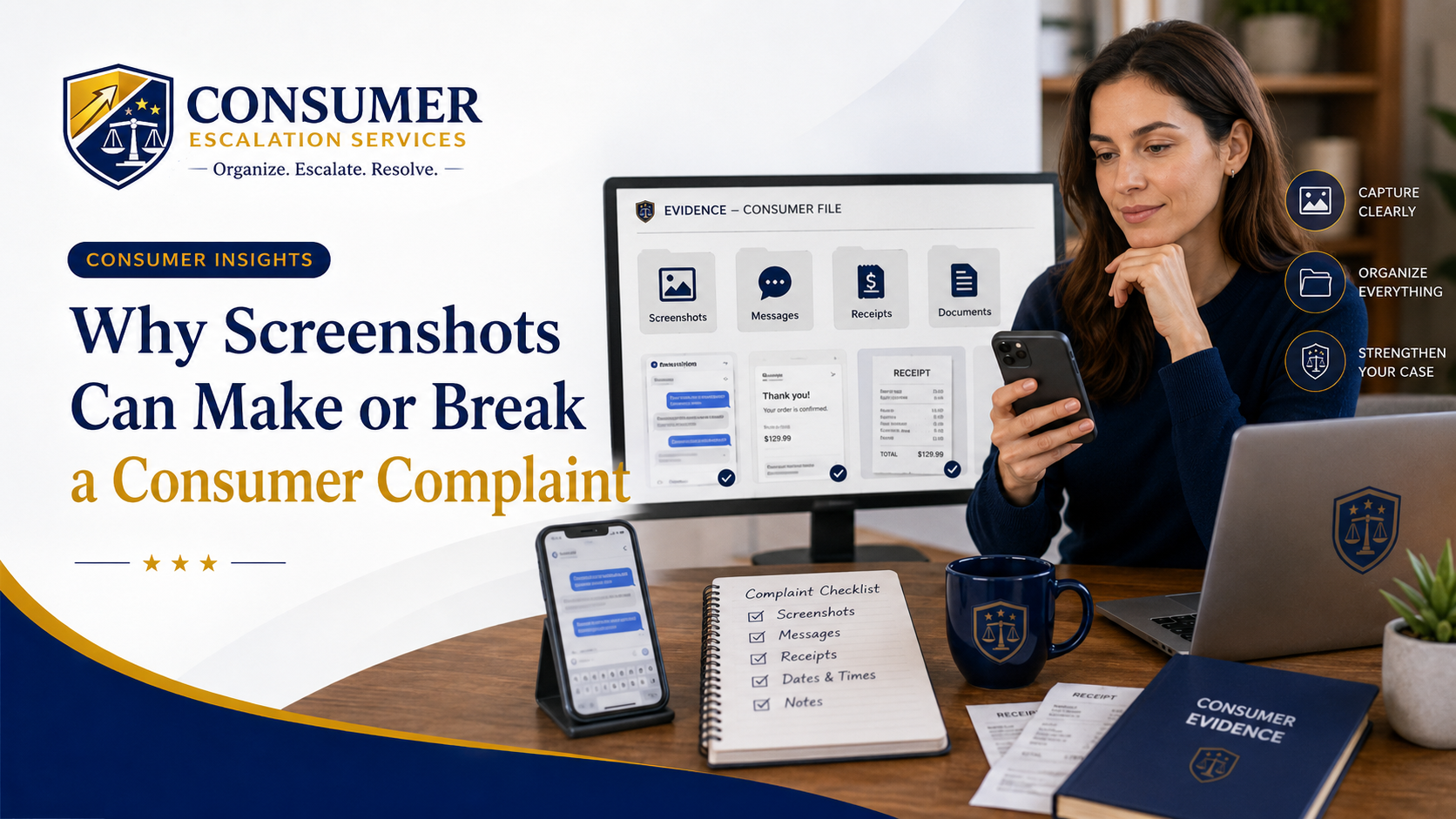
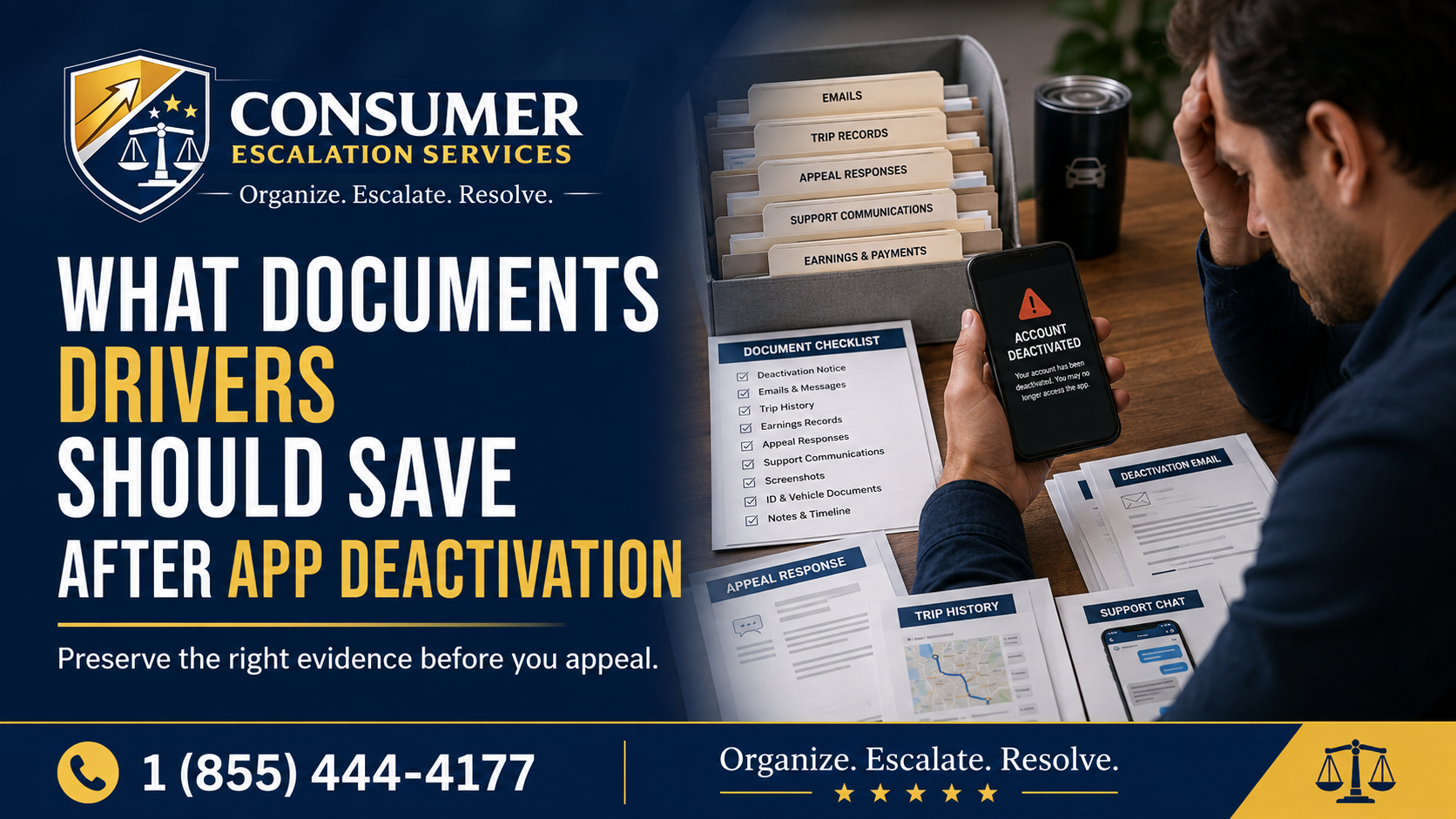
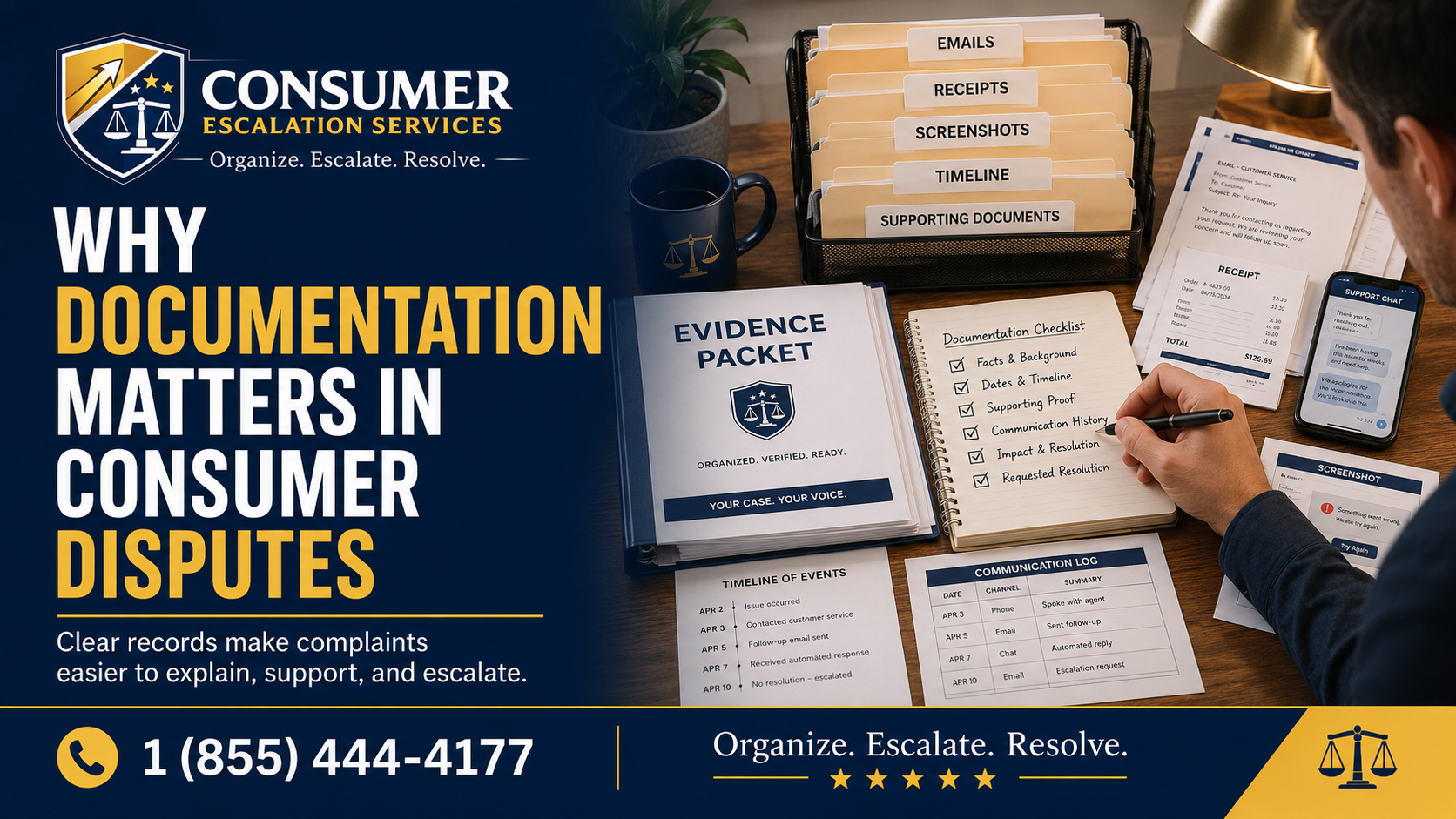
- Screenshot the deactivation notice in full, including the date, time, and any reference number.
- Download or screenshot your last 30–60 days of trip or order history while you still have access.
- Save the in-app message thread for any customer complaint that may have triggered the flag.
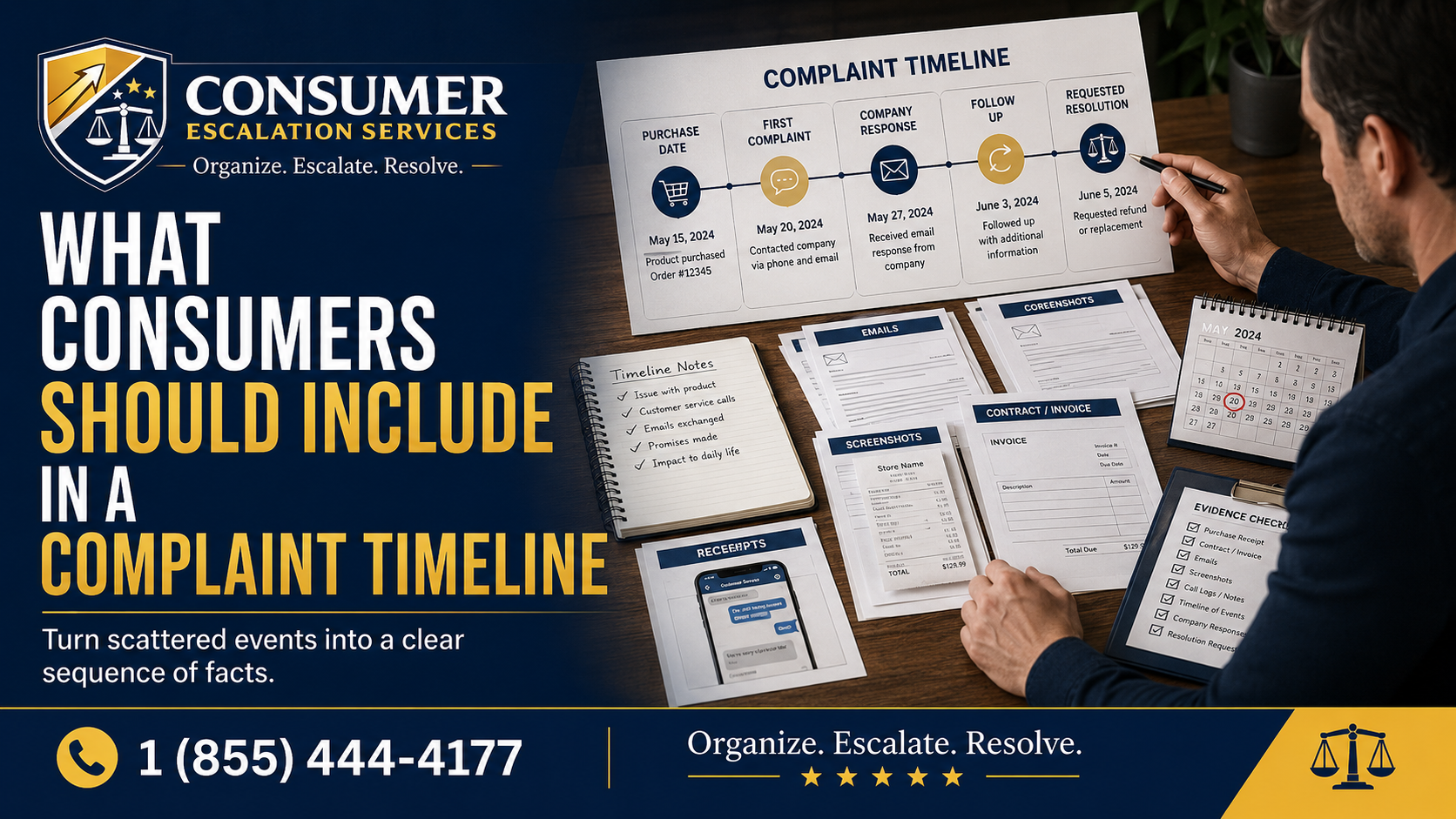
- Write a one-page timeline: account start date, recent trips, the specific incident if known, and the deactivation date.
- Identify the exact accusation. If the message says "safety violation," ask the platform to specify which trip and what the customer reported.
- Submit ONE clear appeal. Do not flood the support channel with multiple emotional follow-ups — that pushes you down the queue.
What Evidence to Gather
The strongest appeals are the ones that match the platform's accusation point-for-point. Gather:
- GPS records or trip maps where available.
- In-app and SMS message threads with the customer.
- Photos and timestamps of completed deliveries (drop-off photo, restaurant pickup, etc.).
- Dashcam footage if you record while driving.
- Receipts confirming you completed required steps (e.g., ID-checked alcohol delivery).
- Customer service screenshots showing prior platform responses.
- A clean list of cancellations with reasons — many cancellations are platform-initiated, not driver-initiated, and that distinction matters.
How to Request Human Review
Most platforms do have a human-review path, but it is not the first response you will get. Be explicit. In your appeal, ask in writing:
- For the specific policy you are alleged to have violated.
- For the date, time, and trip or order ID the platform is referencing.
- For a human reviewer to look at the appeal — not an automated re-decision.
- For a written response that addresses your evidence, not a generic template.
Keep the tone professional. Algorithmic appeal queues often deprioritize messages flagged as abusive, threatening, or off-topic.
When It May Be Time to Escalate
Consider professional escalation support if:
- You have submitted a clear appeal and only received automated responses.
- The platform refuses to identify the policy or the underlying trip.
- You have evidence that contradicts the deactivation but no one is engaging with it.
- You depend on the account for income and the appeal has stalled.
- You need to organize a professional escalation package that lands with a real reviewer.
How CES Can Help Organize the Complaint
Consumer Escalation Services helps drivers organize the timeline, evidence index, supporting documents, and professional appeal language used in a Rideshare or Delivery App Deactivation Support package. CES does not file legal action and does not promise reactivation, but it does help you present the strongest possible nonlegal escalation record to the platform.
You can also explore the broader CES Algorithmic Escalation page for the full picture of how AI-driven denials are challenged across industries.
Related Algorithmic Escalation Insights
- Travel Refund or Credit Denied by an Automated System — /consumer-insights/travel-airline-hotel-automated-denials
- Flagged by an Automated Risk System (Account or Payment Blocked) — /consumer-insights/automated-risk-flag-account-payment-blocked
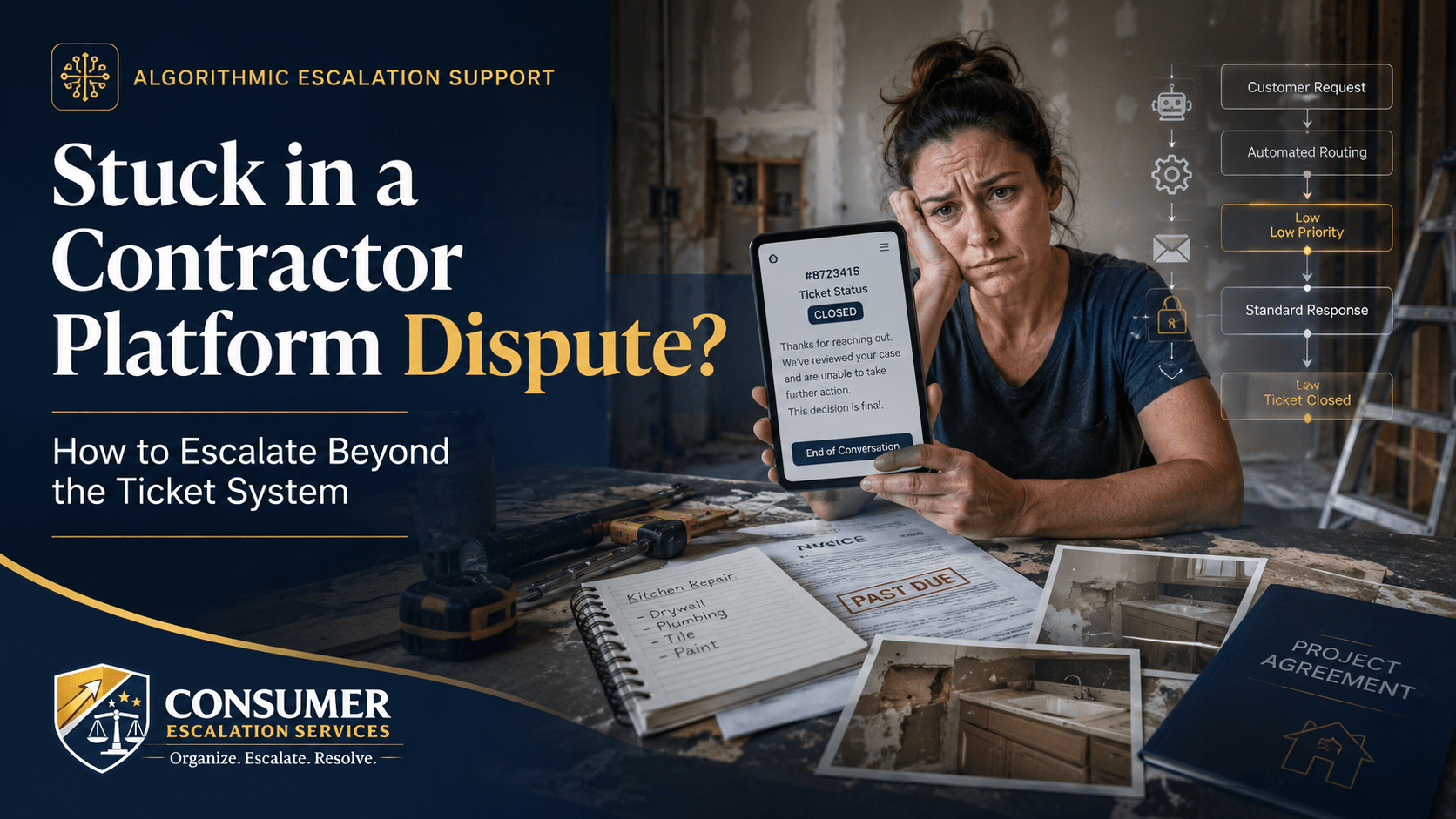
- Stuck in a Marketplace or Contractor Platform Dispute — /consumer-insights/marketplace-contractor-platform-dispute-escalation
- CES Algorithmic Escalation — /algorithmic-escalation
Final Thought
A deactivation message can feel like the end of the conversation. Most of the time, it is the beginning of an appeals process designed to wear consumers down. A clean record, a calm appeal, and a specific ask for human review are the three highest-leverage moves you have. Consumer Escalation Services is not a law firm, does not provide legal advice, and does not guarantee any outcome.