Consumer Escalation Services logo

Escalation Readiness

Escalation Before Giving Up

Why valid complaints get abandoned right before they would have moved — and the small reset that separates fatigue from resolution.

Escalation before giving up — how to organize, document, and prepare a complaint properly
Estimated read time: 5 minutesLast updated: April 30, 2026

The most common ending to a consumer complaint is not a denial. It is fatigue. After enough hold music, automated replies, and dead-end chats, a valid complaint quietly stops being pursued — not because the consumer was wrong, but because the work of pushing it forward started to outweigh the original loss.

Sometimes giving up is the right call. Often, though, the issue is closer to resolution than it feels — and the gap between giving up and getting an answer is a few hours of organized work.

Why Many Consumers Give Up Too Soon

Walking away is rarely about the dispute itself. It is about the cost of pursuing it: the repeated explanations, the inconsistent answers, the time off work, the rising emotional charge of every new message. Once the cost of pushing feels higher than the original problem, even legitimate complaints get abandoned. That is the moment to pause and reset, not the moment to send another angry email.

Step 1 — Pause and Organize the Facts

Stop sending messages for one short session. Open a single document and write down what happened in plain language: the company involved, what was paid, what was promised, what went wrong, and what you have already tried. Even a half-page version of this is more useful than a hundred messages strung across email, chat, and memory.

Step 2 — Create a Clear Timeline

Convert your story into a dated list. The dates do not need to be perfect — close approximations are fine for now. The timeline turns a tangle of frustration into a sequence anyone outside your situation can follow.

  • February 14 — Service purchased
  • February 18 — First problem reported via chat (Ticket #102)
  • February 22 — Refund promised by phone
  • February 28 — No refund received, follow-up email sent
  • March 4 — Ticket closed, no resolution
  • March 10 — Second written follow-up, no response

Step 3 — Collect Proof and Screenshots

Pull every piece of supporting evidence into one folder. Receipts. Order confirmations. Screenshots of in-app notices, chats, or error messages. Bank or card statements that show the disputed charge. Photos or videos if applicable. The goal is not to argue with each piece — the goal is to make sure your file is complete before the next message goes out.

Step 4 — Identify the Exact Resolution You Want

Vague requests get vague answers. "I want this fixed" leaves the company guessing. "I am requesting a full refund of $148.20 to the original payment method by April 5" gives the reviewer something specific to approve, deny, or counter. Whatever resolution makes you whole, write it down in a single sentence before you send the next message.

Step 5 — Make One Clear Written Request

Send a single, factual message that consolidates your timeline, references prior ticket numbers, attaches your supporting documents, states the specific resolution you are requesting, and asks for a written response by a reasonable date. Keep it short. The reset message is meant to make the matter easy to act on, not to vent.

Step 6 — Escalate Beyond Basic Customer Service When Needed

If the reset message does not produce a substantive response in a reasonable window, the matter has stopped being a customer service problem. From here, more effective channels usually include written executive escalation, complaints to consumer protection or licensing bodies, payment-based disputes through your card or financing company, written demand for review, or organized third-party complaints. Each of those depends on the file you have already built.

Step 7 — Stay Professional and Avoid Emotional Language

Anything you write may be quoted, screenshotted, or forwarded internally. Tone is not a moral test — it is a strategic tool. A factual, calm message keeps options open. A heated one closes them. The consumer who keeps their writing professional is the one who keeps every escalation channel available.

When Outside Support May Help

Some matters genuinely benefit from outside help — not because the consumer cannot do the work, but because the work itself becomes a second job. When organizing the file, drafting the escalation, and managing the follow-up start to interfere with normal life, structured nonlegal support can absorb that workload while the consumer continues with everything else.

Final Takeaway

Most consumers who give up on a valid complaint do so right before the matter would have moved. The work that comes between an unanswered ticket and an actual resolution is rarely flashy — it is a clean timeline, a clear request, and one well-written message. That same small amount of work is what turns "I just want this over" into a real outcome.


Need Help?

Before you give up on a legitimate complaint

CES helps consumers organize evidence, clarify the requested resolution, and prepare a more professional escalation as nonlegal consumer advocacy support.

Keep Reading

More Consumer Insights

Consumer reviewing an under-review complaint message on a phone and laptop for Consumer Escalation Services insight article

Escalation Strategy

When "Under Review" Becomes a Delay Tactic

Read article

Consumer organizing relevant and non-relevant evidence for a complaint with Consumer Escalation Services branding

Documentation

Why Too Much Evidence Can Hurt Your Complaint

Read article

Consumer calmly preparing a professional complaint escalation letter with Consumer Escalation Services branding

Escalation Strategy

How to Escalate a Complaint Without Losing Credibility

Read article

Consumer documenting conflicting customer service answers during a complaint escalation

Customer Service Warning Signs

When Every Customer Service Agent Gives You a Different Answer

Read article

Consumer gathering refund records, receipt, order confirmation, photos, and messages before filing a complaint

Refund Disputes

Before You Demand a Refund, Build the Record

Read article

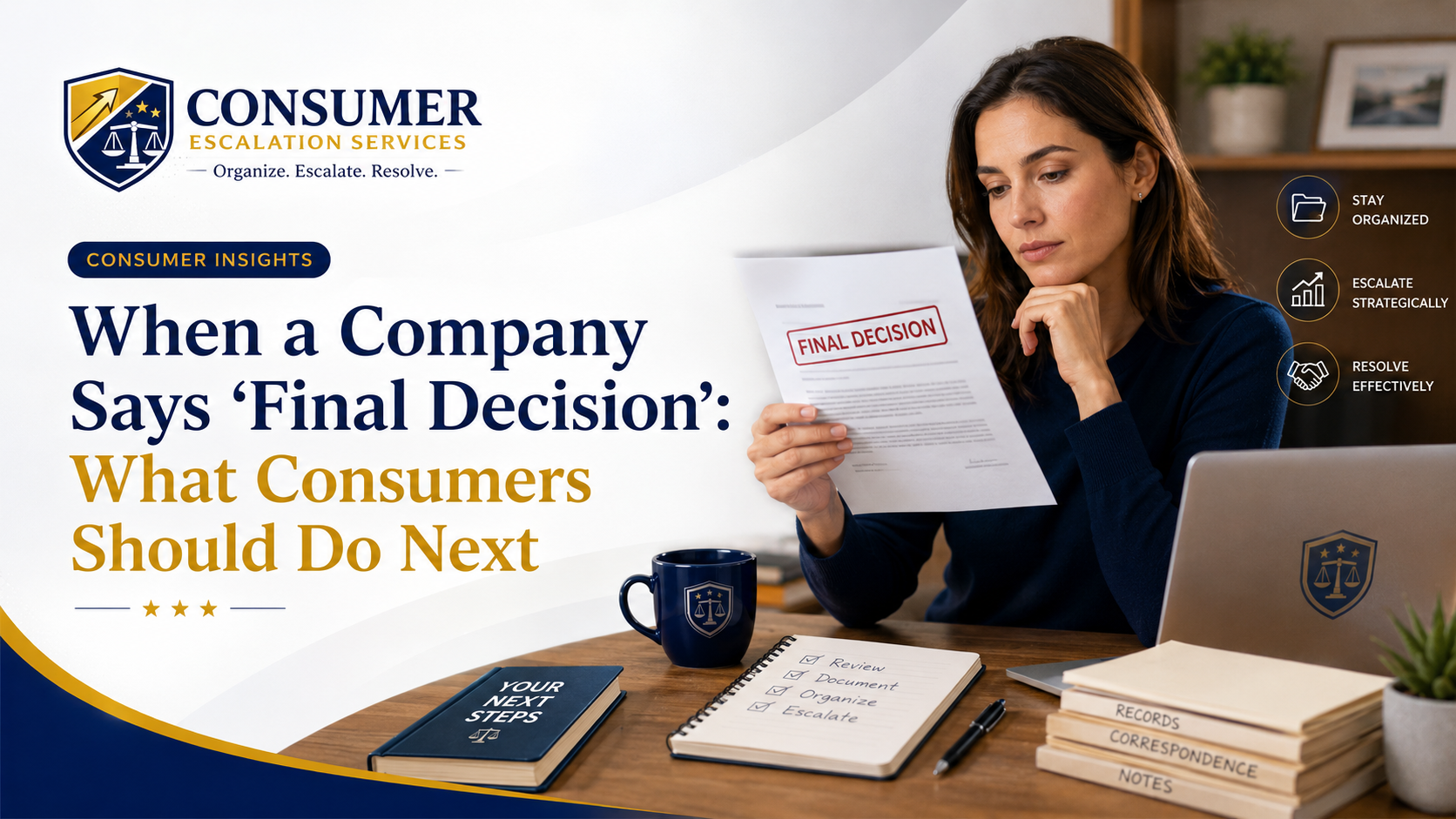
Consumer Escalation Services article on what to do when a company says final decision

Escalation Strategy

When a Company Says "Final Decision": What Consumers Should Do Next

Read article

Consumer Escalation Services article on the difference between complaining and escalating

Escalation Strategy

The Difference Between Complaining and Escalating

Read article

Consumer Escalation Services article on customer service red flags that signal escalation is needed

Customer Service Warning Signs

Red Flags That Your Customer Service Issue Needs Escalation

Read article

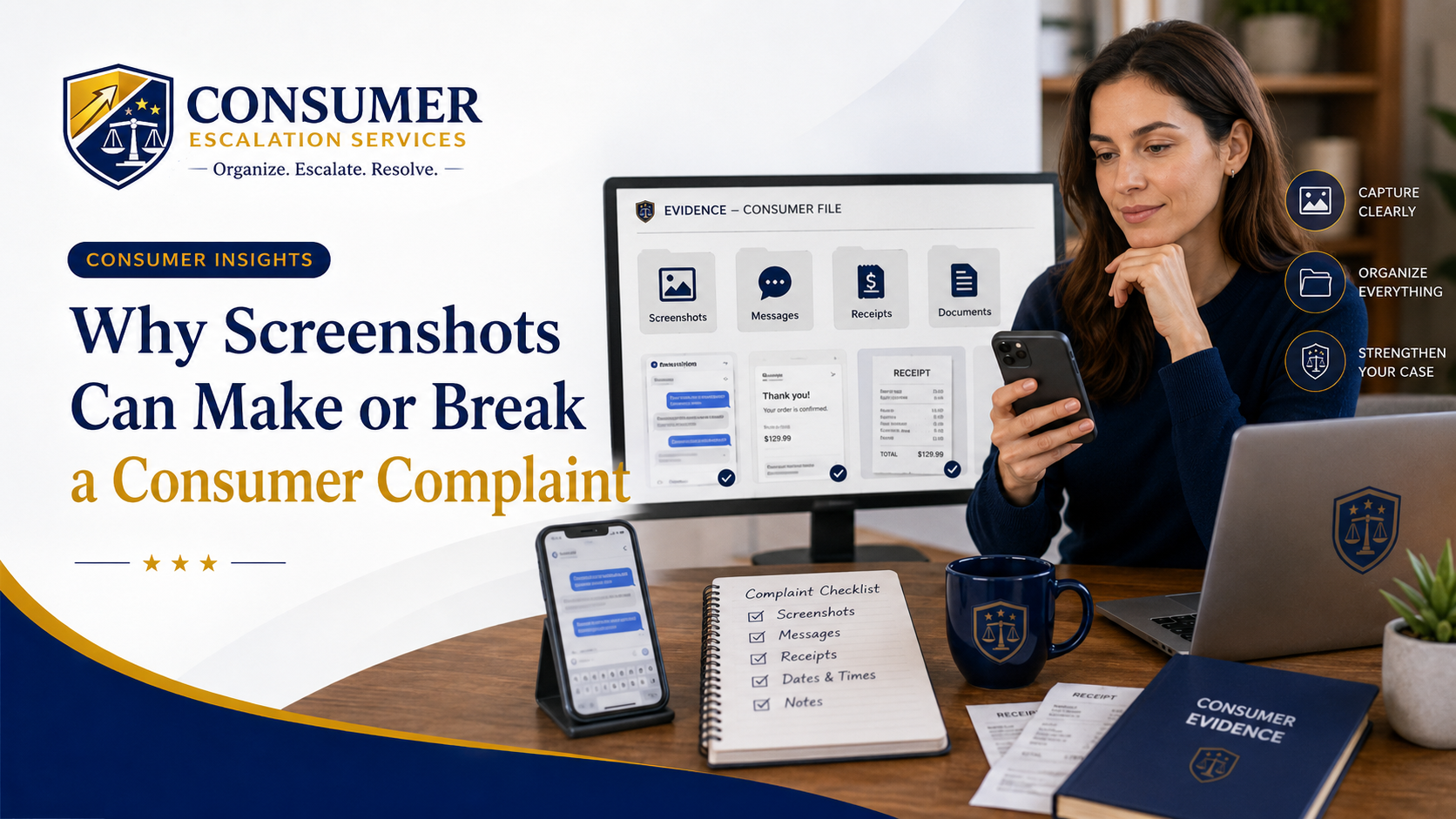
Consumer Escalation Services article on how screenshots can support a consumer complaint

Documentation

Why Screenshots Can Make or Break a Consumer Complaint

Read article

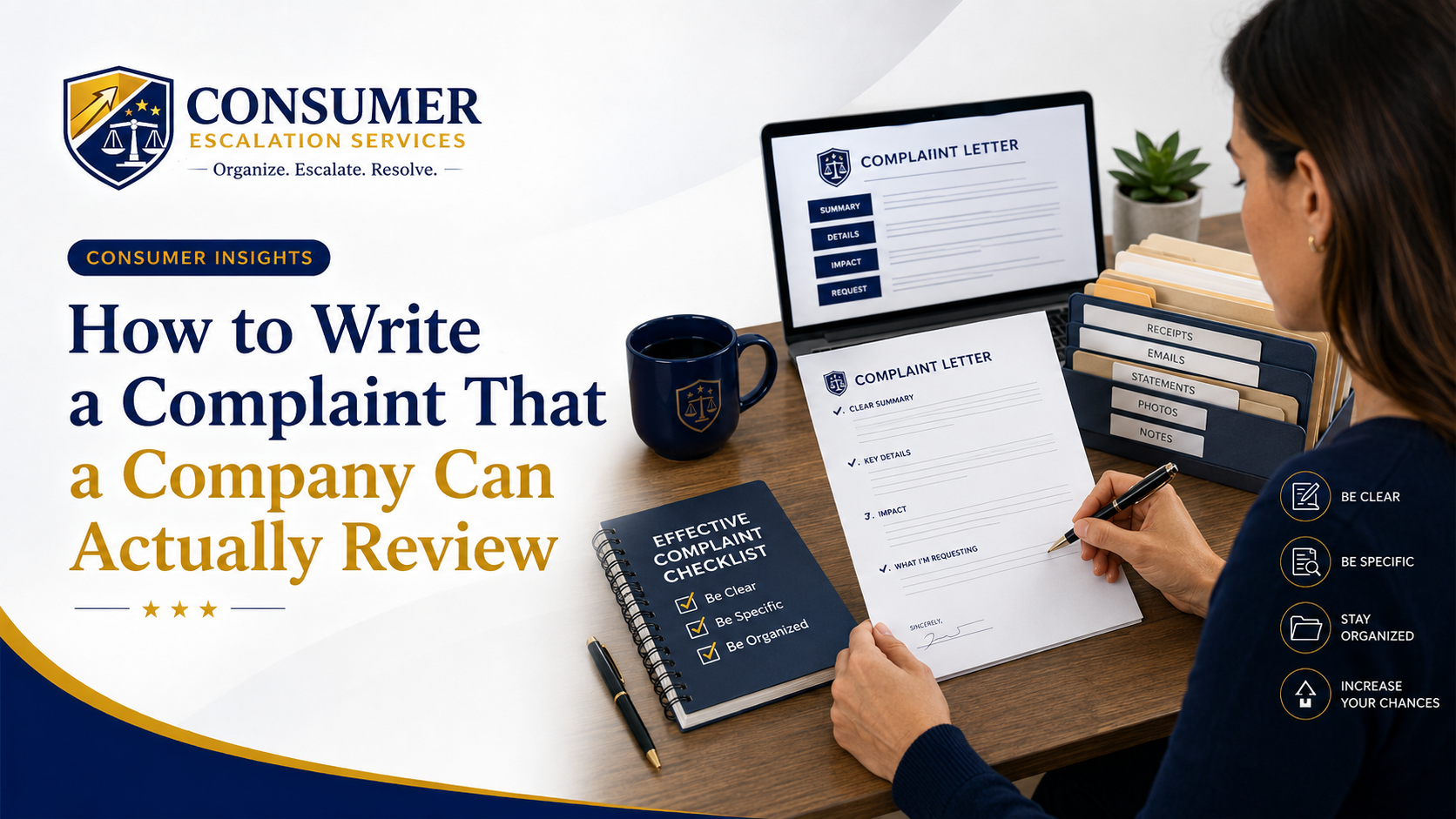
Consumer Escalation Services article on writing a clear, organized consumer complaint

Complaint Letter Writing

How to Write a Complaint That a Company Can Actually Review

Read article

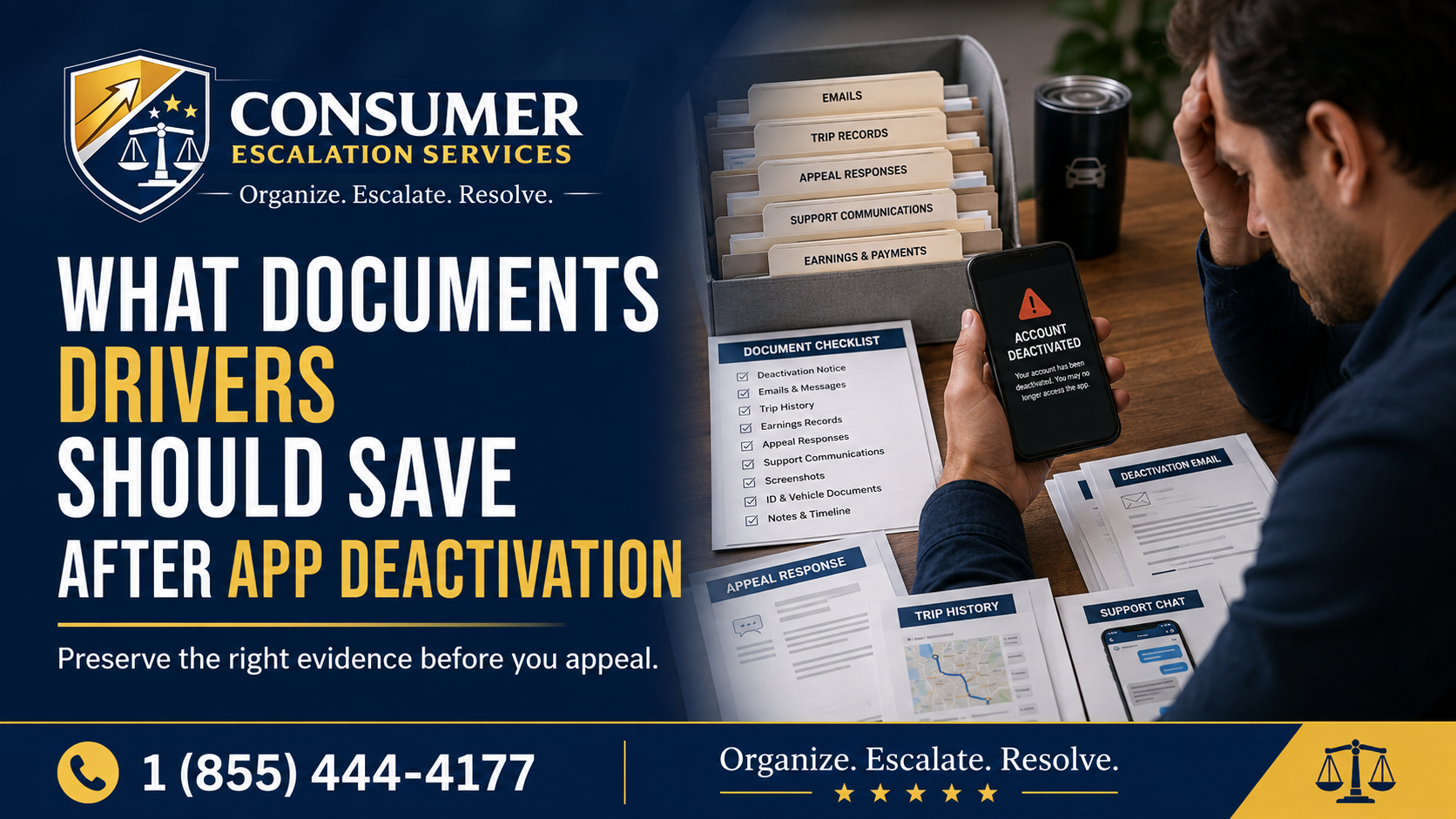
Consumer Escalation Services guide showing documents drivers should save after app deactivation

Rideshare & Delivery App Deactivation

What Documents Drivers Should Save After App Deactivation

Read article

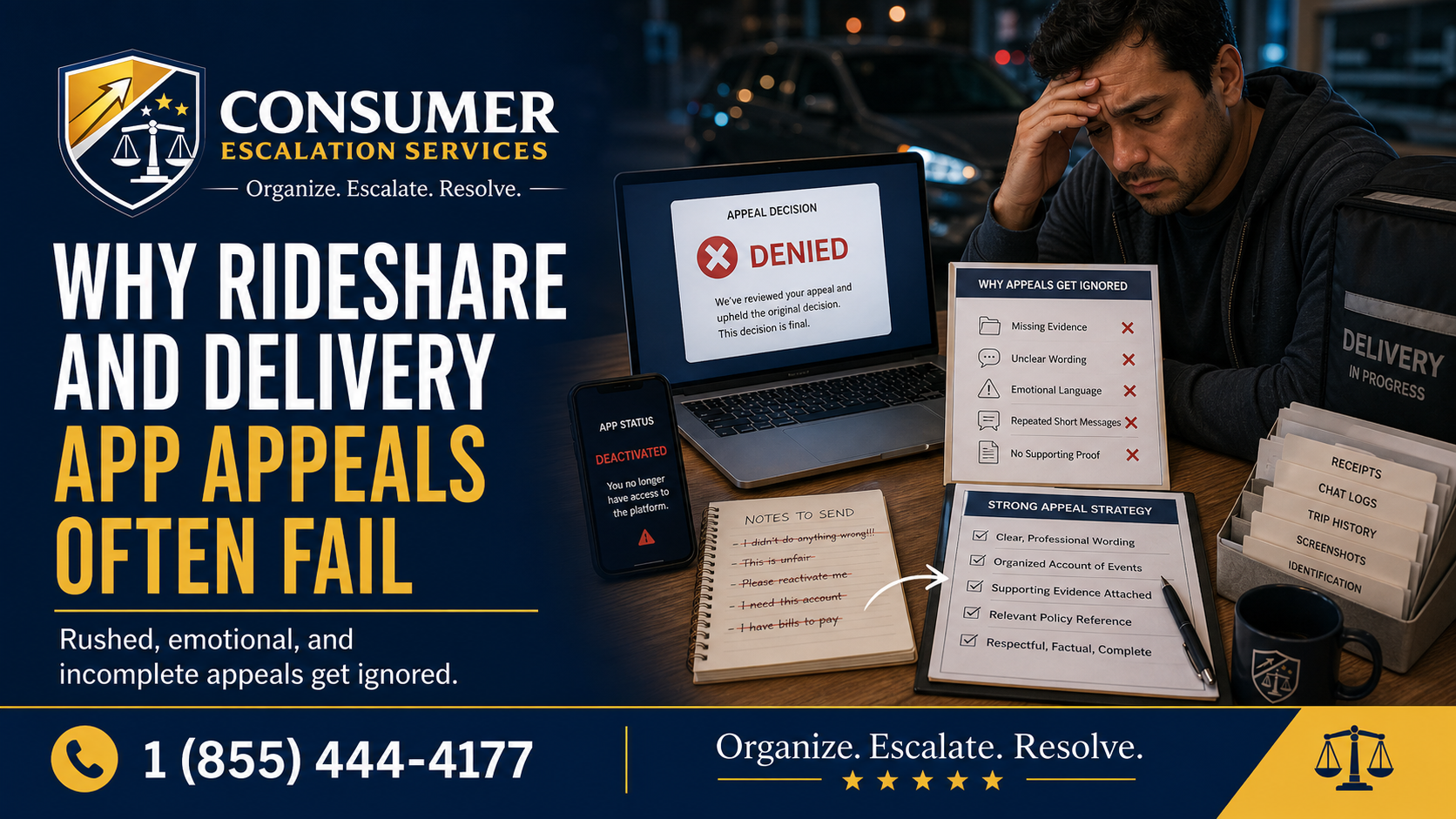
Consumer Escalation Services article explaining why rideshare and delivery app appeals often fail

Rideshare & Delivery App Deactivation

Why Rideshare And Delivery App Appeals Often Fail

Read article

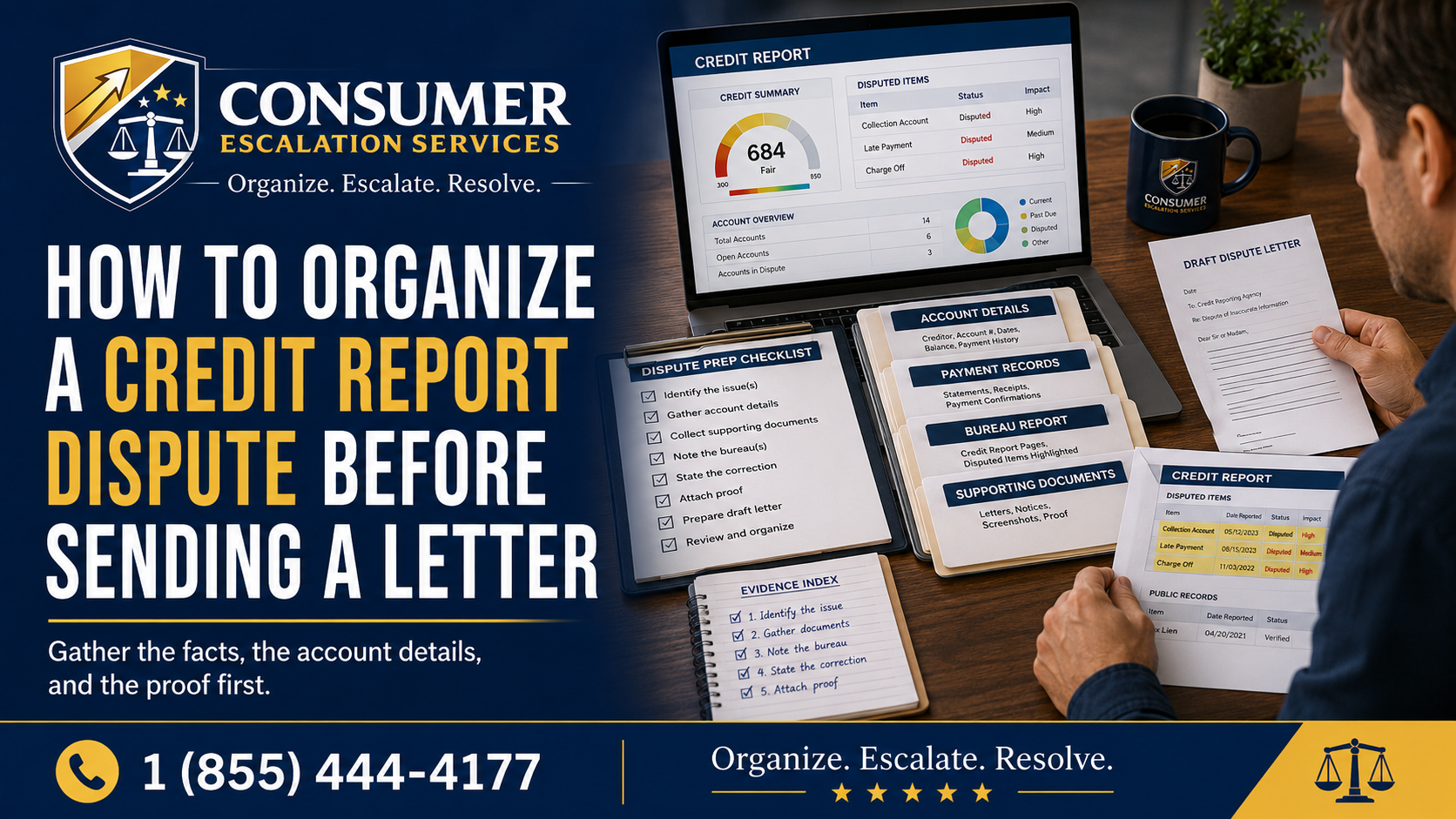
Consumer Escalation Services guide for organizing a credit report dispute before sending a letter

Credit Report Disputes

How To Organize A Credit Report Dispute Before Sending A Letter

Read article

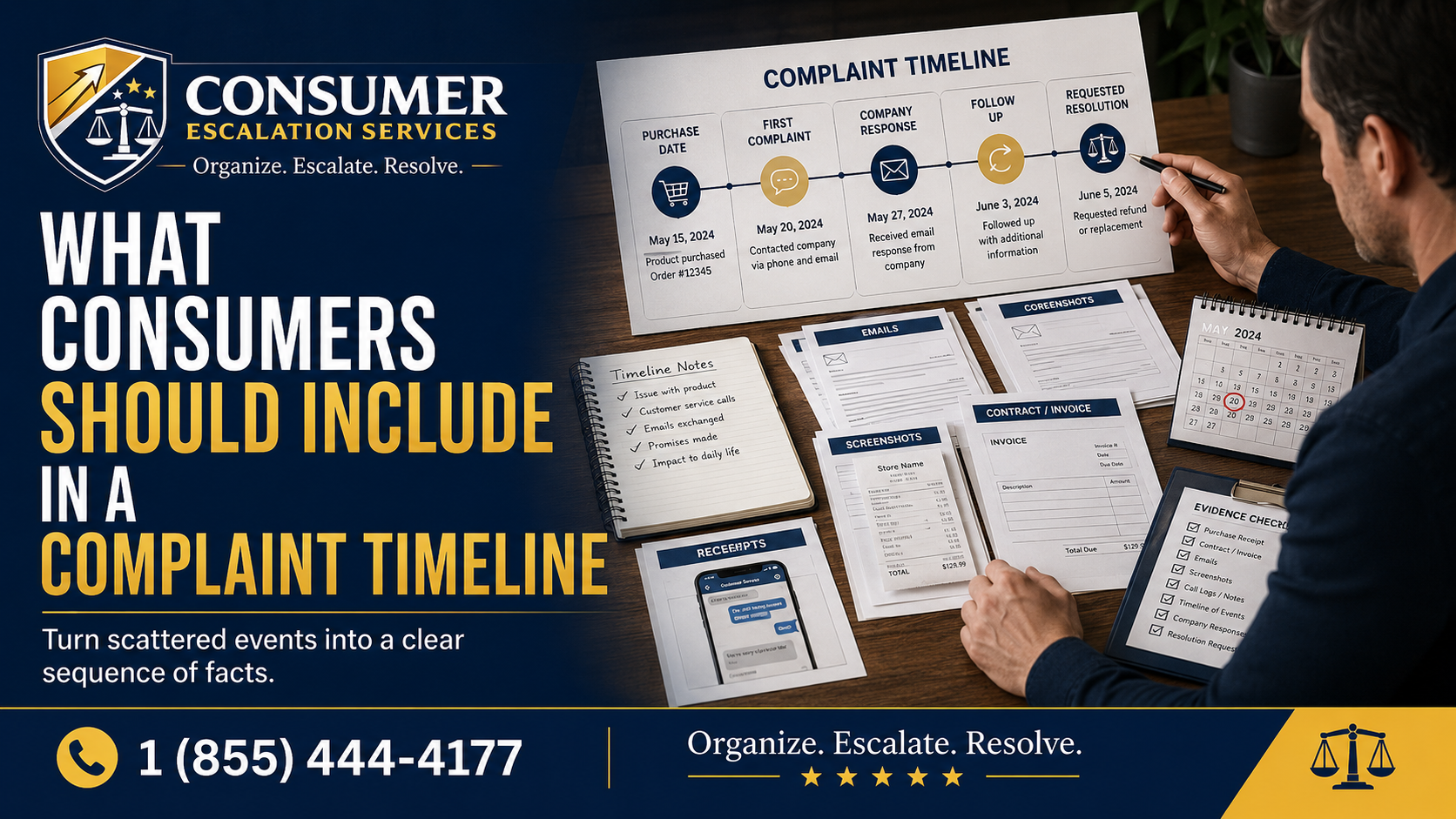
Consumer Escalation Services article showing how to organize a consumer complaint timeline

Complaint Preparation

What Consumers Should Include In A Complaint Timeline

Read article

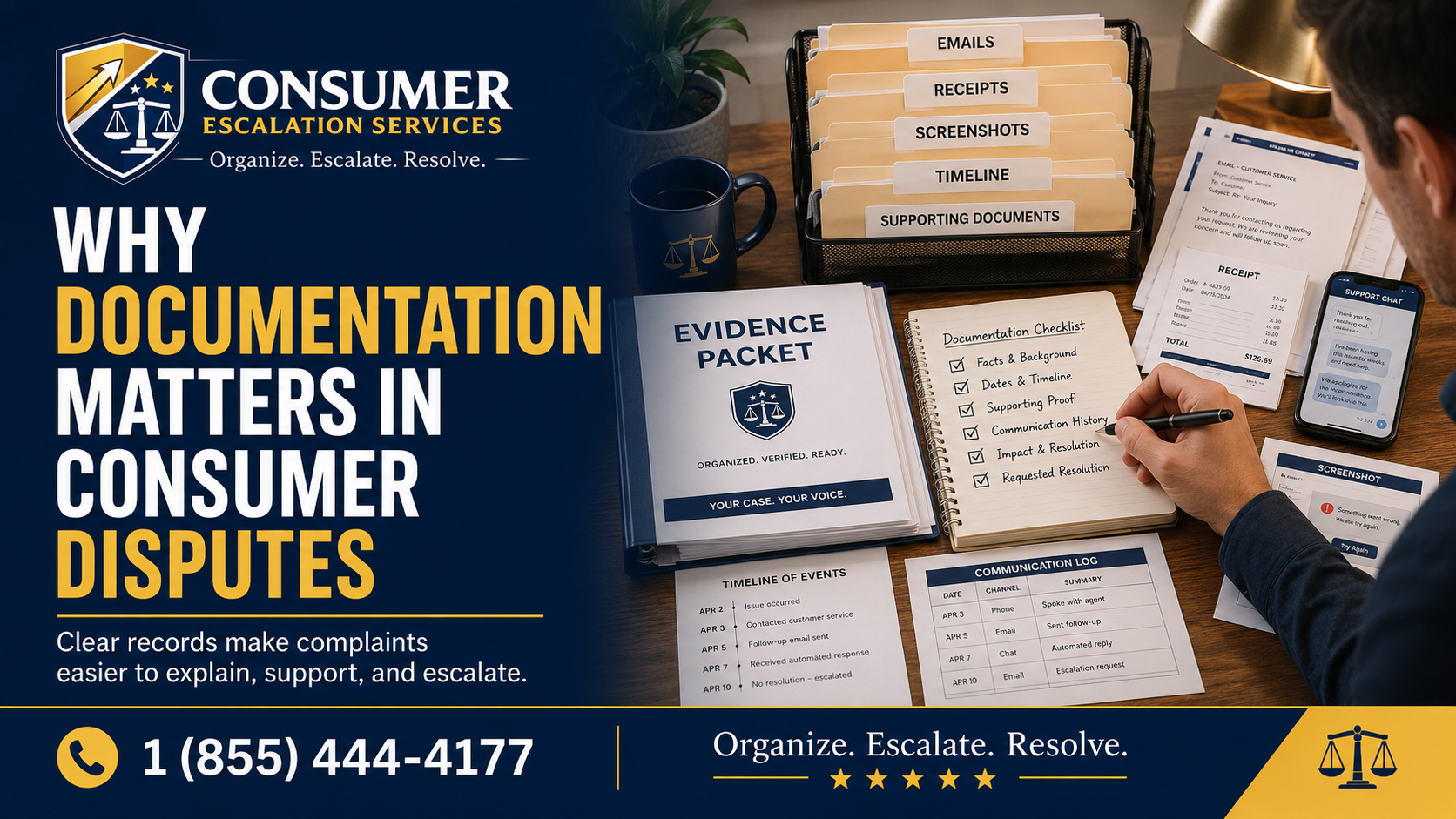
Consumer Escalation Services article about why documentation matters in consumer disputes

Documentation and Evidence

Why Documentation Matters In Consumer Disputes

Read article

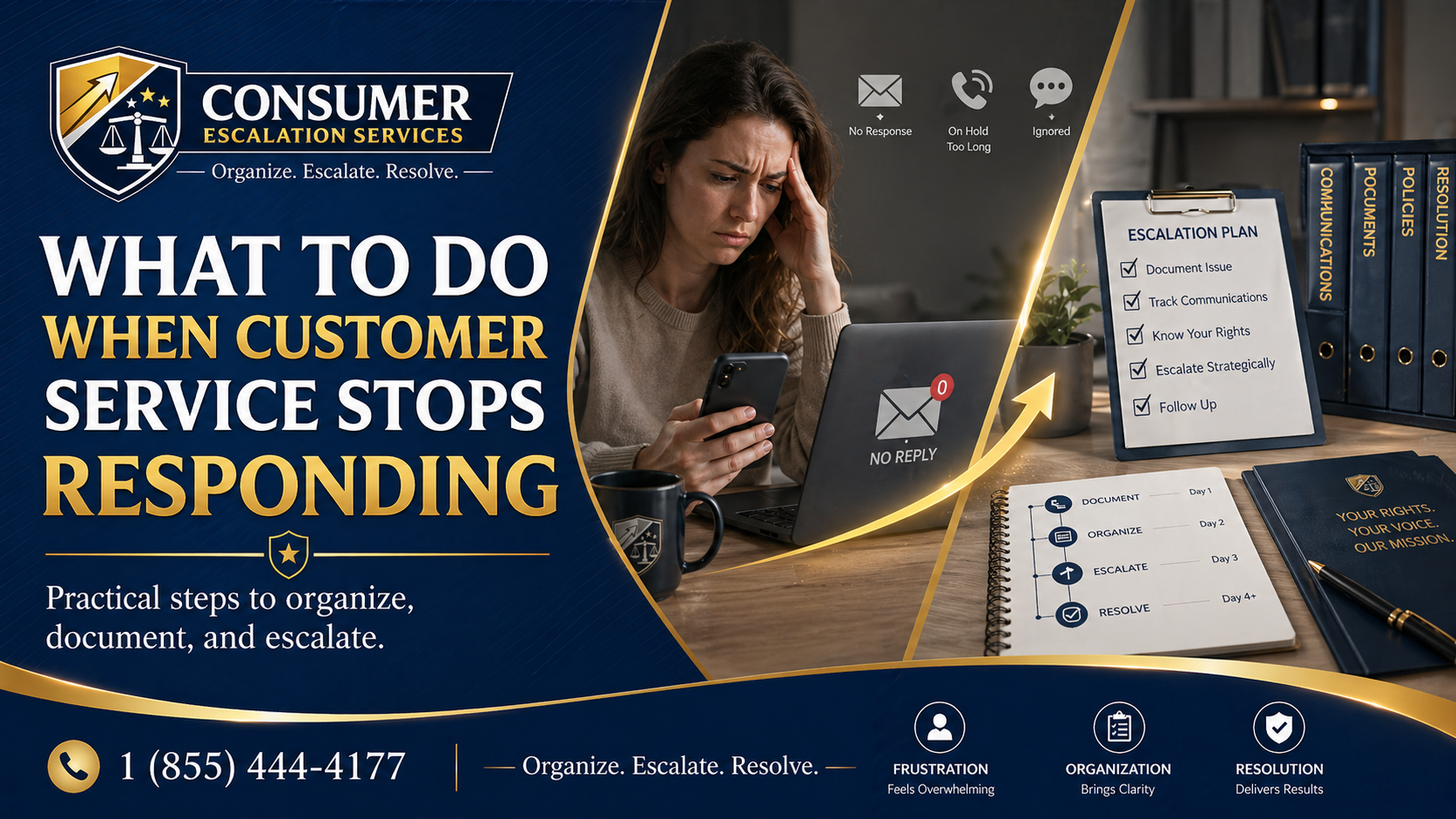
What to do when customer service stops responding — organize, document, and escalate professionally

Customer Service Escalation

What to Do When Customer Service Stops Responding

Read article

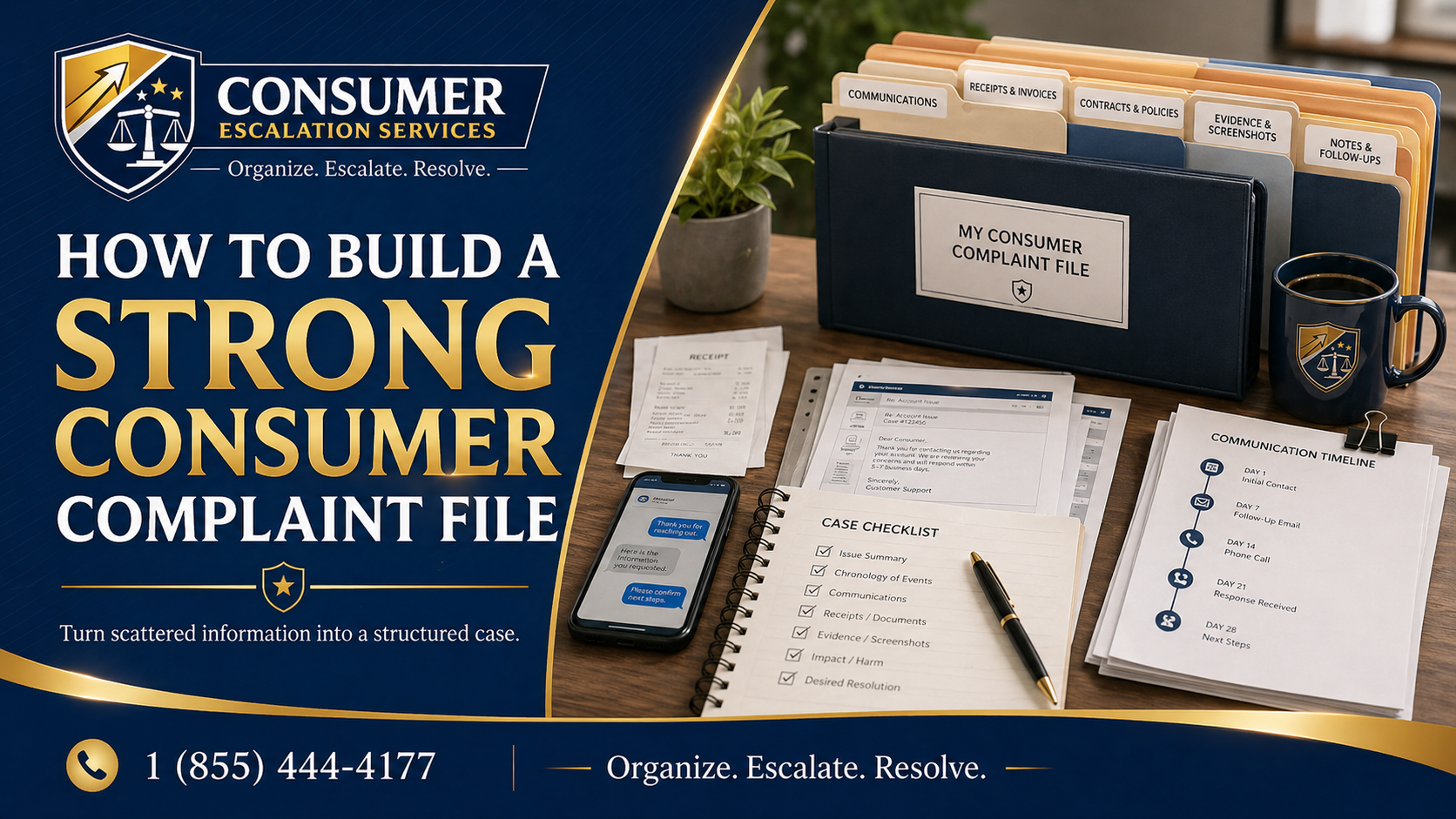
How to build a strong consumer complaint file — timelines, receipts, screenshots, and supporting documents

Complaint Documentation

How to Build a Strong Consumer Complaint File

Read article

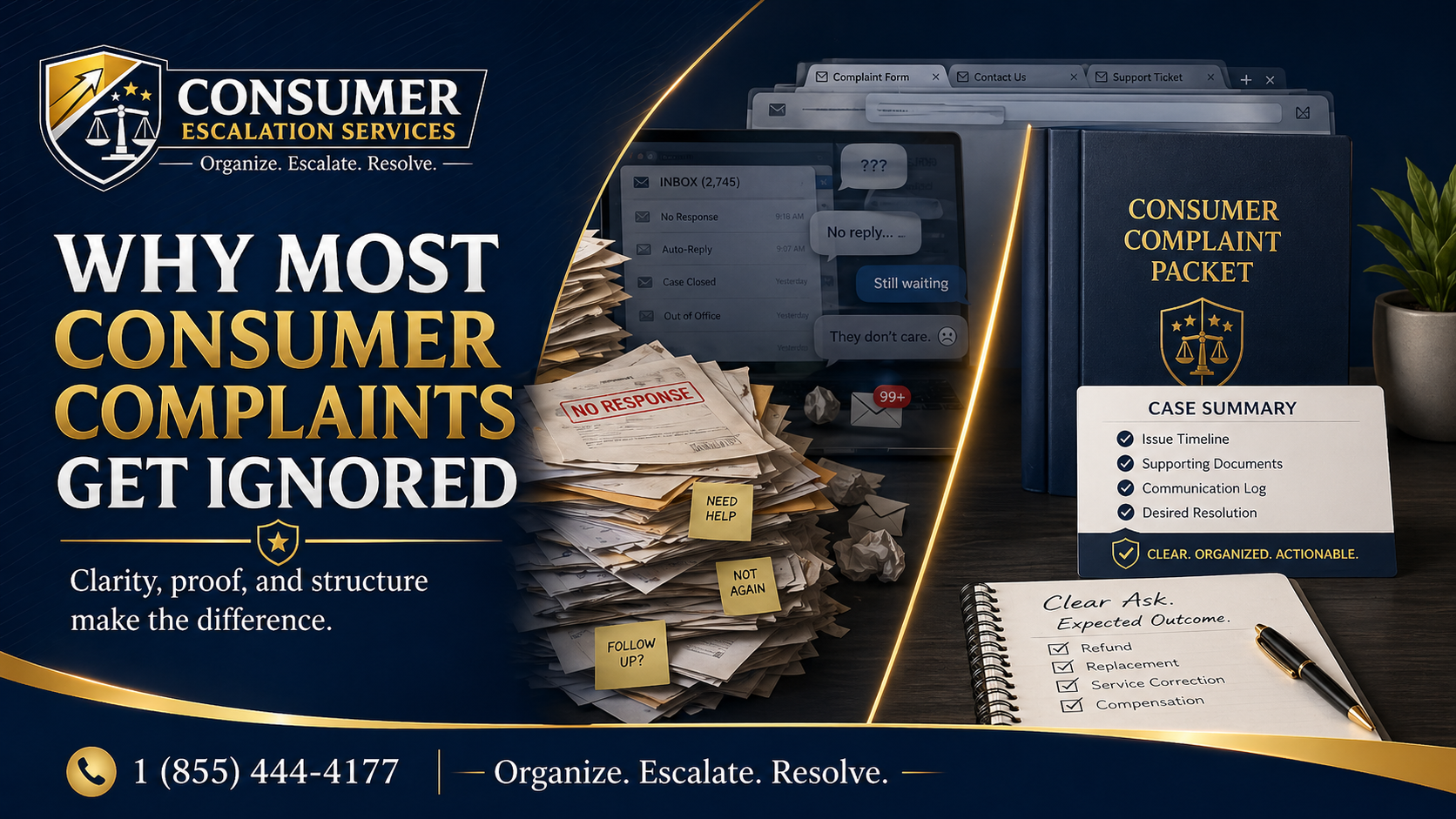
Why most consumer complaints get ignored — clarity, proof, and structure make the difference

Complaint Strategy

Why Most Consumer Complaints Get Ignored

Read article

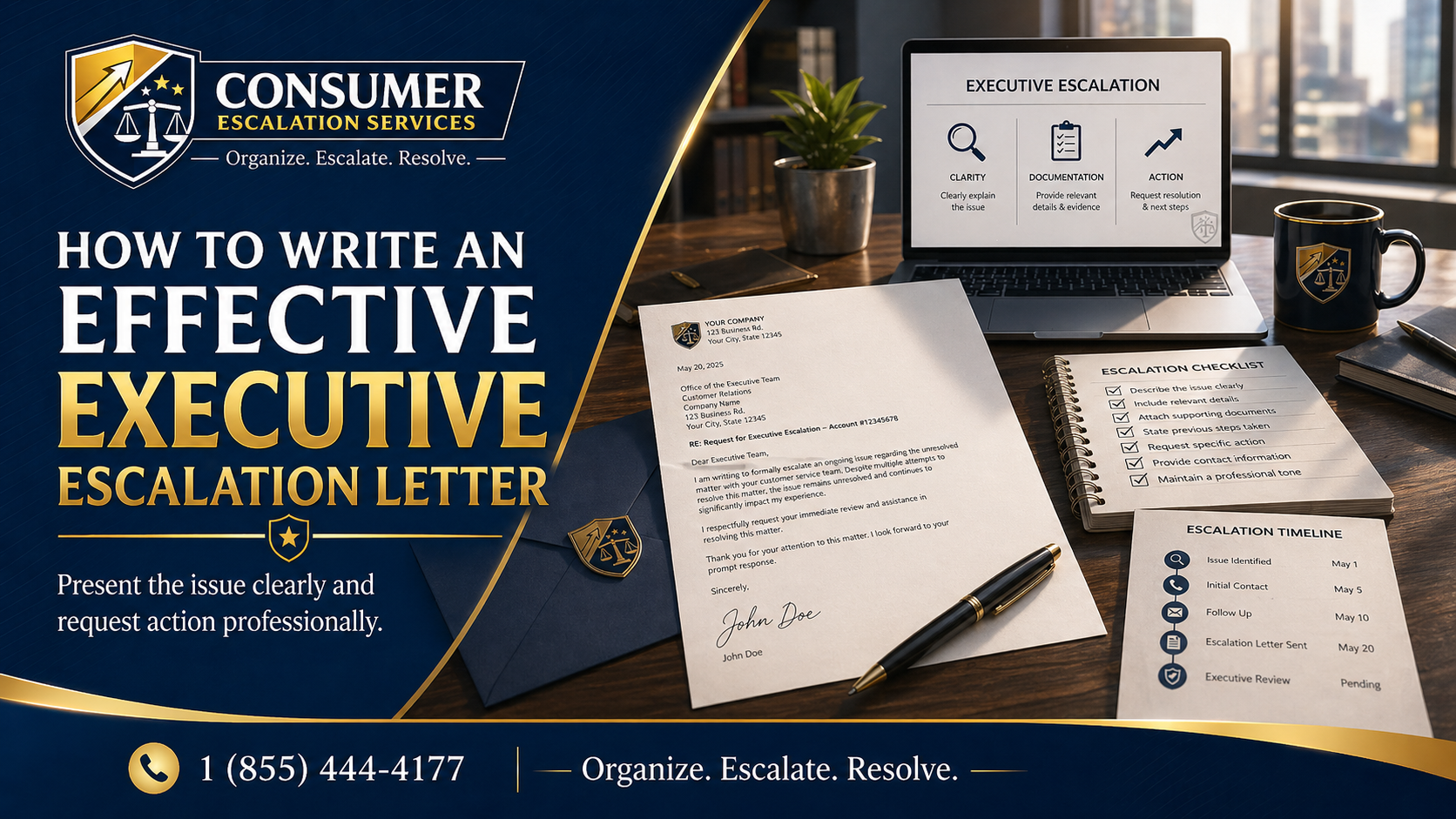
How to write an effective executive escalation letter — present the issue clearly and request action professionally

Executive Escalation

How to Write an Effective Executive Escalation Letter

Read article

Homeowner reviewing unfinished contractor work and preparing a complaint escalation file

Contractor & Home Improvement Disputes

What To Do When a Contractor Does Not Finish the Job

Read article

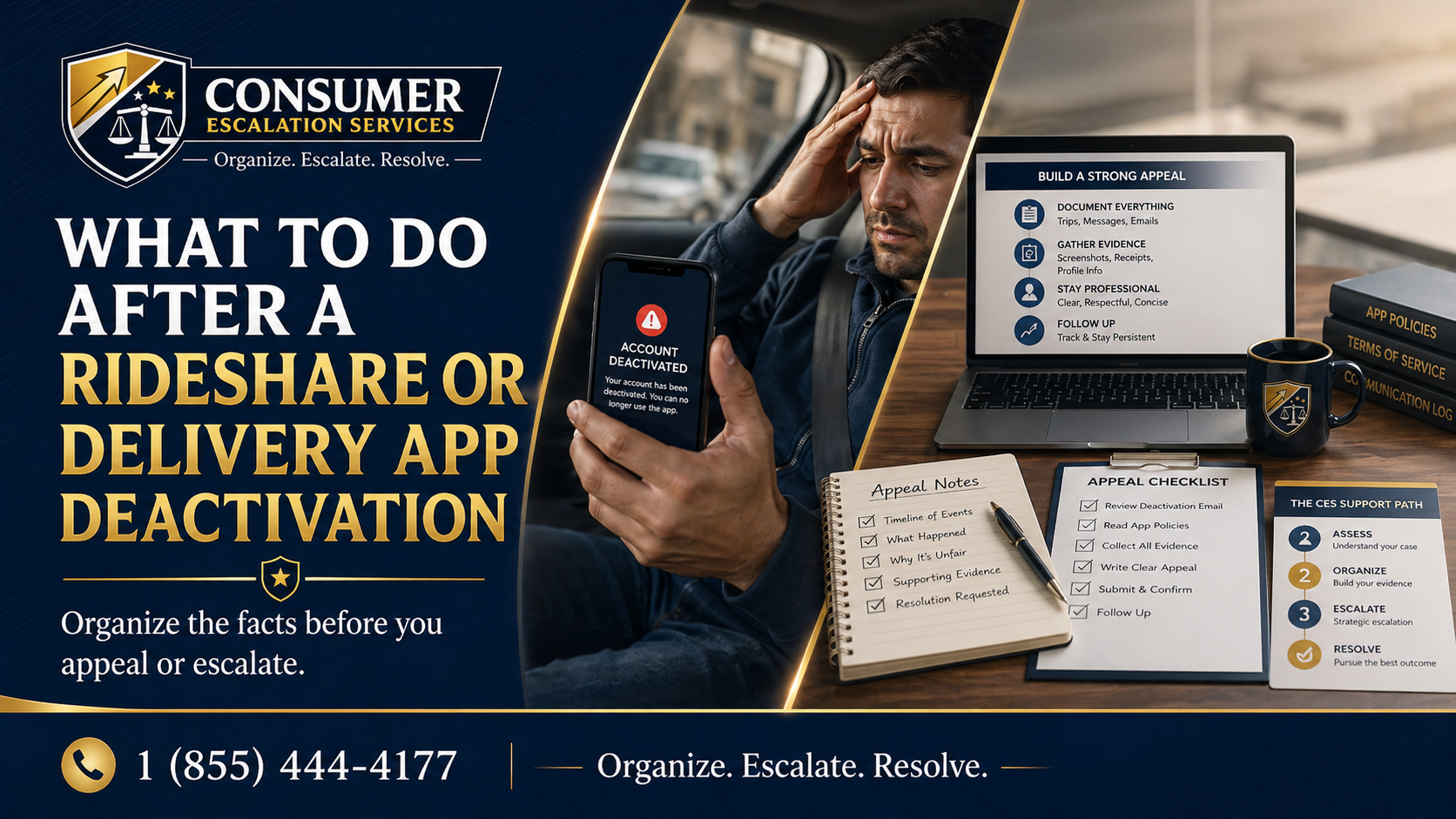
Rideshare and delivery driver reviewing app deactivation notice and organizing appeal documents

Rideshare & Delivery App Deactivation

What To Do After a Rideshare or Delivery App Deactivation

Read article

Refund dispute warning signs — recognizing when a refund issue requires stronger documentation and escalation

Refund Disputes

Refund Dispute Warning Signs

Read article

Consumer Escalation Services is not a law firm, does not provide legal advice, and does not guarantee any outcome.