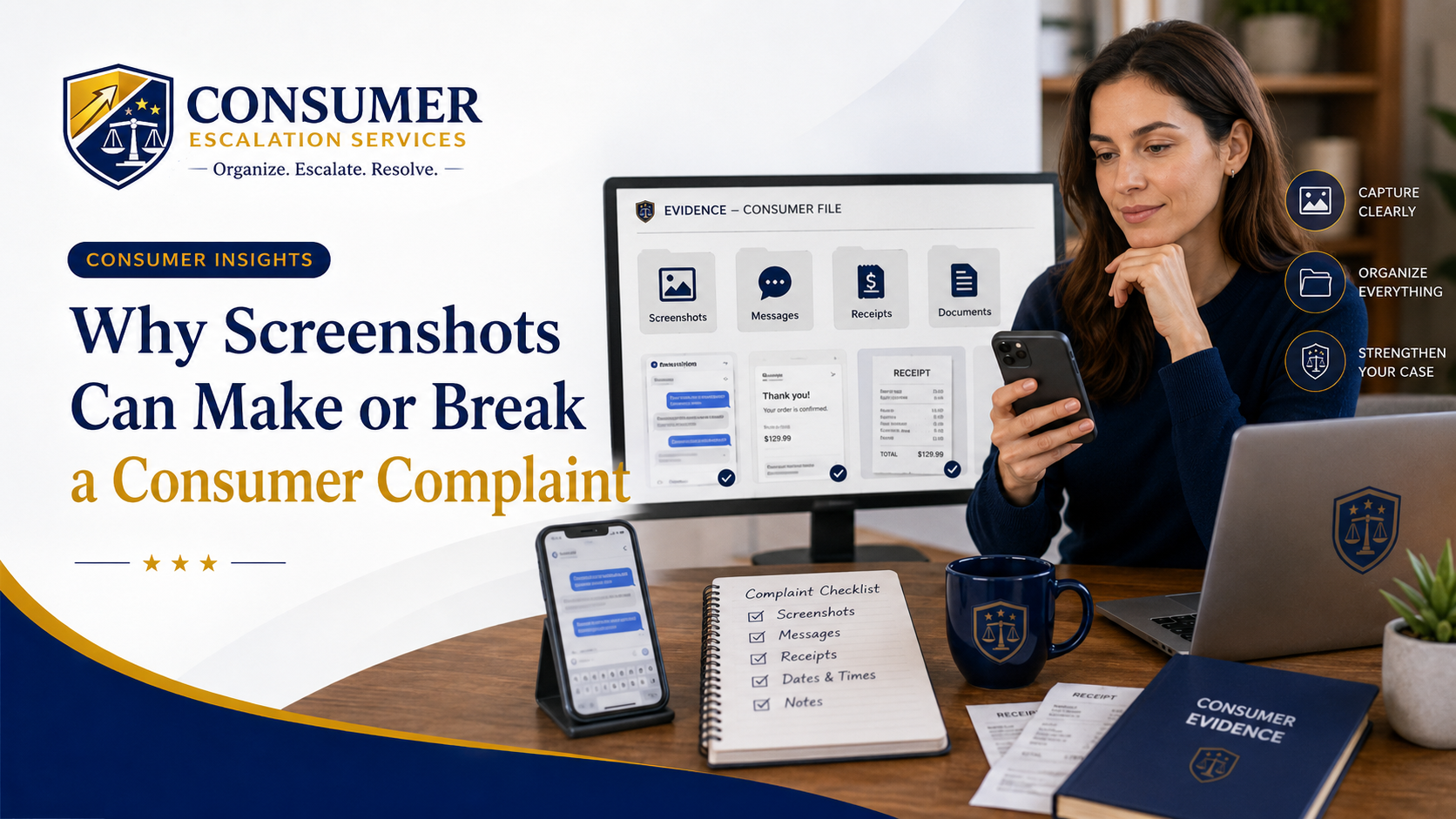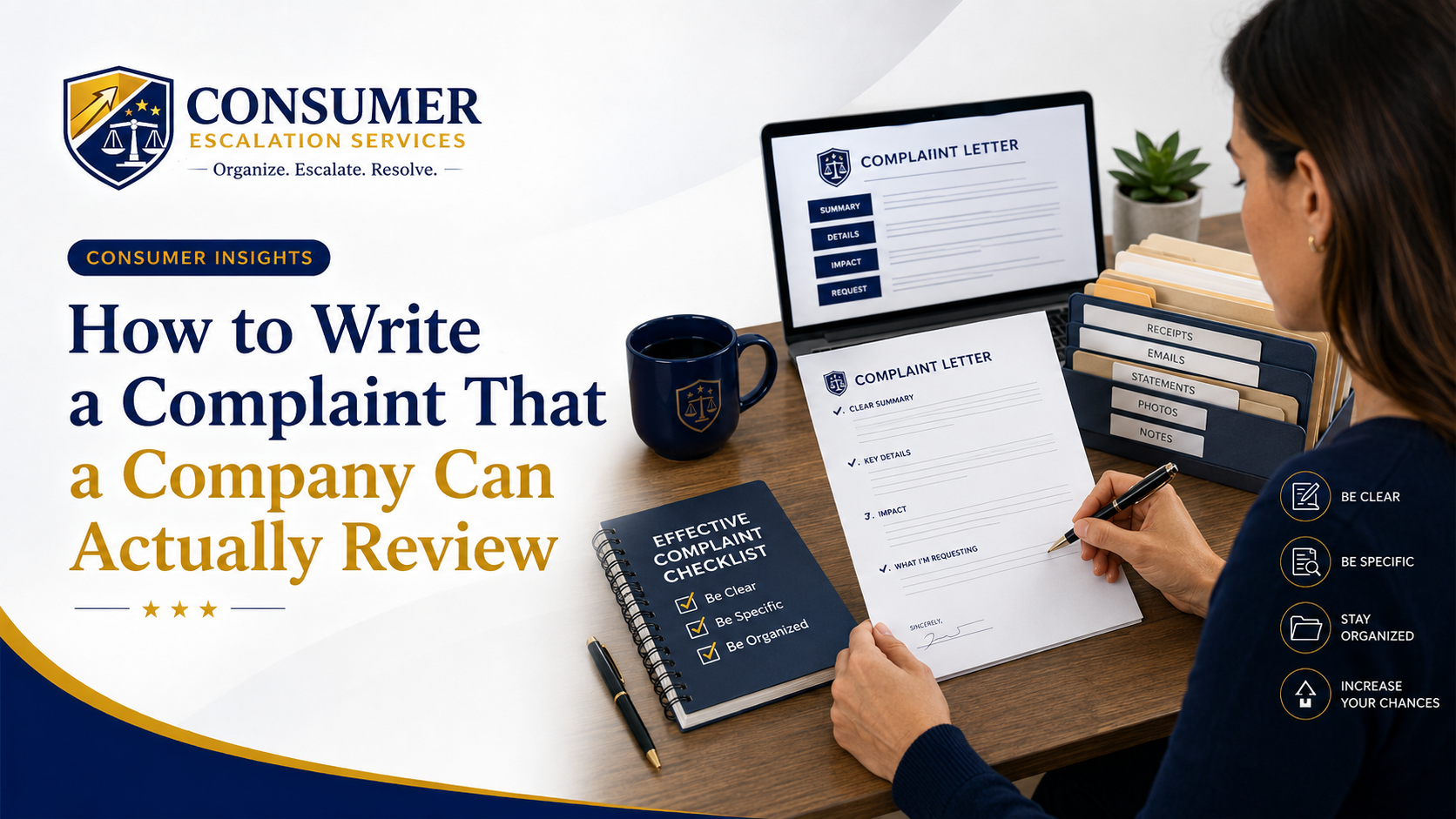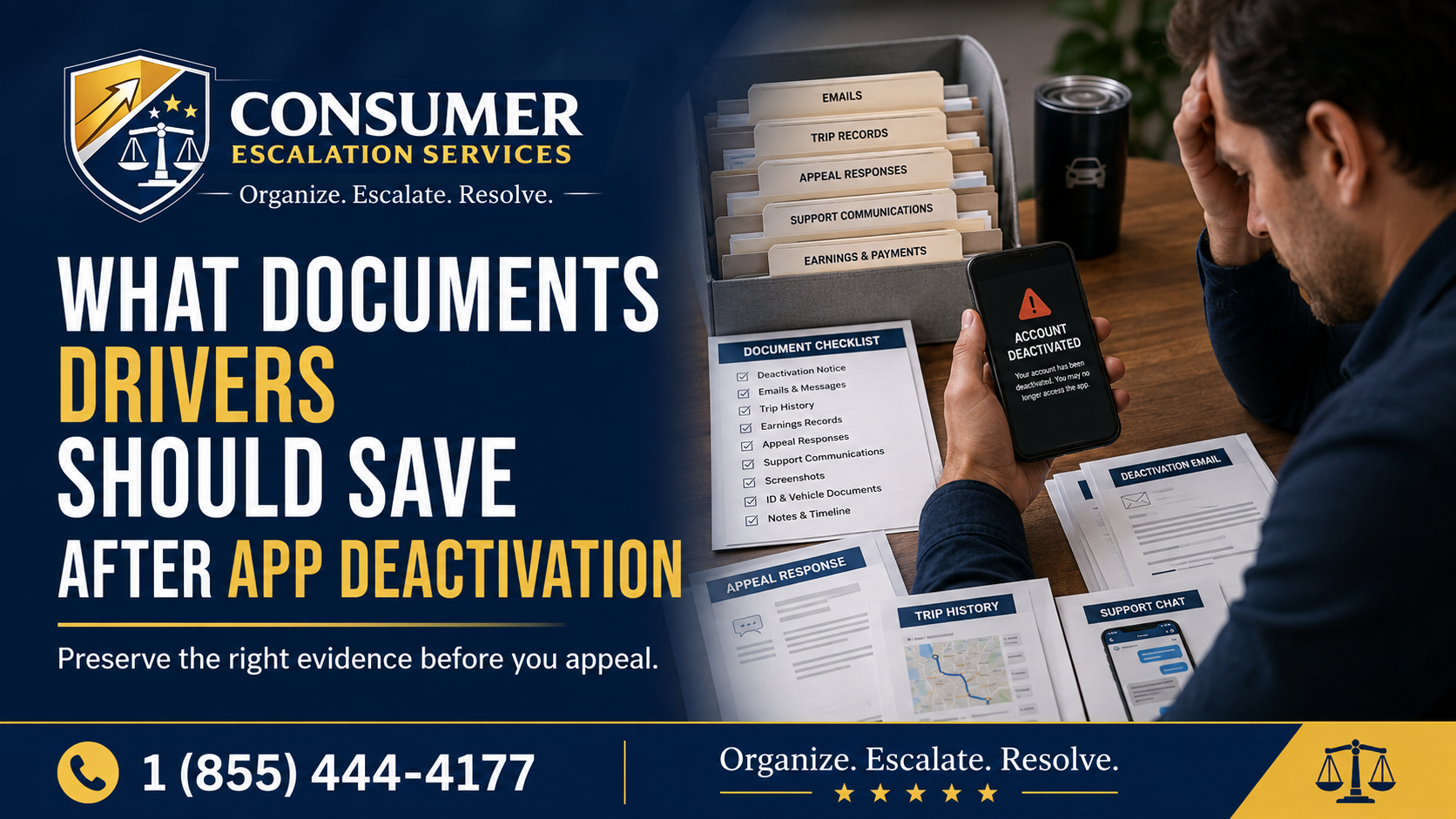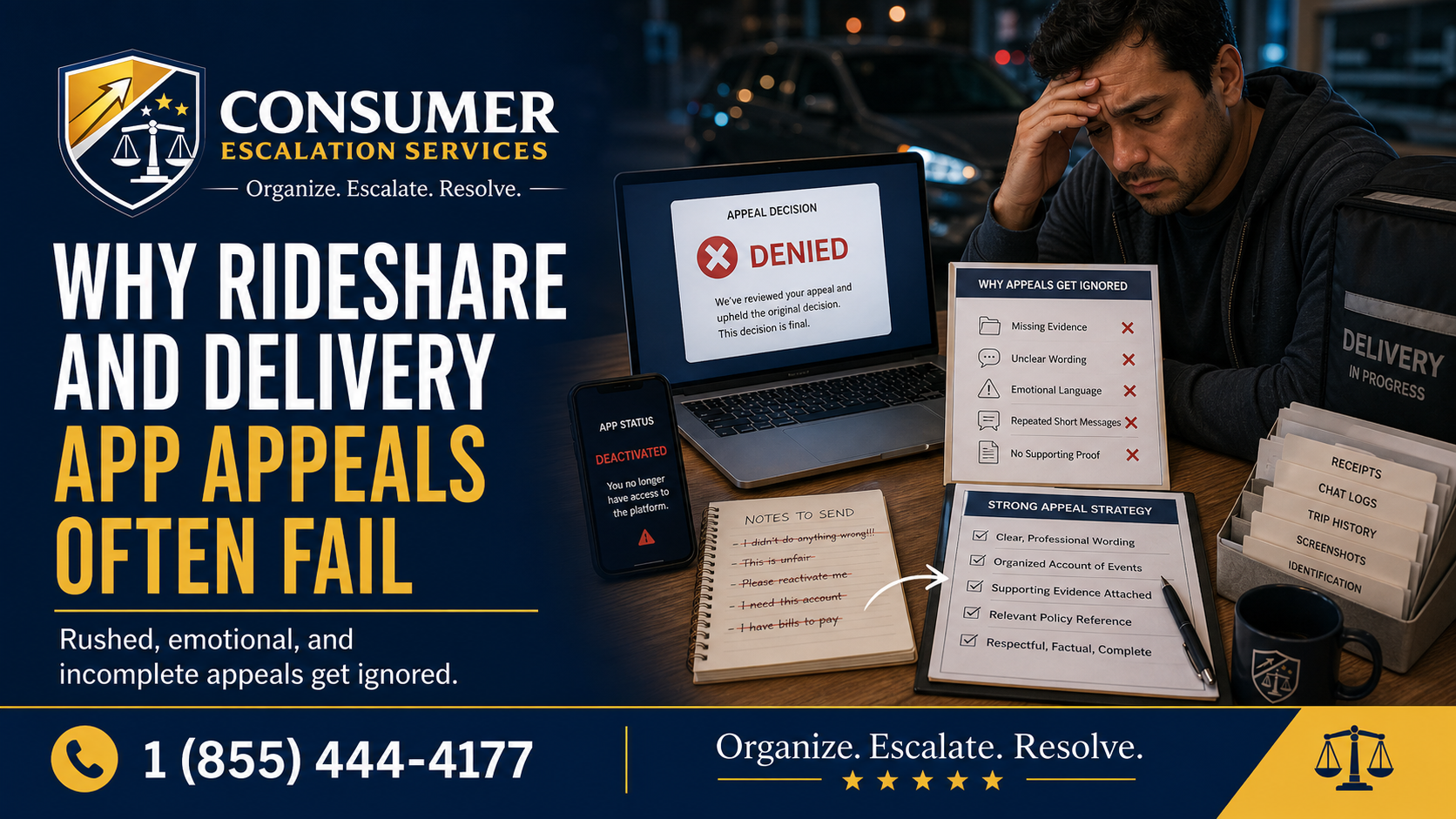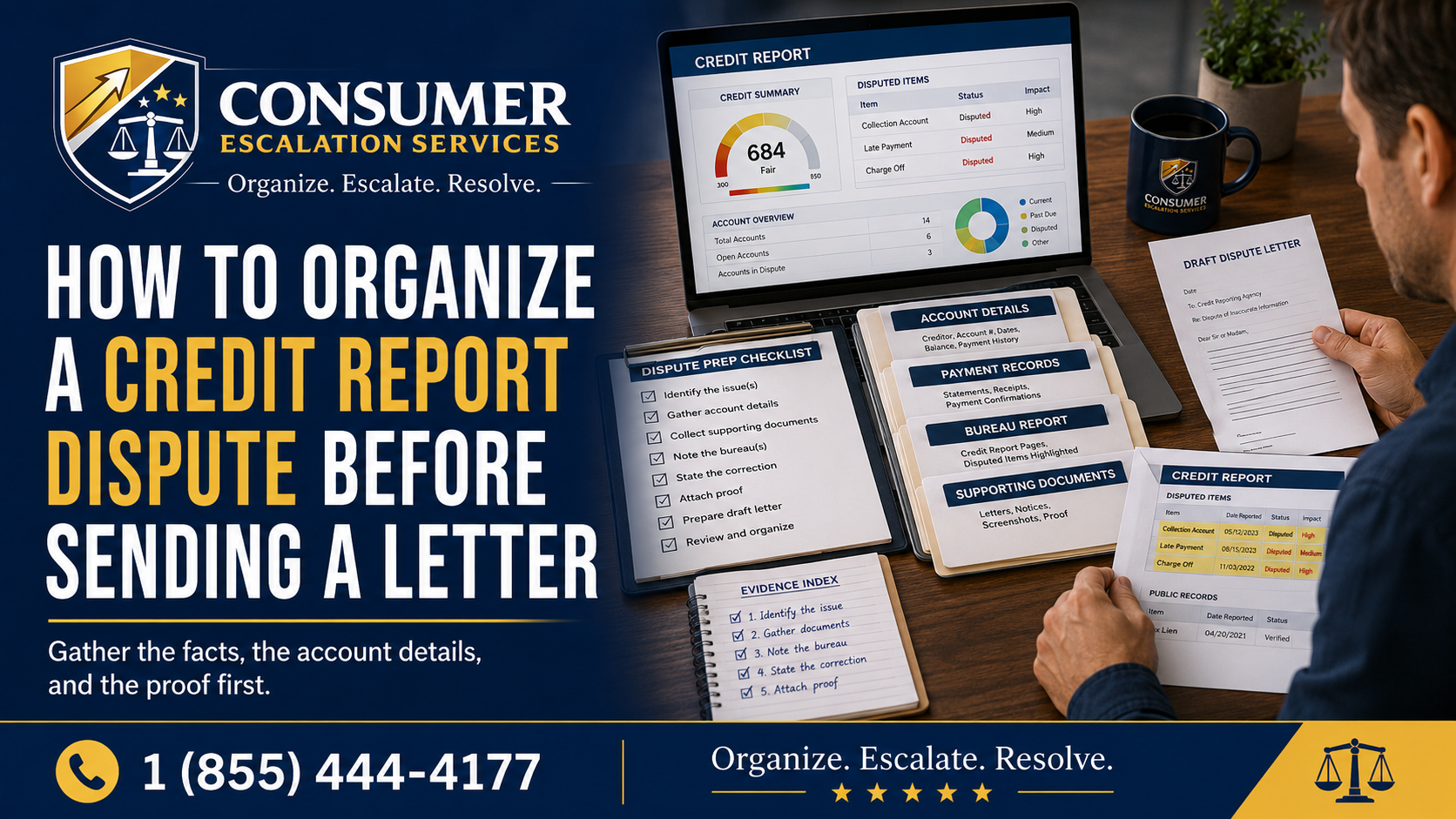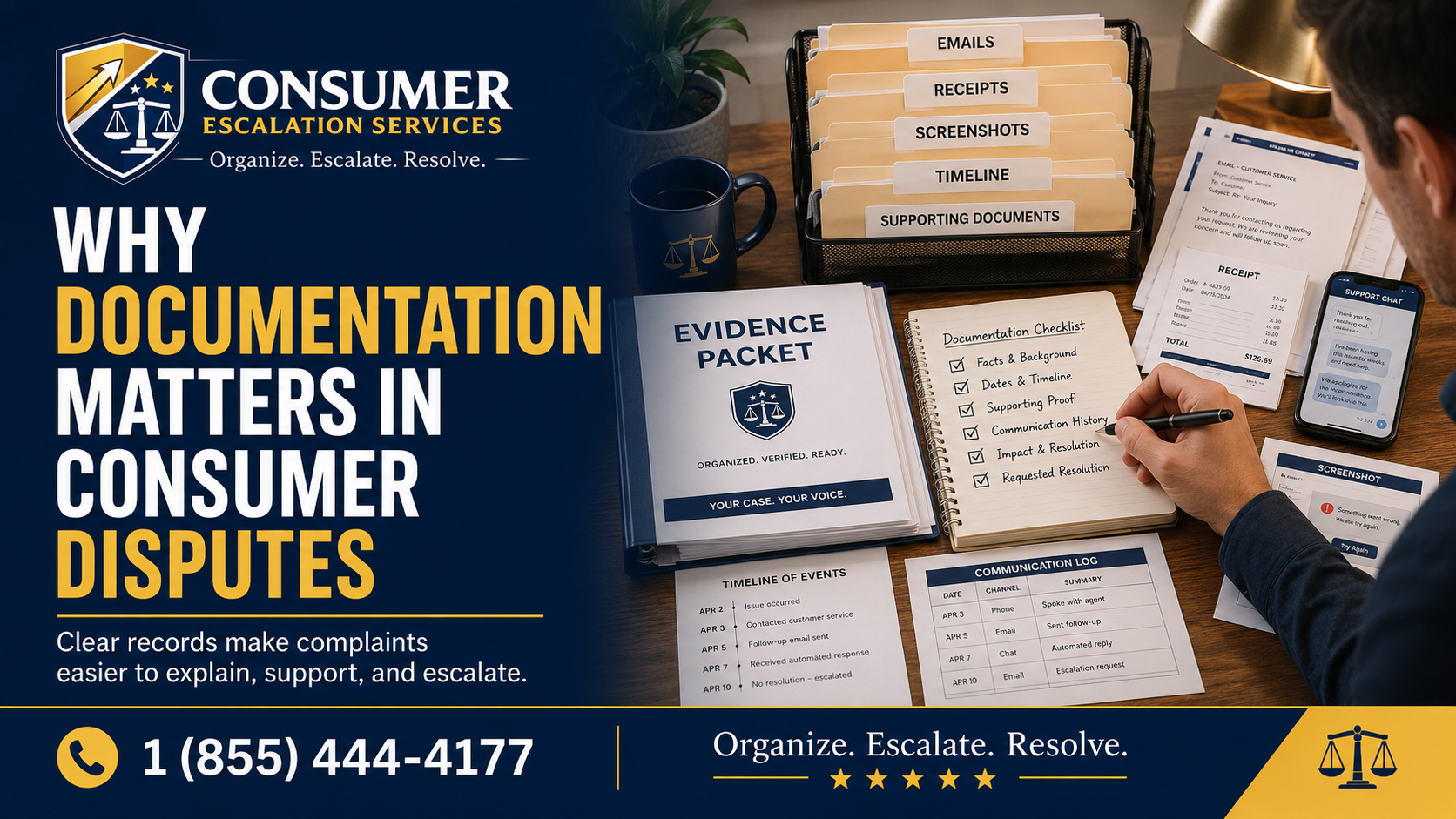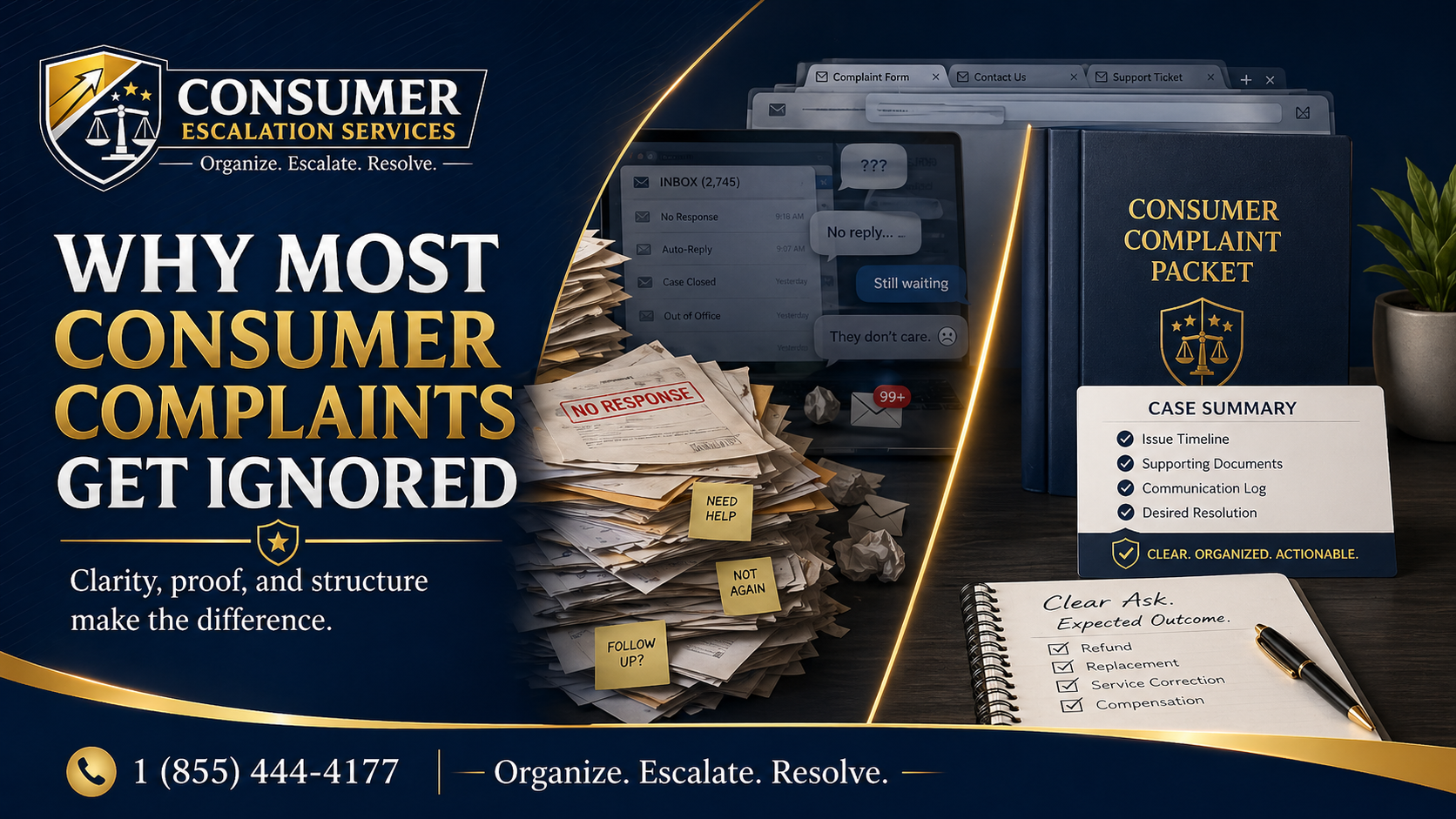
Most disputes are not won by the loudest message. They are won by the cleanest file. The consumer who can show, in one place, what was promised, what was paid, what went wrong, and what they are asking for is already in a different category from the consumer who is still searching their inbox.
A complaint file is not a folder of evidence. It is the structured, condensed version of your story that any reviewer — a supervisor, a credit card company, a regulator, a third party — can scan in under five minutes.
Your File Is Your Argument
Companies receive a lot of incoming complaints. Yours is more likely to move when the reviewer does not have to assemble the story themselves. The job of your file is to do that assembly for them.
What Belongs in a Complaint File
- A one-page complaint summary at the top
- A clean timeline of events
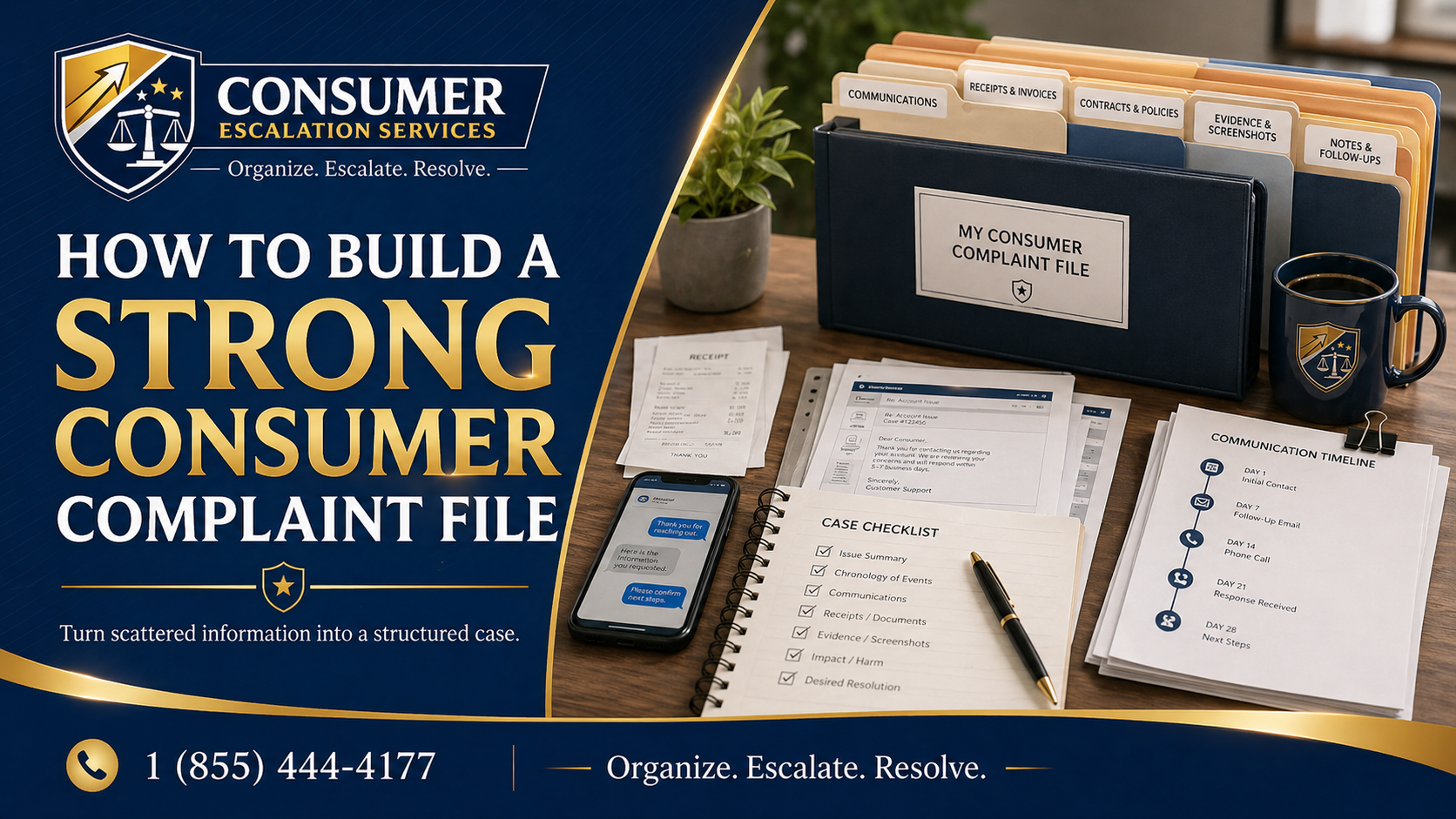
- Receipts, invoices, contracts, and proof of payment
- Screenshots of relevant messages, app activity, or account screens
- Email threads with customer service, in date order
- Photos or videos that document the problem, if applicable
- Notes from any phone calls — date, time, agent name, and what was said
- A clear statement of the resolution you are requesting
The Single Question Your File Must Answer
When someone outside your situation reads the first page of your file, they should be able to answer one question without ambiguity:
What happened, and what is the consumer asking the company to do about it?
If your one-page summary cannot answer that, the rest of the file does not matter yet. Tighten the summary first, then layer the proof underneath.
How to Build a Working Timeline
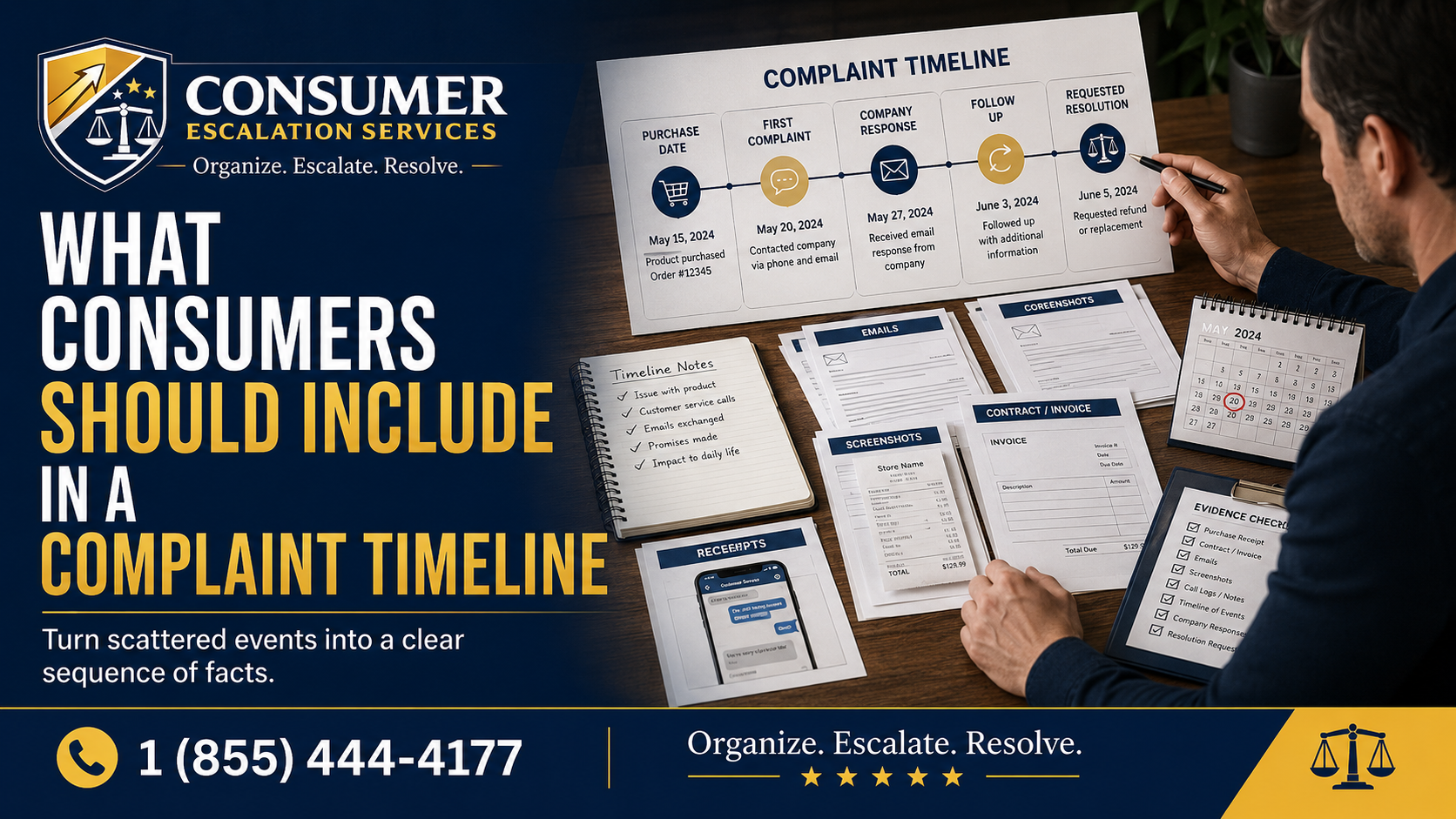
A timeline is the single most useful document in a complaint file. It does not need to be fancy. A bulleted list of dates and one-line events is enough.
- March 4 — Service purchased
- March 7 — Problem discovered
- March 8 — First complaint submitted (Ticket #1042)
- March 12 — Refund denied via email
- March 15 — Follow-up email sent, no response
- March 20 — Second follow-up sent, no response
A timeline turns a long, emotional story into a clean sequence anyone can follow. It also makes it harder for the company to dispute the basic facts.
What Changes Once the File Is Done
Once the file is together, the conversation shifts. You stop being the consumer who is still trying to explain the issue and start being the consumer presenting a structured case. That shift is what creates leverage — and it is the same shift that lets a refund dispute, an executive escalation letter, or a third-party complaint actually go somewhere.