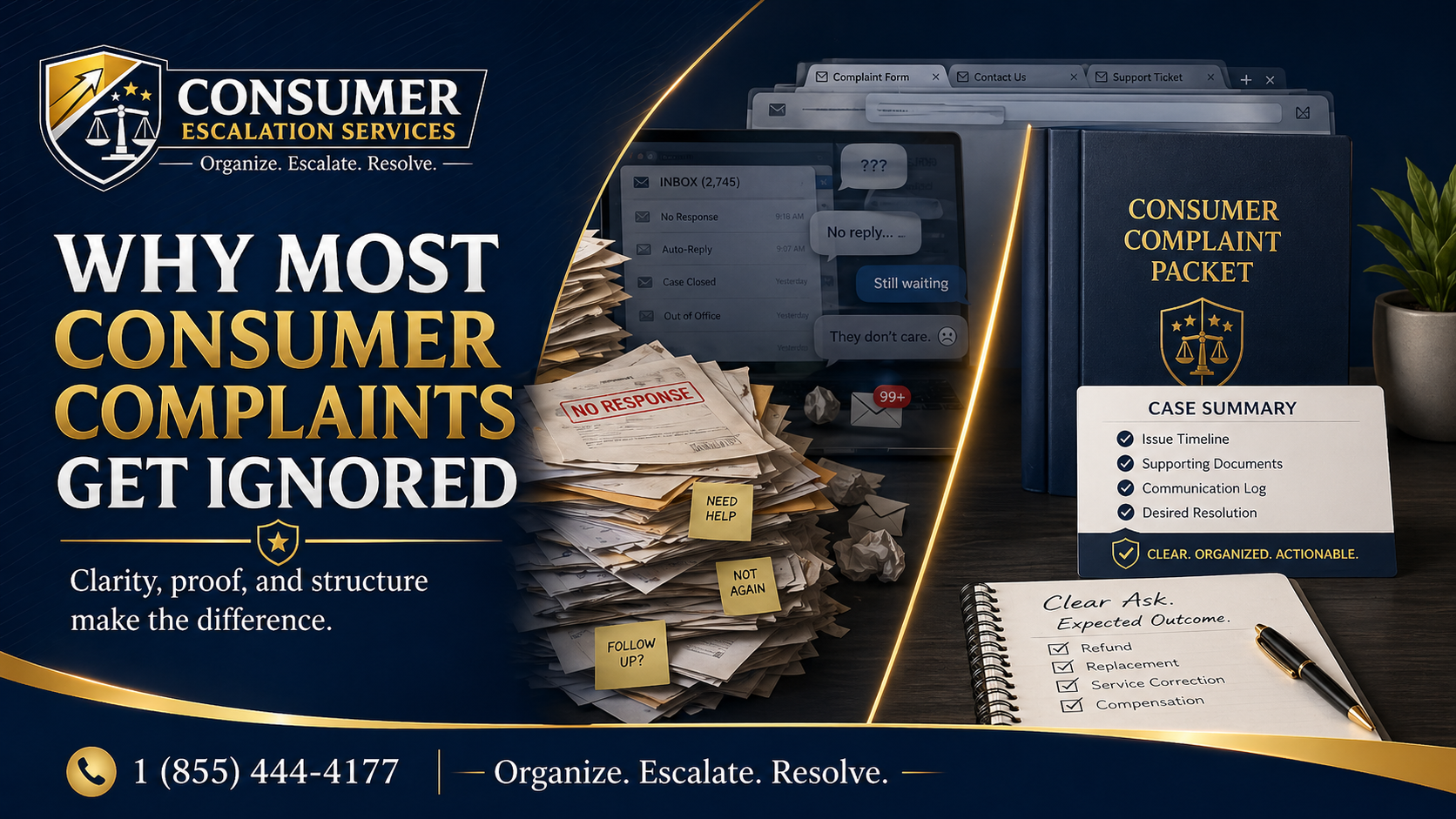

When a consumer feels ignored, denied, or mistreated, frustration is natural. But when it is time to escalate a complaint, emotion can work against you if it takes over the message.
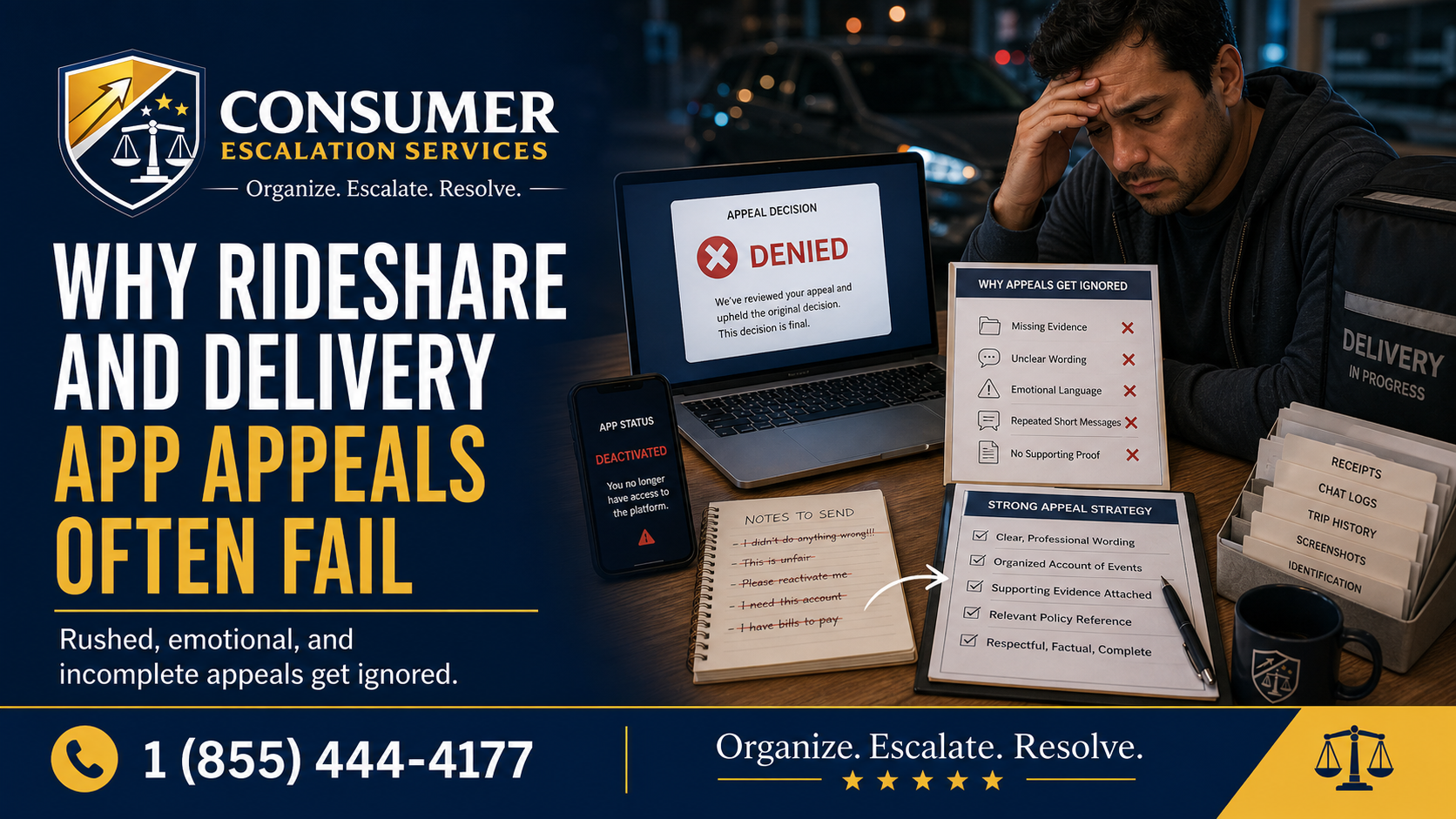
A strong complaint does not need insults, threats, sarcasm, or long emotional explanations. In many cases, the most effective complaint is calm, organized, and fact-driven.
Credibility Matters
The person reviewing your complaint may not know you. They may only see your written message, your evidence, and your timeline. If the complaint is angry, scattered, or filled with accusations, the reviewer may focus more on the tone than the issue.
Start With a Short Summary
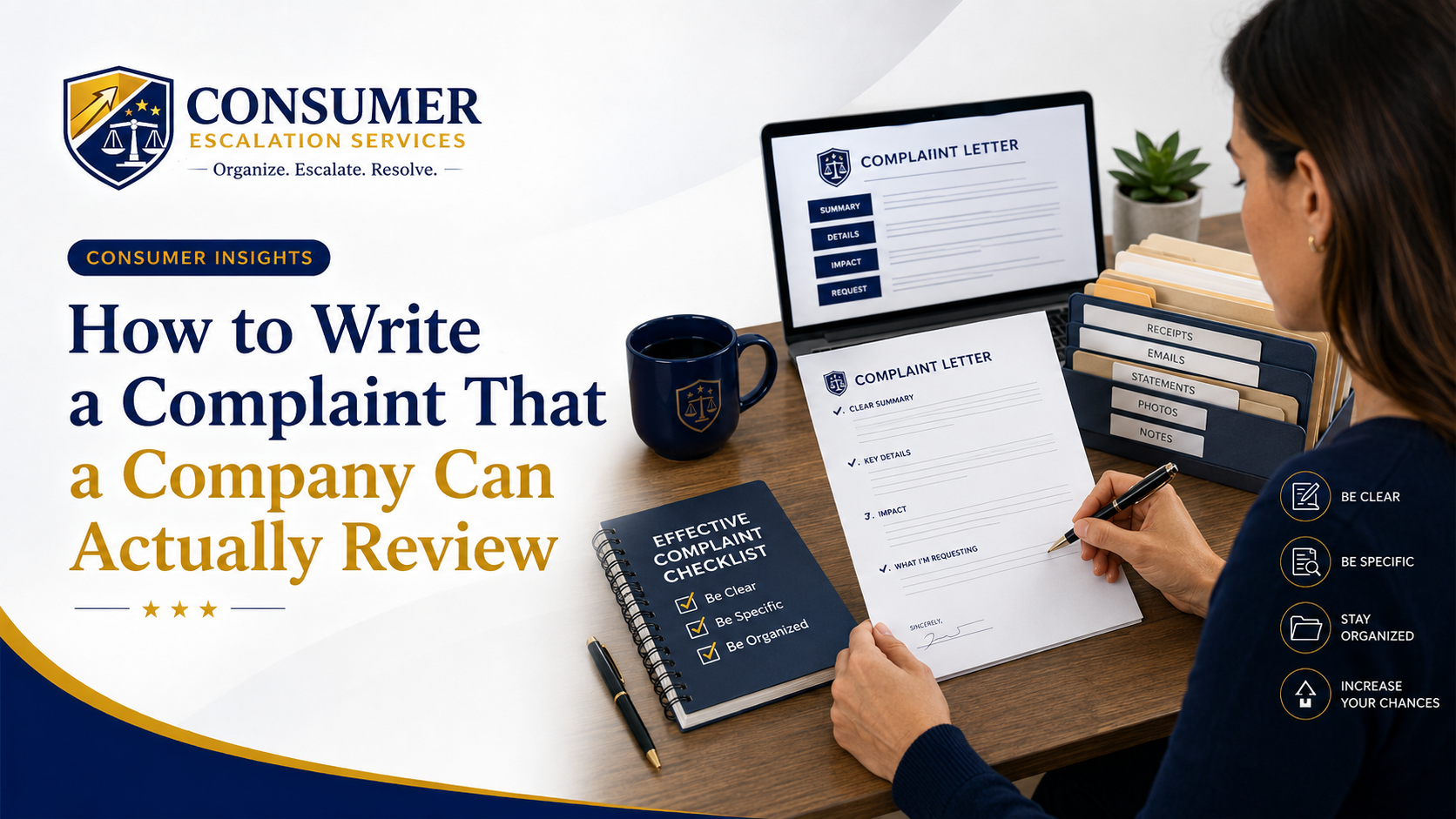
Start with a short summary of the problem. Explain what happened, when it happened, and why you believe the matter remains unresolved.
Provide a Clear Timeline
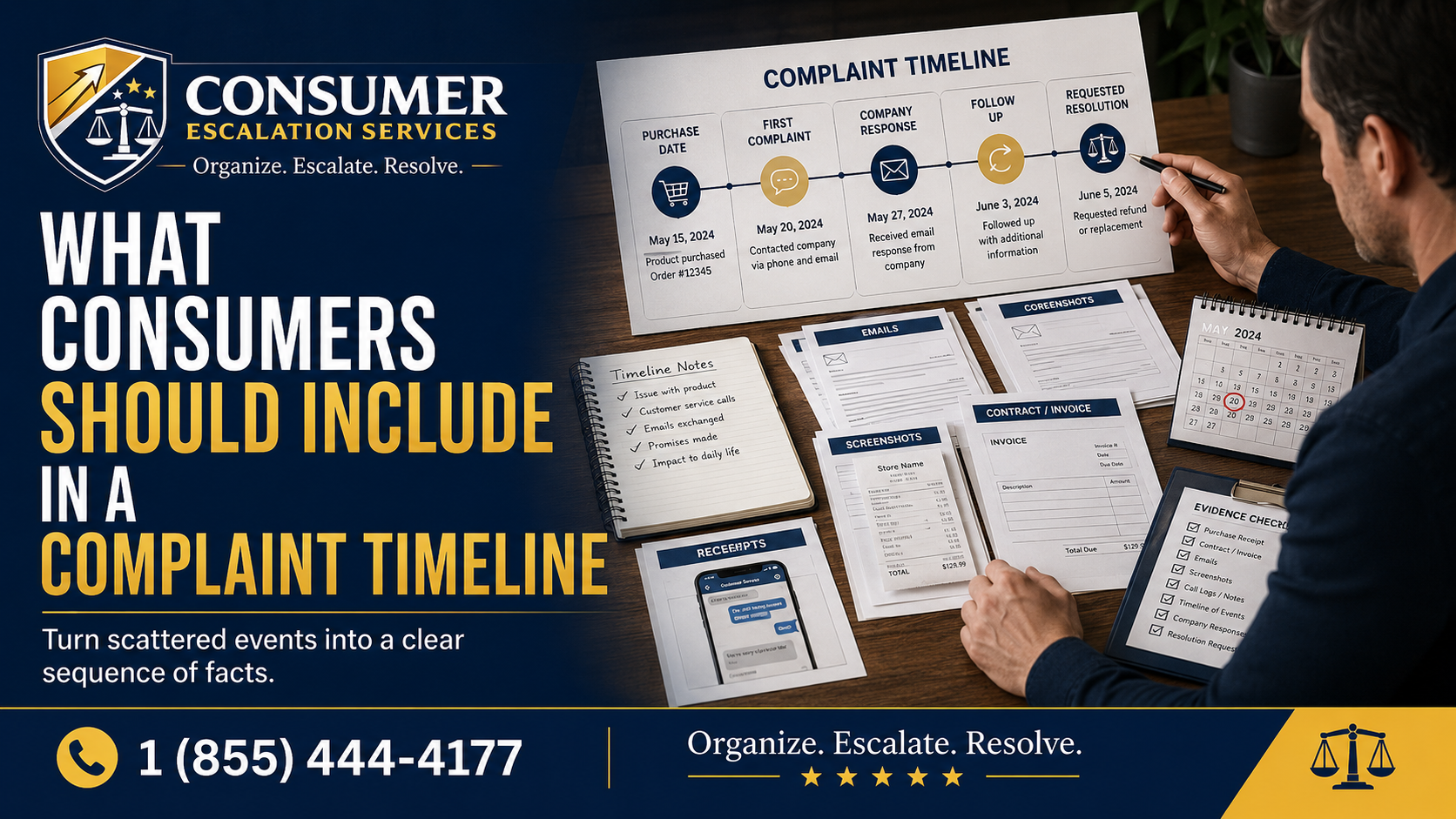
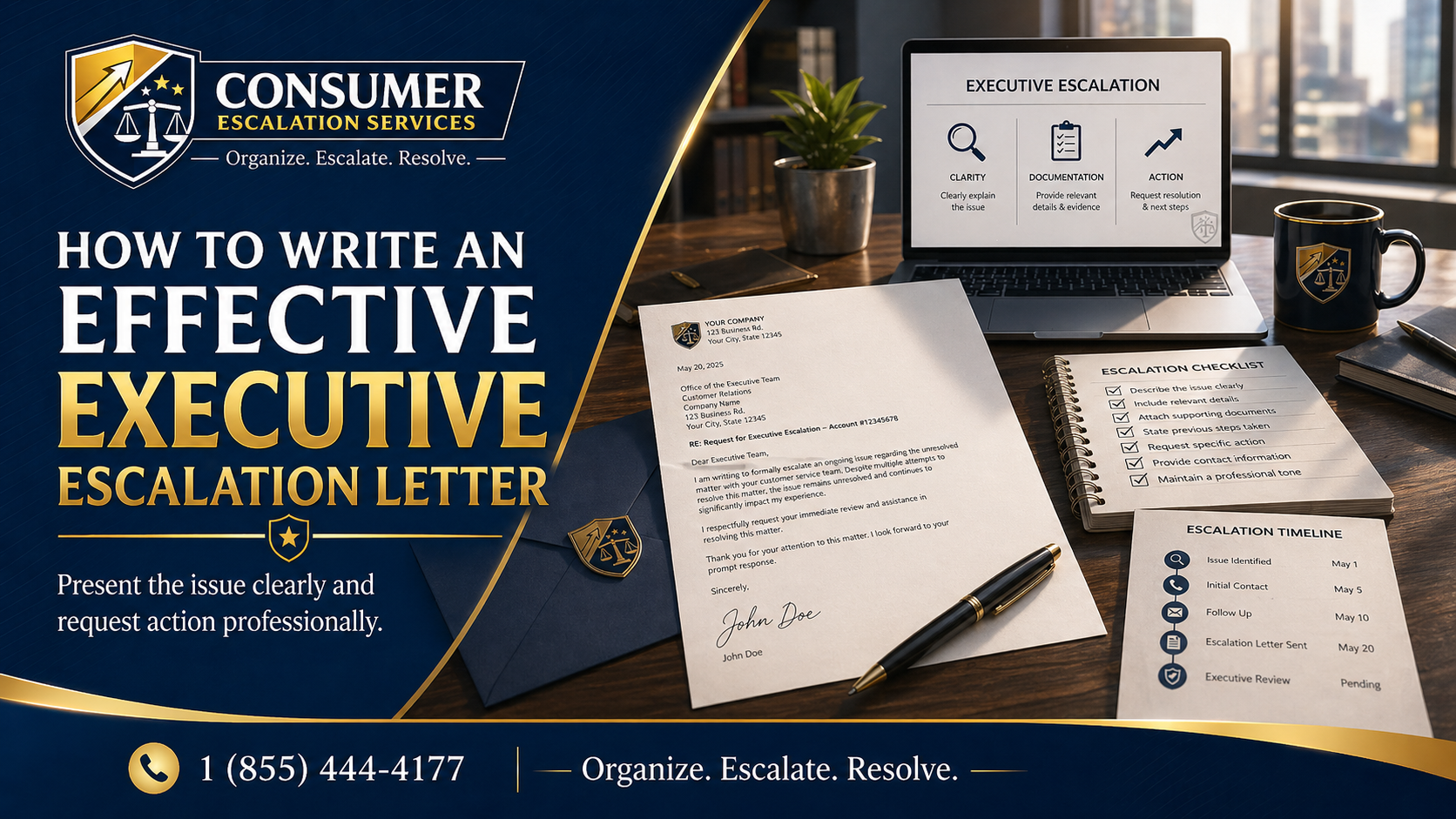
Then provide a clear timeline. List important dates, including:
- Purchase date
- Service date
- Cancellation date
- Delivery date
- Repair attempt
- Payment date
- Customer service contact
- Denial response
Identify the Supporting Evidence
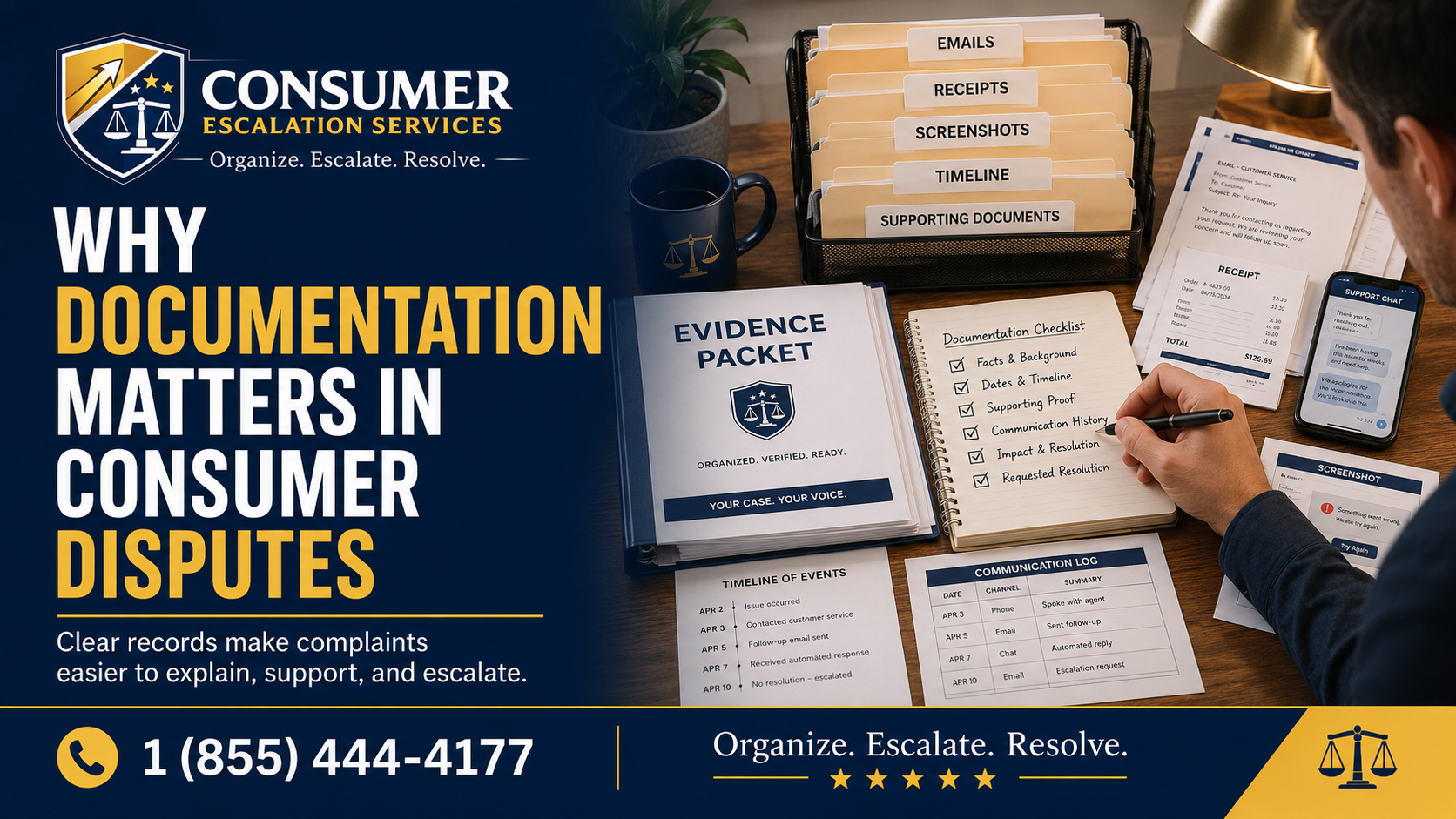
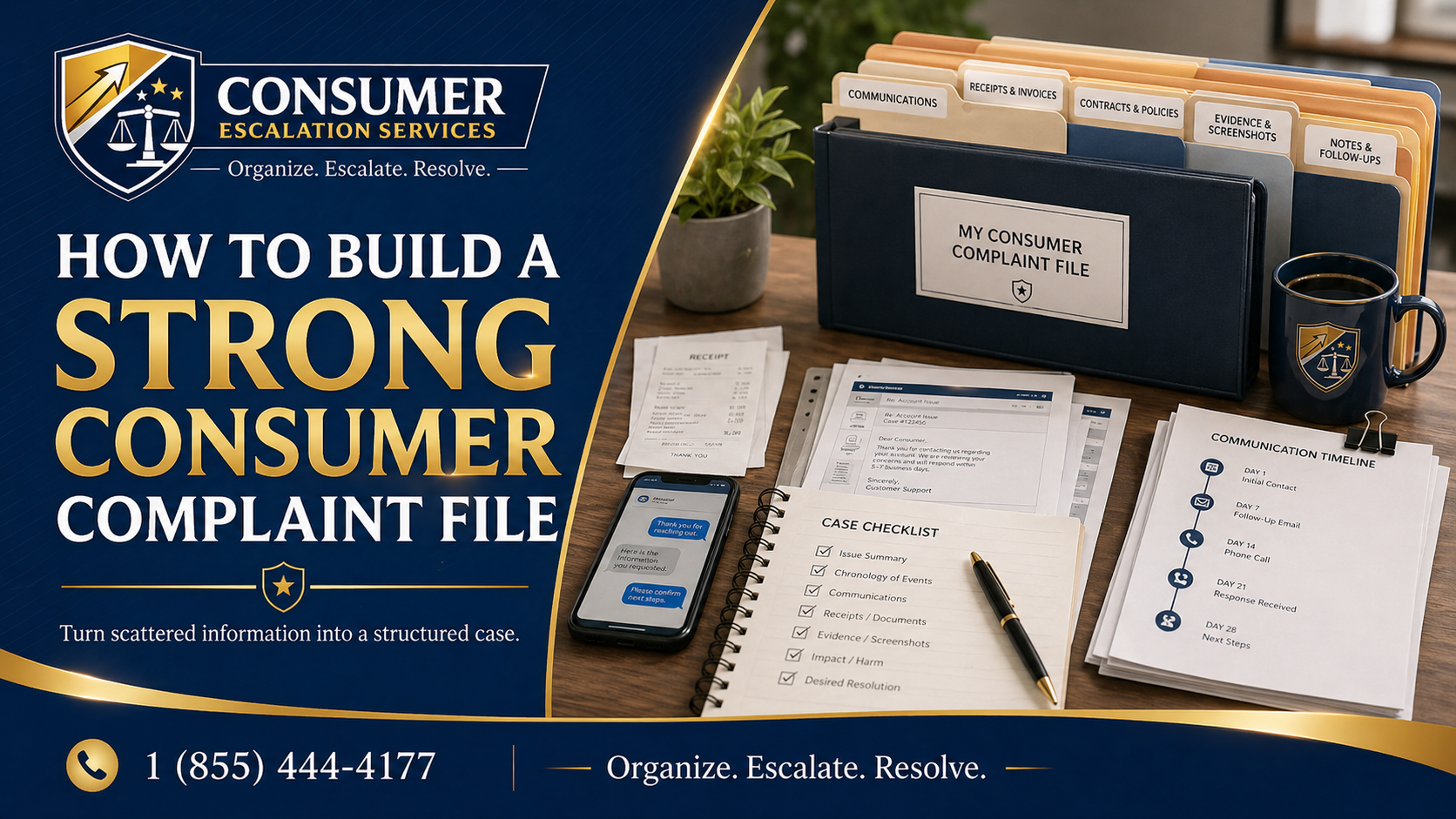
Next, identify the supporting evidence. Mention the documents, screenshots, receipts, photos, messages, or account records that support your position.
State the Resolution You Are Requesting
Finally, state the resolution you are requesting. This could be a refund review, account review, billing correction review, repair review, replacement review, service completion review, clearer explanation, or another reasonable resolution based on the situation.
Remain Firm Without Sounding Reckless
The key is to remain firm without sounding reckless.
A professional complaint can still be serious. You can explain that the matter has not been resolved, that prior attempts have been unsuccessful, and that you are requesting written review by the appropriate department.
When you keep the complaint focused on facts, you increase the chance that the issue will be reviewed on substance rather than emotion.
Final Thought
Consumer Escalation Services helps consumers organize facts, timelines, evidence, and professional complaint materials. CES is not a law firm, does not provide legal advice, and does not guarantee any outcome.